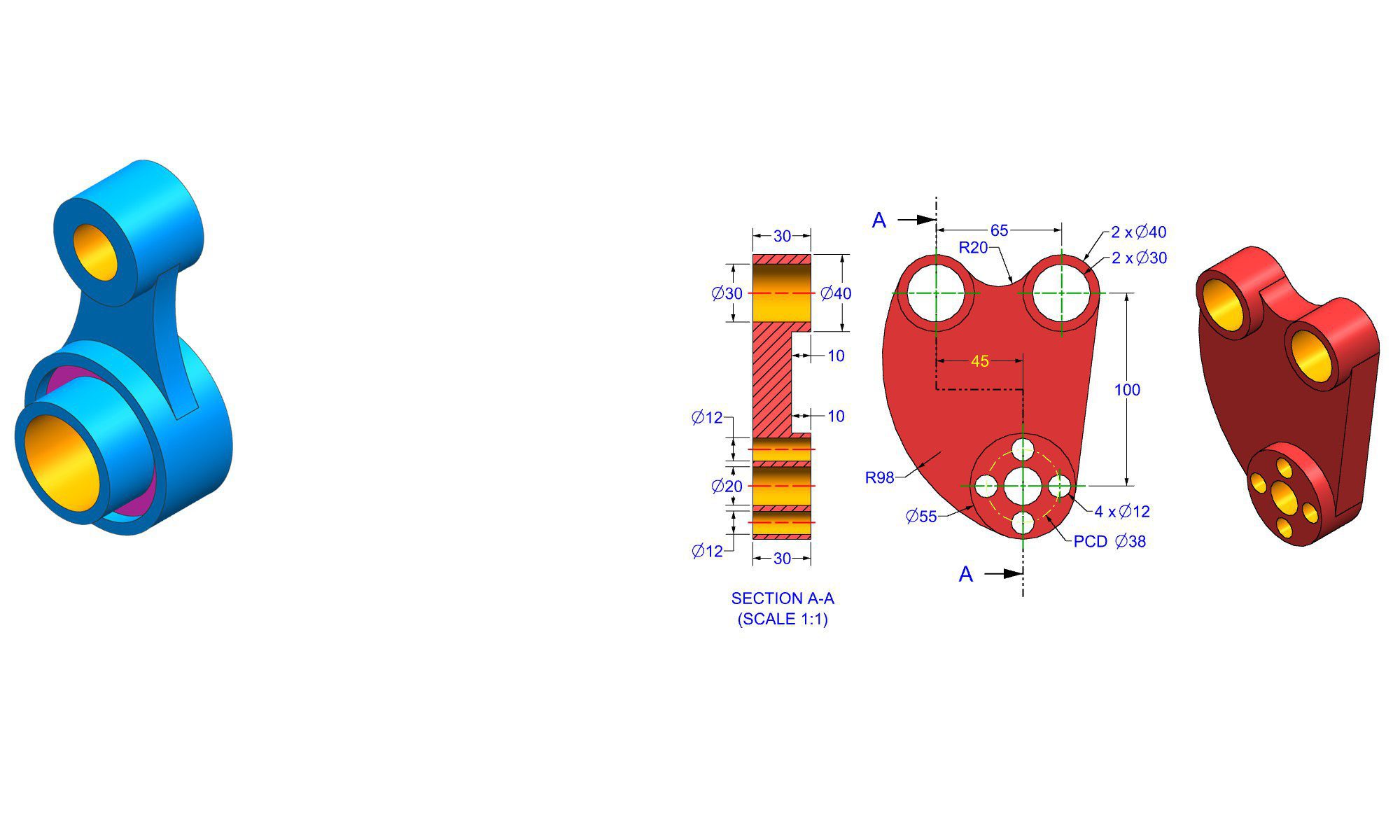

How to rename components automatically In Fusion 360

Introduction

Automating component renaming in Fusion 360 can save significant time, especially in complex projects with multiple parts. Whether you’re managing an assembly, preparing files for manufacturing, or simply aiming for a more organized design process, automatic renaming streamlines your workflow. This guide provides a step-by-step approach to set up automatic component renaming in Fusion 360, ensuring your files stay tidy and easily navigable. We’ll cover best practices, practical examples, and common pitfalls to help you master this powerful feature for your design projects.

Why Automate Component Renaming in Fusion 360?

Renaming components manually can be tedious, prone to errors, and inconsistent—especially in large assemblies. Automation offers several benefits:

  • Time-Saving: Quickly rename hundreds of parts based on rules or context.
  • Consistency: Maintain uniform naming conventions across your projects.
  • Organization: Easier to locate and reference components during editing or manufacturing.
  • Integration: Automate naming when importing or exporting files, making collaboration smoother.

Understanding how to automatically rename components in Fusion 360 becomes an essential skill, especially for engineers, designers, and makers working with complex assemblies.

How to Rename Components Automatically in Fusion 360

Fusion 360 doesn’t have a built-in, one-click automatic renaming feature in its core interface; however, it offers several approaches through scripting, add-ins, and external tools. The most reliable and flexible method involves using the Fusion 360 API (Application Programming Interface) with Python scripts.

1. Setting Up Your Environment for Automation

Before automating renaming, make sure your environment is ready:

  • Install Fusion 360 Script and Add-In Environment
  • Open Fusion 360.
  • Navigate to the “Scripts and Add-Ins” menu.
  • Make sure you can access the scripting toolkit, which supports Python and JavaScript.
  • Prepare a Text Editor for Scripting
  • Use editors like Visual Studio Code, or the built-in Fusion 360 script editor.
  • Understand How Fusion 360 API Works
  • Review the official API documentation.
  • Familiarize yourself with the object model, focusing on components and their names.

2. Write a Basic Script to Rename Components

Here’s a simplified example of a Python script that renames all components based on a pattern:

“`python

import adsk.core, adsk.fusion, adsk.cam, traceback

def run(context):

try:

app = adsk.core.Application.get()

ui = app.userInterface

design = adsk.fusion.Design.cast(app.activeProduct)

if not design:

ui.messageBox(“No active Fusion design”, “Error”)

return

rootComp = design.rootComponent

components = rootComp.allComponents

index = 1

for comp in components:

# Define your renaming pattern

newname = f”Component{index}”

comp.name = new_name

index += 1

except:

if ui:

ui.messageBox(‘Failed:\n{}’.format(traceback.format_exc()))

“`

  • Use case: This script renames all components sequentially as “Component1″, “Component2″, etc.

3. Customizing the Naming Pattern

To tailor the automatic renaming:

  • Use component properties such as comments, part numbers, or custom attributes.
  • For example, rename components based on their original name plus a sequence number:

“`python

original_name = comp.name

newname = f”{originalname}_v{index}”

“`

  • You can also incorporate user input, date stamps, or part specifications into the pattern.

4. Batch Renaming Based on External Data

For advanced automation, import data from external sources (CSV, Excel):

  • Use Python libraries like `csv` or `pandas`.
  • Map external data fields to component names.
  • Loop through components and assign names dynamically.

5. Running and Testing Your Script

  • Save your script in the scripts directory.
  • Execute it via “Scripts and Add-Ins” within Fusion 360.
  • Test on a sample assembly beforehand to prevent unwanted changes.

Practical Examples of Automatic Renaming

Below are some real-world scenarios where automatic renaming proves useful:

Example 1: Renaming Components Based on Part Numbers

Suppose you have a list of part numbers in a CSV file. You can write a script to:

  • Read the CSV file.
  • Match each component’s ID or existing name.
  • Assign the corresponding part number as its new name.

Example 2: Sequential Naming in Large Assemblies

For a complex structure, rename components with a prefix related to their assembly section, then add sequence numbers:

  • “Frame001″, “Frame002″, “Bracket_001”, etc.

Example 3: Bulk Renaming During Import

Automatically assign meaningful names immediately after importing parts or assemblies, saving time during initial setup.

Common Mistakes to Avoid

  • Overwriting Critical Names: Ensure that renaming doesn’t replace important existing names used for referencing.
  • Forgetting to Save Scripts: Always save your scripts before running to avoid repetition.
  • Running Scripts on Large Assemblies Without Testing: Start with small models to prevent unintended changes.
  • Ignoring Naming Conventions: Consistency is key—define and stick to standardized patterns.

Best Practices and Pro Tips

  • Create a Naming Convention: Decide on patterns before automating.
  • Backup Data: Save your projects before bulk renaming, especially when using scripts.
  • Use Comments in Scripts: Comment your code for clarity, especially if modifications are needed later.
  • Leverage Fusion 360 API Community: Use forums and tutorials for custom scripts tailored to your needs.
  • Integrate with CAD Workflow: Combine renaming scripts with other automation tasks, like exporting.

Comparing Manual vs. Automated Renaming

Feature Manual Renaming Automated Renaming
Speed Slow Fast
Consistency Prone to errors Highly consistent
Scalability Difficult in large projects Efficient in large assemblies
Flexibility Limited Highly customizable
Learning Curve Minimal Moderate (requires scripting knowledge)

Conclusion

Automatically renaming components in Fusion 360 enhances your productivity, keeps your projects organized, and minimizes manual effort. While Fusion 360 lacks a built-in bulk renaming feature for components, leveraging the API with Python scripting offers powerful, flexible automation. By following the steps outlined in this guide—setting up your environment, writing custom scripts, and applying best practices—you can seamlessly integrate automatic renaming into your CAD workflow, saving time and reducing errors.

FAQ

1. How can I automate renaming components in Fusion 360 without scripting?

Ans: Fusion 360 doesn’t have a built-in feature for batch renaming but you can use third-party add-ins or create scripts with the API to automate renaming.

2. Is it possible to rename only specific components automatically?

Ans: Yes, by modifying your script to include conditions based on component properties or names, you can target specific components for renaming.

3. Can I customize the naming pattern in my automation script?

Ans: Absolutely, you can tailor the script to create custom naming patterns based on your project needs, such as including dates, part numbers, or hierarchical info.

4. What are some common mistakes when automating component renaming?

Ans: Common mistakes include overwriting important component names, running scripts without testing, and neglecting version backups before batch changes.

Ans: The Fusion 360 API community and forums often share scripts that can be customized; however, writing your own tailored scripts offers the best control.


By mastering automatic component renaming, you streamline your design process and ensure your Fusion 360 projects stay organized—making your workflow more efficient and professional.


End of Blog


Fusion 360 Workbook Cover

After purchasing, a download link will be sent instantly to your email.

Buy Now For $27.99

Are you a student or Unemployed? Get this bundle for $19.99

Offer for Students Buy Now For $19.99

Buy Paperback on Amazon.com

Autodesk Fusion 360 All-in-One Workbook

500+ Practice Exercises to Master Autodesk Fusion 360 through real-world practice!

This all-in-one workbook is your ultimate resource to develop hands-on CAD skills with Autodesk Fusion 360. Whether you’re a student, engineer, hobbyist, or professional, this guide is built to help you gain real design confidence through structured practice.

What’s Inside this Book:

  • 200 2D Sketching Exercises – Build a strong foundation in dimension-driven 2D geometry and technical drawings
  • 200 3D Modeling Exercises – Practice modeling real-world parts, from simple shapes to complex components.
  • Multi-Part Assembly Projects – Understand how parts fit together and create full assemblies with detailed drawings

🎯 Why This Book?

  • 500+ practice exercises following real design standards
  • Designed for self-paced learning & independent practice
  • Perfect for classrooms, technical interview preparation, and personal projects
  • Covers 2D Sketching, 3D Modeling & Assembly Design in one workbook
  • Trusted by 15,000+ CAD learners worldwide

After purchasing, a download link will be sent instantly to your email.

Buy Now For $27.99

Are you a student or Unemployed? Get this bundle for $19.99

Offer for Students Buy Now For $19.99

Buy Paperback on Amazon.com

What shell command does In Fusion 360

Introduction

Fusion 360 is a popular cloud-based CAD, CAM, and CAE software, favored by engineers, designers, and manufacturers worldwide. While Fusion 360 primarily operates through its graphical user interface, advanced users and developers often leverage command-line interfaces or scripts for automation, customization, and integration. When it comes to command-line or shell interactions, many are curious about whether Fusion 360 supports shell commands, and if so, what specific commands are available. In this guide, we’ll explore what shell command does in Fusion 360, how to use them effectively, and best practices to enhance your workflow.

Understanding Shell Commands in Context of Fusion 360

Before diving into specific shell commands, it’s important to clarify what “shell command” generally refers to. Shell commands are instructions executed via a command-line interpreter (CLI), such as Bash on Linux or Terminal on macOS, or Command Prompt / PowerShell on Windows.

Fusion 360 itself does not natively support shell commands within its interface. Instead, it relies heavily on its API, scripting languages such as Python and JavaScript, and add-ins for automation. However, advanced users and developers often run external shell commands to automate workflows related to Fusion 360 files, models, or environment setup.

How does Fusion 360 interact with shell commands?

  • Indirect interaction: Fusion 360 does not execute shell commands directly within its platform.
  • External automation: Users can run shell commands outside Fusion 360 to manipulate files, launch scripts, or integrate with other software.
  • Python scripting: Fusion 360 offers a robust API that can be scripted with Python, which can invoke system shell commands via Python libraries.

While there’s no built-in shell command “in Fusion 360,” users often leverage external commands to streamline their CAD workflows.

Common use cases include:

  • Automating file conversions or batch processing of Fusion 360 files (`.f3d`, `.f3z`, etc.).
  • Exporting or importing files through command-line scripts.
  • Integrating Fusion 360 with other CAD tools or pipelines.

How to run shell commands that support Fusion 360 workflows

  1. Using Python scripts with subprocess module

Fusion 360’s API supports scripting in Python. To run shell commands within a Python script for Fusion 360, you can use the `subprocess` module.

Example: Running an external command from Fusion 360 Python script

“`python

import subprocess

def runexternalcommand():

result = subprocess.run([‘your-shell-command’, ‘arg1’, ‘arg2’], capture_output=True, text=True)

print(result.stdout)

runexternalcommand()

“`

Note: This script is run within Fusion 360’s scripting environment, which allows executing external system commands.

  1. Batch processing files using command-line tools
  • For example, automating file conversions with command-line tools like Autodesk’s Forge APIs, or third-party utilities.
  1. Launching scripts or applications
  • Fusion 360 can be set to run scripts triggered externally, facilitating automation pipelines.

Practical Examples of Shell Commands in Fusion 360 Automation

Example 1: Batch export Fusion 360 files

Suppose you want to convert multiple Fusion 360 files to STL using command-line tools. Using a batch script:

“`bash

for f in *.f3d; do

fusion360-cli –export-stl “$f” -o “${f%.f3d}.stl”

done

“`

(Note: `fusion360-cli` is a hypothetical command-line utility. Actual workflows may require custom scripting or APIs.)

Example 2: Automate file organization

You can write a shell script to move all Fusion 360 backup files to a specific directory:

“`bash

mv ~/Documents/Autodesk/Fusion 360/Backups/*.f3dbackup ~/ArchivedBackups/

“`

Example 3: Use Python for external commands

Create a script to automate a process:

“`python

import subprocess

files = [‘part1.f3d’, ‘part2.f3d’]

for file in files:

subprocess.run([‘fusion360-cli’, ‘–export’, file, ‘–to’, ‘STL’])

“`

Common Mistakes and Troubleshooting

  • Incorrect command syntax: Always verify your shell command syntax against the terminal or command prompt.
  • Security restrictions: Be cautious of security policies that prevent execution of external scripts.
  • Path issues: Make sure that the commands or tools you invoke are correctly added to your system PATH environment variable.
  • Compatibility: Ensure that scripts are compatible with your OS (Windows, macOS, Linux).

Best Practices for Using Shell Commands with Fusion 360

  • Use scripting languages (e.g., Python) that support subprocess calls to integrate external commands.
  • Automate with batch files or shell scripts for repetitive tasks.
  • Test commands independently to verify their functionality before integrating.
  • Maintain backups of your Fusion 360 models before batch processing.

Comparing Fusion 360’s API and Shell Commands

Feature Fusion 360 API Shell Commands Use Cases
Primary interface Python, JavaScript Command-line interface Automation, batch processing
Native support Yes No (indirectly through scripts) Automation, external workflows
Ease of use Moderate Advanced Custom workflows

While Fusion 360 API provides more direct control within the application, shell commands are essential for integrating with external tools, automations, and system-level workflows.

Conclusion

Fusion 360 does not have a dedicated in-built shell command system but can be effectively integrated with shell commands via scripting and external automation. Advanced users utilize Python scripts with the subprocess module to invoke system commands, automate workflows, and process files efficiently. Understanding how to leverage these techniques can substantially enhance productivity and streamline design-to-production pipelines.

By combining Fusion 360’s API capabilities with external shell commands, you can automate complex tasks, reduce manual effort, and improve precision across your projects. Remember, ensuring your commands are correctly configured and tested is key to avoiding errors and maximizing efficiency.


FAQ

1. Does Fusion 360 support shell commands natively?

Ans : No, Fusion 360 does not support shell commands directly within its user interface but allows integration through scripting.

2. How can I run system commands from within Fusion 360?

Ans : You can run system commands in Fusion 360 by scripting in Python and using the `subprocess` module to execute external commands.

3. Can I automate file conversions for Fusion 360 using shell commands?

Ans : Yes, by using command-line tools and scripting, you can automate batch conversions of Fusion 360 files.

4. What are some common shell commands used in Fusion 360 workflows?

Ans : Common commands include file management commands (`mv`, `cp`), conversion tools, and custom CLI utilities related to CAD processing.

5. Are there any third-party utilities to facilitate shell operations with Fusion 360?

Ans : Yes, some third-party utilities and APIs, like Autodesk Forge, can be integrated for automation, but they often require scripting and setup.

6. How do I troubleshoot errors when running shell commands externally for Fusion 360?

Ans : Check your command syntax, ensure paths are correct, test commands independently, and verify environment variables or permissions.

7. Can I schedule shell scripts to automate Fusion 360 workflows?

Ans : Yes, using task schedulers like Windows Task Scheduler or cron on Linux/macOS to run scripts that involve file processing related to Fusion 360.


End of Blog


Fusion 360 Workbook Cover

After purchasing, a download link will be sent instantly to your email.

Buy Now For $27.99

Are you a student or Unemployed? Get this bundle for $19.99

Offer for Students Buy Now For $19.99

Buy Paperback on Amazon.com

Autodesk Fusion 360 All-in-One Workbook

500+ Practice Exercises to Master Autodesk Fusion 360 through real-world practice!

This all-in-one workbook is your ultimate resource to develop hands-on CAD skills with Autodesk Fusion 360. Whether you’re a student, engineer, hobbyist, or professional, this guide is built to help you gain real design confidence through structured practice.

What’s Inside this Book:

  • 200 2D Sketching Exercises – Build a strong foundation in dimension-driven 2D geometry and technical drawings
  • 200 3D Modeling Exercises – Practice modeling real-world parts, from simple shapes to complex components.
  • Multi-Part Assembly Projects – Understand how parts fit together and create full assemblies with detailed drawings

🎯 Why This Book?

  • 500+ practice exercises following real design standards
  • Designed for self-paced learning & independent practice
  • Perfect for classrooms, technical interview preparation, and personal projects
  • Covers 2D Sketching, 3D Modeling & Assembly Design in one workbook
  • Trusted by 15,000+ CAD learners worldwide

After purchasing, a download link will be sent instantly to your email.

Buy Now For $27.99

Are you a student or Unemployed? Get this bundle for $19.99

Offer for Students Buy Now For $19.99

Buy Paperback on Amazon.com