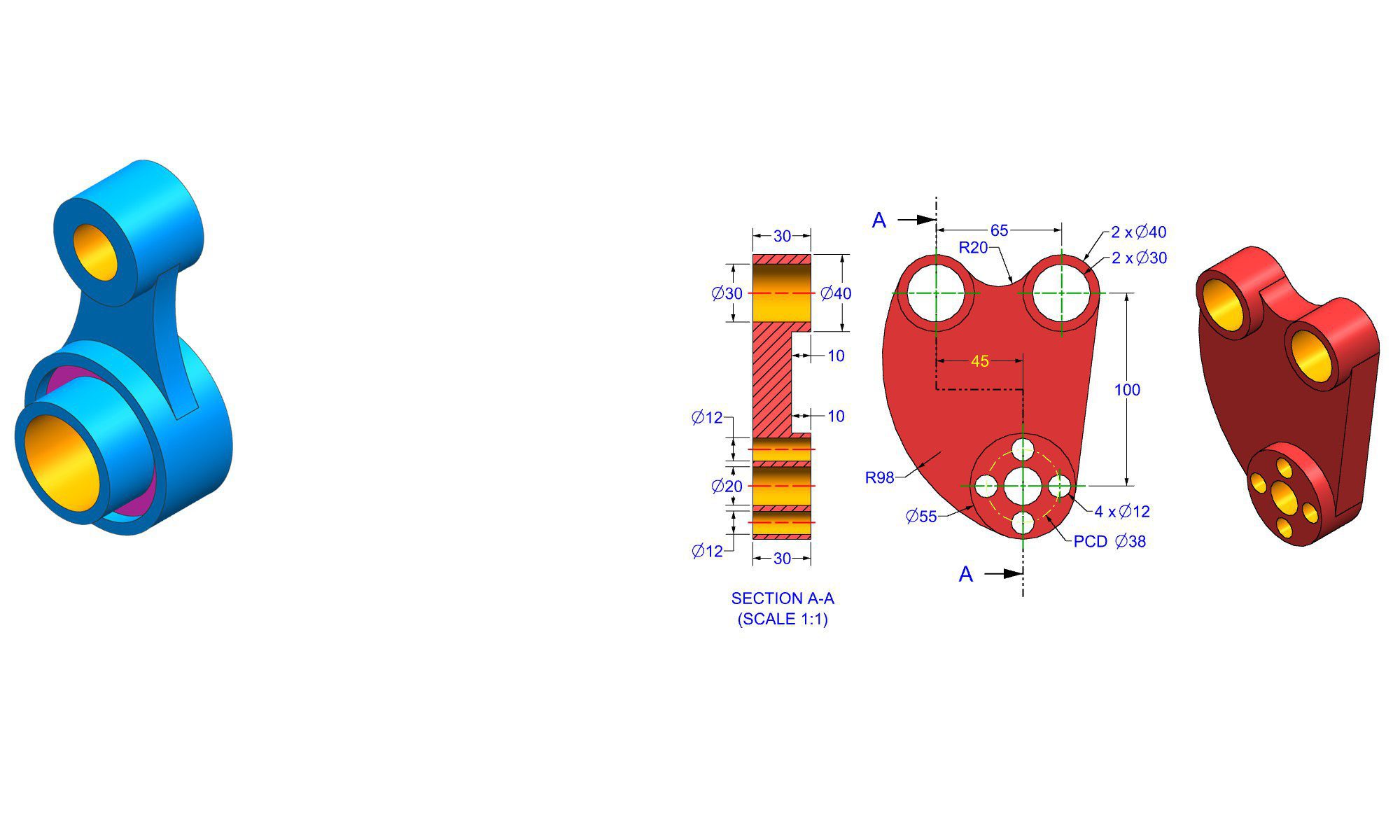

Meaning of Front Plane explained in SolidWorks

Introduction

In SolidWorks, understanding the concept of the “front plane” is fundamental for creating precise and effectively structured 3D models. The front plane acts as an initial reference surface used during the sketching and modeling process. Recognizing its significance ensures better control over your designs, eases the assembly process, and enhances overall CAD productivity. In this comprehensive guide, we will explore the meaning of the front plane in SolidWorks, how to utilize it properly, and best practices for optimizing your modeling workflow.

What is the Front Plane in SolidWorks?

The front plane in SolidWorks is one of the three default reference planes—along with the Top plane and Right plane—that come pre-established when you start a new part or assembly. It serves as a primary sketching surface, defining the feature’s orientation in the 3D space.

Key features of the front plane:

  • It acts as a base sketching surface from which geometry is created.
  • It is oriented perpendicular to the top and right planes.
  • It facilitates the creation of symmetrical and precisely positioned features.

Understanding the front plane’s orientation and role is essential for creating clean, aligned models that meet your design intent.

How to Use the Front Plane in SolidWorks: Step-by-Step

Using the front plane effectively involves a mix of initial setup, sketching, and feature creation. Here’s a practical step-by-step guide:

1. Accessing the Front Plane

  • Open a new part in SolidWorks.
  • In the Feature Manager Tree, locate the default planes: Top, Front, Right.
  • Select the “Front Plane” to begin your sketch or feature creation.

2. Creating a Sketch on the Front Plane

  • Right-click on the “Front Plane.”
  • Choose “Sketch” from the context menu.
  • The sketching environment opens, with the front plane as the active sketch plane.

3. Sketching Basic Geometry

  • Use sketch tools such as lines, circles, rectangles, and arcs.
  • Dimension your sketch accurately using the Smart Dimension tool.
  • Plan your design layout with the front plane as the primary reference.

4. Extruding or Revolving Features from the Sketch

  • After completing the sketch, select features like “Extruded Boss/Base” or “Revolved Boss/Base.”
  • Ensure “Sketch Plane” is set to the front plane or associated sketch.
  • Adjust feature parameters to create 3D geometry aligned along the front plane.

5. Moving or Mirroring Sketches

  • Use the “Mirror Entities” tool to create symmetrical features about the front plane.
  • Apply relations or constraints to keep dimensions and geometry consistent with the front plane as a reference.

6. Adjusting the Front Plane Position

  • If needed, right-click the front plane and select “Define” or “Move/Copy” to reposition it.
  • You can also create new planes parallel or perpendicular to the front plane for advanced features.

Real-World Examples of Using the Front Plane

Understanding theoretical concepts becomes clearer with practical applications. Here are real-world examples:

  • Creating a symmetric gear or pulley: Sketch half the profile on the front plane and mirror it across the plane to ensure perfect symmetry.
  • Designing enclosures: Begin the primary outline on the front plane to precisely control width and height.
  • Assembly alignment: Use the front plane to position components accurately relative to each other.

Common Mistakes When Using the Front Plane

Mistakes in using the front plane can lead to misaligned parts, complex revisions, or errors in manufacturing.

1. Skipping the initial sketch setup

  • Failing to sketch directly on the front plane can cause misalignment issues.

2. Overlooking proper constraints

  • Ignoring references or constraints related to the front plane may lead to unintended geometry movements.

3. Moving the front plane unnecessarily

  • Repositioning the default planes without proper understanding can complicate downstream features.

4. Not defining coordinate systems

  • Neglecting to establish origin points or planes aligned with the front plane reduces geometric control.

Best Practices and Pro Tips for Leveraging the Front Plane

  1. Always start your sketches on the appropriate plane to ensure geometry accuracy.
  2. Use mirrored features to maintain symmetry about the front plane.
  3. Create reference geometry like axes or points on the front plane for complex assemblies.
  4. Reposition the front plane deliberately when your design requires a different initial orientation.
  5. Keep the default planes intact unless absolutely necessary to move or redefine them.
  6. Use configurations or alternate planes for design variations, keeping the front plane as a consistent reference.

Comparing the Front Plane with Other Reference Planes

Aspect Front Plane Top Plane Right Plane
Default position Vertical, front-facing Horizontal, top-facing Vertical, side-facing
Main use Sketching front views Sketching top views Sketching side views
Orientation Perpendicular to Top and Right planes Perpendicular to Front and Right planes Perpendicular to Front and Top planes
Commonly used in Front view sketches Top view sketches Side view sketches

Understanding these differences allows for better spatial planning and more intuitive modeling workflows.

Conclusion

The front plane in SolidWorks serves as a fundamental reference for sketching and model creation. Its proper use enhances the accuracy, symmetry, and clarity of your designs. By mastering how to utilize, modify, and position the front plane effectively, you gain greater control over your CAD projects. Whether you’re a beginner or experienced designer, leveraging this crucial reference plane will streamline your workflow and lead to more precise, professional-quality models.

FAQ

1. What is the primary function of the front plane in SolidWorks?

Ans: The primary function of the front plane is to serve as a reference surface for sketching and modeling in a front-facing orientation.

2. Can I move or redefine the default front plane in SolidWorks?

Ans: Yes, you can move or redefine the front plane by right-clicking and selecting “Define” or creating new reference planes parallel or perpendicular to it.

3. How does the front plane differ from the top and right planes?

Ans: The front plane is oriented vertically in the front view, while the top plane is horizontal, and the right plane is vertical in the side view.

4. Why is it important to sketch on the front plane?

Ans: Sketching on the front plane ensures proper orientation, alignment, and symmetry, especially for features viewed from the front.

5. What are some tips for ensuring symmetry when using the front plane?

Ans: Use mirror entities, constrain geometry symmetrically, and reference the front plane for accurate and balanced features.

6. Can the front plane be used for creating assemblies?

Ans: Yes, the front plane can serve as a reference for positioning and aligning components within an assembly.

7. Is it necessary to keep the default reference planes unchanged?

Ans: Not always, but it’s good practice to keep them until you understand the impact of modifying them; creating custom planes is often more advantageous for complex designs.

Understanding planes in SolidWorks easily

Introduction

Understanding planes in SolidWorks easily is fundamental for creating precise and efficient 3D models. Planes serve as foundational reference points, enabling designers to sketch, model, and assemble parts with accuracy. Whether you’re a beginner learning the basics or a seasoned user refining your skills, mastering how to create and manage planes in SolidWorks is essential for productivity. This guide provides a comprehensive, step-by-step overview of how to work with planes in SolidWorks, along with practical tips and common mistakes to avoid. By the end, you’ll be equipped to confidently utilize planes to enhance your 3D modeling workflows.

What Are Planes in SolidWorks?

Planes in SolidWorks are flat, two-dimensional surfaces that serve as references for creating sketches, extrusions, cuts, and other features. They are invisible in the final part but are critical for defining geometry, orientations, and positioning of features accurately. Think of planes as the “drawing sheets” or “building surfaces” that allow you to sketch precisely where needed.

Common Types of Planes in SolidWorks

  • Default planes: Front, Top, and Right planes that come with every new part.
  • User-defined planes: Custom planes created by users for specific design needs.
  • Reference planes: Additional planes created parallel, perpendicular, or at specific angles to existing geometry.
  • Plane of sketches: Planes on which 2D sketches are drawn.

How to Create Planes in SolidWorks: Step-by-Step Guide

Creating planes effectively is central to advanced modeling. Here are the most common methods:

1. Creating the Default Planes

  • These are automatically available when you start a new part.
  • They serve as primary references.

2. Creating a New Plane Using the “Plane” Tool

  1. Open your SolidWorks part workspace.
  2. Go to the Features tab in CommandManager.
  3. Click on the Plane icon.

How to define a new plane:

  • Option A: Plane parallel to an existing plane
  • Select the plane you want to reference (e.g., Top plane).
  • Specify the distance from the reference plane.
  • Click OK.
  • Option B: Plane at an angle
  • Select two or more faces/edges.
  • Choose the Angle option.
  • Set the desired angle.
  • Confirm with OK.
  • Option C: Plane through a point and an edge/face
  • Select a point and a face or edge.
  • Adjust the options to position the plane.

3. Creating a Plane Using the “Reference Geometry” Menu

  • Access Insert > Reference Geometry > Plane.
  • Similar options are available for defining the plane’s orientation relative to existing geometry.

4. Using “Plane at Distance” from Existing Geometry

  • Select an existing face or plane.
  • Specify a clear distance.
  • Create the new reference plane at the desired offset.

5. Creating Plane with the “Plane Through Three Points”

  • Select three points in space.
  • Define a plane passing through these points, useful for complex geometries.

Practical Examples of Using Planes in SolidWorks

Example 1: Creating a Side Pocket in a Rectangular Block

  1. Start with a rectangle extrusion.
  2. Create a new plane offset from the Top plane where the pocket should be.
  3. Use this plane to sketch the shape of the pocket.
  4. Extrude cut to create the pocket.

Example 2: Adding an Angle Cut

  1. Create a plane at an angle to the main face.
  2. Sketch the cut profile on this angled plane.
  3. Use extrude cut to form the angled feature.

Example 3: Symmetric Parting Line

  • Create a plane through the center of the part.
  • Use it as a reference for symmetric features or assembly.

Common Mistakes When Working with Planes

  • Incorrect referencing: Selecting the wrong face or edge, causing misaligned sketches.
  • Over-complicating planes: Creating too many planes unnecessarily, which can clutter your workspace.
  • Forgetting to suppress or hide unused planes: Leading to confusion.
  • Not updating dependent features: Resulting in geometry failures if the reference geometry moves or changes.

Best Practices and Tips for Working with Planes

  • Always name your planes for easier identification, especially in complex models.
  • Use simple, direct references initially before complex arrangements.
  • Keep track of dependencies; understand how changes to parent geometry affect dependent planes.
  • Use the “Display/Delete Relations” tool to manage reference relations.
  • Simplify your workflow by creating planes only when necessary.

Comparing Planes to Other Reference Tools in SolidWorks

Tool Purpose Typical Use Case Pros Cons
Planes Create flat reference surfaces Sketching, feature positioning Flexible and precise Can clutter workspace if overused
Axis Define rotational centers Revolves, pattern features Precise axis control Limited to rotational geometry
Points Reference locations Sketching, feature origins Simple, positional Less flexible for complex references

Conclusion

Mastering planes in SolidWorks easily unlocks the ability to create complex, precise, and well-organized 3D models. Understanding how and when to create different types of planes, along with practical application tips, enhances your modeling efficiency. Whether you’re positioning features, creating intricate geometries, or preparing for assembly, planes serve as essential tools for accurate design. Practice regularly, keep references organized, and utilize best practices to streamline your workflow and achieve professional results.

FAQ

1. How do I create a plane exactly halfway between two faces in SolidWorks?

Ans: Select both faces and use the “Midplane” option in the Plane PropertyManager to create a plane at the midpoint.

2. Can I create a plane at an arbitrary angle in SolidWorks?

Ans: Yes, choose the “Plane” tool, select two references or an edge, and specify the angle in the dialog box.

3. What is the best way to organize multiple custom planes in a complex model?

Ans: Name each plane clearly and keep a logical sequence, suppress unused planes, and use folders and comments for clarity.

4. How do I delete or hide unnecessary planes?

Ans: Right-click the plane in the FeatureManager design tree and select “Hide” or “Delete” to remove it from the workspace.

5. Are default planes sufficient for most modeling tasks?

Ans: Yes, default planes are sufficient for basic modeling, but custom planes are essential for advanced, complex features.

How to use section analysis In Fusion 360

Introduction

Section analysis in Fusion 360 is a powerful feature that allows engineers, designers, and hobbyists to examine the internal structure of complex parts and assemblies. It provides insight into the internal geometry, helps identify potential issues, and makes optimizing designs easier. Whether you’re performing stress analysis, inspecting internal features, or preparing for manufacturing, mastering section analysis is essential for efficient CAD workflows.

In this guide, we will explore how to use section analysis in Fusion 360 step-by-step. You will learn practical techniques, common pitfalls, and best practices—bringing clarity to your design process. By understanding this feature thoroughly, you can enhance your design accuracy, streamline simulations, and improve overall project outcomes.


What Is Section Analysis in Fusion 360?

Section analysis is a visualization tool within Fusion 360 that enables you to cut through a model and view its internal features without modifying the actual geometry. This dynamic feature provides a “slice” view at any specified plane, making it easier to inspect internal details, verify complex assemblies, or prepare models for manufacturing.

Its primary purpose is to give users a detailed look inside parts, identify interference issues, or verify internal channels. Understanding how to effectively use section analysis can significantly improve your design verification process.


How to Use Section Analysis in Fusion 360: Step-by-Step Guide

1. Opening Your Model

Start by opening the Fusion 360 project containing the part or assembly you want to analyze.

  • Ensure your model is saved and that all features are properly imported or designed.
  • Navigate to the “Design” workspace, where most modeling and analysis tools are available.

2. Accessing the Section Analysis Tool

To initiate section analysis:

  • Click on the “Inspect” dropdown menu in the toolbar.
  • Select “Section Analysis” from the list.

Alternatively, you can access it directly via the right-click context menu:

  • Right-click on the component or body.
  • Choose “Section Analysis” from the context menu.

3. Creating and Positioning the Section Plane

Once activated, Fusion 360 automatically creates a section plane:

  • The default plane is typically aligned with the XY, YZ, or ZX planes.
  • To move the section plane:
  • Drag the arrow or handle to the desired location.
  • Use the “Direction” dialog box to specify an exact coordinate or plane.
  • To rotate the section plane:
  • Rotate the arrow using the handles that appear, aligning the plane perpendicular to the desired cutting face.

4. Adjusting Section Parameters

Refinement improves the clarity of your section:

  • Use the “Offset” option to move the section plane closer or farther from the model.
  • Select the “Flip” option to change the viewing direction.
  • Enable or disable the “Slice” option to show only the portion of the model in front of or behind the plane.

5. Visualizing the Internal Features

After positioning:

  • Observe the sectioned view in real-time.
  • Use the “Hide/Show” options in the browser to hide parts or other features for better visibility.
  • Adjust transparency of surfaces, if necessary, for in-depth inspection.

6. Annotating and Exporting the Section View

For documentation and communication:

  • Add annotations or notes directly on the section view.
  • Capture screenshots for reports.
  • Export the view as an image or render for presentations.

Practical Examples of Using Section Analysis

Example 1: Inspecting Internal Channels in a Pump Housing

  • Use section analysis to verify that internal coolant channels are correctly aligned.
  • Check for any interference or misalignment prior to manufacturing.

Example 2: Verifying Complex Assemblies

  • Slice through assemblies to check for interference between components.
  • Ensure that internal features like fastener holes align correctly within the assembled parts.

Example 3: Stress Analysis Preparation

  • Use section analysis to identify critical regions for detailed stress simulations.
  • Isolate internal features to understand load distribution better.

Common Mistakes When Using Section Analysis in Fusion 360

  • Not updating the section plane after moving it: Remember to refresh or reposition the plane as needed during iterative inspections.
  • Overlooking transparency settings: Failing to adjust surface transparency can obscure internal features.
  • Ignoring the direction of the slice: Flipping the section view without consideration can give misleading perspectives.
  • Forgetting to save or capture views: Always save important views for future reference or documentation.
  • Using overly complex models: Large or highly detailed models may slow down Fusion 360; simplify or sectionalize the model if needed.

Tips and Best Practices for Effective Section Analysis

  • Use named views: Save orientations for quick access during multiple analyses.
  • Combine with section boxes: Use the section box feature for more controlled and uniform cuts.
  • Leverage section analysis with motion studies: See internal features dynamically during an assembly animation.
  • Maintain model clarity: Simplify your models where possible to keep the section analysis responsive.
  • Document regularly: Capture images and annotations at each step for comprehensive reporting.

Comparing Section Analysis with Other View Techniques

Technique Purpose Pros Cons
Section Analysis Inspect internal features dynamically Non-destructive, flexible May require adjustment for clarity
Exploded View Show component relationships Clear assembly breakdown Not for internal inspection
Cross-Section View in Drawings View slices in 2D documentation Precise for documentation Static, less interactive
Transparent Mode Make entire model transparent General internal visibility Can obscure details if overused

Section analysis is unique in its ability to provide interactive, dynamic internal views, making it highly suitable for detailed inspections.


Conclusion

Mastering section analysis in Fusion 360 empowers you to thoroughly inspect your designs, identify potential issues, and prepare your models for manufacturing with confidence. By following the step-by-step instructions, practicing with real-world examples, and avoiding common pitfalls, you can leverage this powerful tool to enhance your CAD workflow.

Whether you’re verifying internal features, preparing for stress analysis, or documenting your design process, section analysis is an indispensable feature that unlocks deeper insights into your models. Incorporate it into your regular design practices and experience improved accuracy and efficiency.


FAQ

1. How do I move the section plane to a specific location in Fusion 360?

Ans: Use the “Section Analysis” tool, then drag or input precise coordinate values to position the section plane exactly where needed.

2. Can I animate or animate the section plane in Fusion 360?

Ans: Not directly; however, you can manually adjust the section plane for different positions or use parameters and CAM features for simulation purposes.

3. How do I create multiple section planes in one model?

Ans: You can create multiple instances of the section analysis or utilize section boxes to slice your model at different locations sequentially.

4. What is the best way to export a section view for presentation?

Ans: Capture a screenshot of the section view or use the “Render” workspace to create high-quality images suitable for presentations.

5. Can section analysis be used in assemblies?

Ans: Yes, section analysis can be applied to assemblies to inspect internal parts and verify clearances without disassembling components.


End of Blog


Fusion 360 Workbook Cover

After purchasing, a download link will be sent instantly to your email.

Buy Now For $27.99

Are you a student or Unemployed? Get this bundle for $19.99

Offer for Students Buy Now For $19.99

Buy Paperback on Amazon.com

Autodesk Fusion 360 All-in-One Workbook

500+ Practice Exercises to Master Autodesk Fusion 360 through real-world practice!

This all-in-one workbook is your ultimate resource to develop hands-on CAD skills with Autodesk Fusion 360. Whether you’re a student, engineer, hobbyist, or professional, this guide is built to help you gain real design confidence through structured practice.

What’s Inside this Book:

  • 200 2D Sketching Exercises – Build a strong foundation in dimension-driven 2D geometry and technical drawings
  • 200 3D Modeling Exercises – Practice modeling real-world parts, from simple shapes to complex components.
  • Multi-Part Assembly Projects – Understand how parts fit together and create full assemblies with detailed drawings

🎯 Why This Book?

  • 500+ practice exercises following real design standards
  • Designed for self-paced learning & independent practice
  • Perfect for classrooms, technical interview preparation, and personal projects
  • Covers 2D Sketching, 3D Modeling & Assembly Design in one workbook
  • Trusted by 15,000+ CAD learners worldwide

After purchasing, a download link will be sent instantly to your email.

Buy Now For $27.99

Are you a student or Unemployed? Get this bundle for $19.99

Offer for Students Buy Now For $19.99

Buy Paperback on Amazon.com

How to split using plane In Fusion 360

Introduction

Splitting a model using a plane in Fusion 360 is a fundamental technique that allows you to modify, analyze, or prepare your designs for manufacturing. Whether you want to cut away parts, create sections for visualization, or prepare your model for assembly, knowing how to split with a plane provides significant flexibility. This guide takes you through the step-by-step process of how to split using a plane in Fusion 360, covering practical tips, common mistakes, and best practices for optimal results. By mastering this skill, you can streamline your workflow and improve your CAD modeling capabilities.

How to Split Using a Plane in Fusion 360: Step-by-Step Guide

Fusion 360 offers multiple methods to split a model with a plane. The most straightforward approach involves using the ‘Split Body’ or ‘Split Face’ tools, which can be accessed through the Solid tab. Here’s how to do it effectively:

1. Prepare Your Model and Workspace

  • Open your Fusion 360 project.
  • Ensure your model is fully modeled and ready to be split.
  • Save your file to prevent accidental loss during editing.
  • Set the workspace to the ‘Design’ environment.

2. Create a Cutting Plane

You have several options for creating a plane to split your model:

  • Use an existing plane: Select from XY, YZ, or ZX planes.
  • Create a new reference plane: Use the ‘Construct’ dropdown menu to select options like ‘Offset Plane,’ ‘Plane at Angle,’ or ‘ Tangent Plane.’

To create an offset plane:

  • Go to ‘Construct’ > ‘Offset Plane.’
  • Select a base plane (e.g., XY plane).
  • Drag or input a specific distance to position the new plane where you want to split.

3. Position the Plane Precisely

For accurate splits:

  • Use measurements or constraints to position the plane exactly.
  • Enter specific values in the dialog box for the offset distance.
  • Check the visual alignment in the canvas before proceeding.

4. Use the Split Tool

Fusion 360 provides different split options based on your needs:

To split the entire body:

  • Switch to the ‘Solid’ tab.
  • Click on ‘Modify’ > ‘Split Body.’

To split a face or part:

  • Use ‘Split Face’ or ‘Split’ depending on your desired operation.

5. Select Objects and the Splitting Tool

  • Select the body you want to split in the workspace.
  • Choose the splitting tool—the plane you created earlier.
  • Confirm the selections in the dialog box.

6. Execute the Split

  • Click ‘OK.’
  • Fusion 360 splits the selected body using the plane as the cutting surface, creating separate bodies or faces.

7. Verify and Refine the Split

  • Rotate and inspect your model.
  • Use the ‘Inspect’ > ‘Section Analysis’ feature for cross-sectional views.
  • If needed, adjust the position of your plane and repeat the split process for different sections.

Practical Example: Creating a Cross-Section for Analysis

Suppose you want to analyze the internal structure of a complex model:

  • Follow the above steps to create an offset plane through the model’s midpoint.
  • Use ‘Split Body’ to cut the model into two halves.
  • Use ‘Section Analysis’ to view internal features clearly.

This method helps in quality checks, internal feature inspection, or preparing for manufacturing.

Common Mistakes When Splitting Using a Plane

  1. Incorrect plane positioning: Misaligned or off-centered planes can lead to unintended splits. Always double-check the plane’s placement.
  2. Not selecting the correct bodies: Ensure you select the specific bodies or faces for splitting.
  3. Forgetting to confirm the split: Remember to click ‘OK’ to execute; otherwise, the operation won’t perform.
  4. Splitting incomplete bodies: If splitting complex assemblies, ensure all parts are selected properly.
  5. Ignoring the resulting bodies: Sometimes split bodies merge unintentionally if not managed correctly; verify the split results.

Tips and Best Practices for Effective Splitting

  • Use construction planes for precise control.
  • Create multiple planes for complex sectioning.
  • Combine with section analysis tools for validation.
  • Keep original models unaltered by duplicating bodies before splitting.
  • Use a combination of split and project commands for intricate designs.

Comparison: Split Body vs. Split Face

Feature Split Body Split Face
Purpose Dividing entire solid bodies Splitting a single face or surface
Use case Creating separate parts for assembly Preparing surfaces for further operations
Result Multiple bodies from one or more bodies Modified faces, remains part of the same body
Typical tools ‘Split Body’ in the Modify menu ‘Split Face’ in the Surface dropdown

Understanding these differences helps you choose the right method for your specific needs.

Conclusion

Mastering how to split using a plane in Fusion 360 opens up numerous possibilities for editing, analyzing, and refining your designs. By creating precise reference planes, properly positioning them, and utilizing the split tools, you can efficiently dissect complex models for various purposes. Remember to double-check your planes’ position, verify your split results, and experiment with different methods to optimize your workflow. With consistent practice, splitting models in Fusion 360 becomes an intuitive process that significantly enhances your CAD capabilities.

FAQ

1. How do I create a custom plane for splitting in Fusion 360?

Ans: Use the ‘Construct’ menu to select options like ‘Offset Plane’ or ‘Plane at Angle’ to create a custom splitting plane.

2. Can I split a body using multiple planes at once?

Ans: No, Fusion 360’s split tools operate with one plane at a time, but you can perform sequential splits with different planes.

3. How do I split a complex assembly into parts?

Ans: Select individual bodies within the assembly and use ‘Split Body’ with appropriately positioned planes to separate parts.

4. What should I do if the split doesn’t work as expected?

Ans: Ensure you have correctly selected the body and plane, confirm the plane’s position, and check for any geometry issues that might prevent splitting.

5. Is it possible to undo a split operation?

Ans: Yes, use the undo command or revert to a saved version before the split operation.

6. Can I split using a non-planar surface?

Ans: No, Fusion 360’s split tools require a planar or reference plane; splitting with curved surfaces requires different techniques like ‘Splitting with a Surface.’

7. How do I automate splitting in Fusion 360?

Ans: Use scripts or APIs for automation, but for most users, manual splitting with planes is straightforward and sufficient.


End of Blog


Fusion 360 Workbook Cover

After purchasing, a download link will be sent instantly to your email.

Buy Now For $27.99

Are you a student or Unemployed? Get this bundle for $19.99

Offer for Students Buy Now For $19.99

Buy Paperback on Amazon.com

Autodesk Fusion 360 All-in-One Workbook

500+ Practice Exercises to Master Autodesk Fusion 360 through real-world practice!

This all-in-one workbook is your ultimate resource to develop hands-on CAD skills with Autodesk Fusion 360. Whether you’re a student, engineer, hobbyist, or professional, this guide is built to help you gain real design confidence through structured practice.

What’s Inside this Book:

  • 200 2D Sketching Exercises – Build a strong foundation in dimension-driven 2D geometry and technical drawings
  • 200 3D Modeling Exercises – Practice modeling real-world parts, from simple shapes to complex components.
  • Multi-Part Assembly Projects – Understand how parts fit together and create full assemblies with detailed drawings

🎯 Why This Book?

  • 500+ practice exercises following real design standards
  • Designed for self-paced learning & independent practice
  • Perfect for classrooms, technical interview preparation, and personal projects
  • Covers 2D Sketching, 3D Modeling & Assembly Design in one workbook
  • Trusted by 15,000+ CAD learners worldwide

After purchasing, a download link will be sent instantly to your email.

Buy Now For $27.99

Are you a student or Unemployed? Get this bundle for $19.99

Offer for Students Buy Now For $19.99

Buy Paperback on Amazon.com

Why mirror fails sometimes In Fusion 360

Introduction

The mirror feature in Fusion 360 is an essential tool for engineers, designers, and hobbyists looking to create symmetrical models efficiently. However, users sometimes encounter situations where the mirror fails to work as expected. Understanding why mirror fails sometimes in Fusion 360 is crucial to troubleshoot effectively and streamline your design process. Whether it’s due to geometric issues, improper selection, or software glitches, knowing the common causes can save you time and frustration. This guide dives into the technical reasons behind mirror failures, provides practical solutions, and shares best practices to ensure your models mirror perfectly every time.

Why Mirror Fails Sometimes in Fusion 360

Fusion 360’s mirror feature is generally reliable, but several factors can lead to failures or unexpected results. These failures can originate from issues within the model, incorrect settings, or limitations of the software itself. Recognizing these causes helps users refine their workflow and avoid common pitfalls.

1. Incorrect Selection of Mirror Plane or Face

One of the most frequent reasons for mirror failures is selecting the wrong plane or reference face for mirroring.

  • The mirror plane must be properly defined and aligned with the model.
  • Selecting a face or plane not perpendicular or not aligned properly can result in a mirrored object that appears off or incomplete.
  • Ensure that the mirror plane lies exactly where you intend the symmetry to occur.

2. Geometry or Topology Issues in the Model

Models with complex geometry, broken edges, or gaps can impede the mirror operation.

  • Open or inconsistent topology can cause Fusion 360 to struggle with creating a mirrored copy.
  • Check for gaps, missing faces, or overlapping components.
  • Use the “Inspect” tool to identify problem areas before attempting to mirror.

3. The Original Components or Bodies are Not Fully Constrained

Unconstrained or loosely constrained bodies might behave unpredictably during mirror operations.

  • Make sure the original sketch or body is fully constrained.
  • Moving or modifying unconstrained geometry can cause mirror failures due to unresolved references.

4. Wrong Object Type Selected for Mirroring

Fusion 360 distinguishes between bodies, components, sketches, and faces.

  • Mirroring a sketch differs from mirroring a solid body.
  • Attempting to mirror incompatible object types or using the wrong tool can result in failure.
  • Confirm you are selecting the correct object type for your intended operation.

5. Fusion 360 Software Bugs or Glitches

Occasionally, software glitches or temporary bugs can interfere with the mirror function.

  • Restart Fusion 360 if you encounter persistent issues.
  • Ensure you’re running the latest version, as updates often fix bugs.
  • Clear cache or reset preferences if needed.

6. Insufficient System Resources or Performance Issues

Large, complex models can cause performance hiccups, affecting tools like mirror.

  • Use simplified models for initial mirror operations and add detail afterward.
  • Close unnecessary applications to free system resources.
  • Save regularly to prevent data loss during crashes.

How to Troubleshoot Mirror Failures: Step-by-Step

When encountering a mirror failure, follow these steps to diagnose and resolve common issues:

1. Verify the Mirror Plane or Face

  • Select the plane or face carefully.
  • Use the “Inspect” tool to confirm its orientation.
  • Ensure the plane is properly aligned with your model.

2. Examine Model Geometry

  • Use the “Repair” or “Analyze” tools.
  • Fix gaps, overlaps, or missing faces.
  • Simplify overly complex geometry if necessary.

3. Confirm Selected Objects are Suitable

  • Check whether you are selecting bodies, sketches, or faces.
  • Use the correct mirror tool suited for your object type.

4. Ensure Constraints and Relations are Correct

  • Fully constrain sketches.
  • Resolve any dangling or unresolved references.

5. Test with a Simple Model

  • Create a simple model and attempt to mirror.
  • If it works, compare with your complex model to identify discrepancies.

6. Update and Restart Fusion 360

  • Save your work.
  • Check for software updates.
  • Restart Fusion 360 and try again.

Practical Example: Mirroring a Simple Part

Suppose you’re designing a bracket that should be symmetrical. Here’s how to do it effectively:

  • Sketch the half of the bracket.
  • Fully constrain the sketch.
  • Finish the sketch.
  • Select the sketch or the body.
  • Choose the “Mirror” command.
  • Select the appropriate mirror plane (e.g., XY plane).
  • Confirm the operation creates a symmetric counterpart.
  • Check for gaps or overlaps before proceeding.

Common Mistakes to Avoid

  • Selecting an incorrect mirror plane that doesn’t align with the geometry.
  • Forgetting to fully constrain sketches before mirroring.
  • Mirroring incompatible object types.
  • Ignoring geometry issues like gaps or overlapping faces.

Best Practices for Successful Mirroring

  • Always fully constrain your sketches before mirroring.
  • Use simple, clear reference planes aligned with your model.
  • Regularly check for geometry issues before applying mirror.
  • Keep software updated for the best stability.
  • Save your work frequently during complex operations.

Comparing Mirroring Types: Features and Limitations

Mirroring Type Suitable For Limitations Best Practice
Sketch Mirror Sketch entities Cannot mirror 3D bodies; limited to sketches Use after sketch constraints are complete
Body/Component Mirror 3D bodies, components May fail with complex geometries or open parts Simplify geometry before mirroring

Understanding which mirror type to use based on your design stage helps prevent failures.

Conclusion

Mirror failures in Fusion 360 often stem from selection errors, geometry issues, or software glitches. By carefully verifying your mirror plane, ensuring your geometry is clean and constrained, and staying updated with the latest software versions, you can prevent most common problems. Practice with simple models first, and gradually work on more complex projects to build confidence in using the mirror feature effectively. Correctly applied, this powerful tool dramatically speeds up your workflow and ensures symmetrical accuracy in your designs.

FAQ

1. Why does my mirror in Fusion 360 not create a perfect symmetrical model?

Ans: It’s typically because the mirror plane is incorrectly aligned or the original geometry is not fully constrained or clean.

2. How can I fix geometry issues that cause mirror failures?

Ans: Use Fusion 360’s “Repair” or “Inspect” tools to identify and fix gaps, overlaps, or missing faces before attempting to mirror.

3. Can I mirror a finished 3D model without issues?

Ans: Yes, but ensure the model is free of complex geometry issues and fully constrained; simplifying complex parts often helps.

4. What should I do if the mirror command crashes or freezes?

Ans: Save your work immediately, restart Fusion 360, check for updates, and try simplifying your model or using a different mirror approach.

5. Is it possible to mirror only specific features instead of entire bodies?

Ans: Yes, you can select specific sketch elements or faces to mirror, but make sure they are compatible and properly constrained for best results.

6. How do I ensure my mirrored geometry stays aligned during further edits?

Ans: Use constraining and parametric relations to keep mirrored parts properly aligned as you modify the original geometry.

7. Are there any shortcuts or tips to speed up the mirroring process?

Ans: Fully constrain your sketches first, use viewing shortcuts to align reference planes, and save frequently to prevent data loss.


End of Blog


Fusion 360 Workbook Cover

After purchasing, a download link will be sent instantly to your email.

Buy Now For $27.99

Are you a student or Unemployed? Get this bundle for $19.99

Offer for Students Buy Now For $19.99

Buy Paperback on Amazon.com

Autodesk Fusion 360 All-in-One Workbook

500+ Practice Exercises to Master Autodesk Fusion 360 through real-world practice!

This all-in-one workbook is your ultimate resource to develop hands-on CAD skills with Autodesk Fusion 360. Whether you’re a student, engineer, hobbyist, or professional, this guide is built to help you gain real design confidence through structured practice.

What’s Inside this Book:

  • 200 2D Sketching Exercises – Build a strong foundation in dimension-driven 2D geometry and technical drawings
  • 200 3D Modeling Exercises – Practice modeling real-world parts, from simple shapes to complex components.
  • Multi-Part Assembly Projects – Understand how parts fit together and create full assemblies with detailed drawings

🎯 Why This Book?

  • 500+ practice exercises following real design standards
  • Designed for self-paced learning & independent practice
  • Perfect for classrooms, technical interview preparation, and personal projects
  • Covers 2D Sketching, 3D Modeling & Assembly Design in one workbook
  • Trusted by 15,000+ CAD learners worldwide

After purchasing, a download link will be sent instantly to your email.

Buy Now For $27.99

Are you a student or Unemployed? Get this bundle for $19.99

Offer for Students Buy Now For $19.99

Buy Paperback on Amazon.com

How to mirror using midplane In Fusion 360

Introduction

Mirroring features in Fusion 360 are essential for creating symmetrical parts efficiently, especially when designing complex geometries or assemblies. Among the various mirroring techniques, using the midplane method offers precise control and accuracy, making it a popular choice among designers and engineers. If you’re wondering how to mirror using midplane in Fusion 360, this comprehensive guide will walk you through each step, providing practical tips and common pitfalls to avoid. By mastering this technique, you’ll streamline your modeling process and produce more professional, symmetric designs with ease.

Understanding the Midplane Mirror in Fusion 360

Before diving into the step-by-step process, it’s important to understand what the midplane mirror does. Unlike other mirror options that duplicate geometry across a selected face or plane, the midplane mirror creates a precise reflection that divides your design into two equal halves. It’s especially useful when you want to maintain symmetry about an exact central axis.

Why Use Midplane Mirroring?

  • Ensures geometric symmetry across an axis
  • Ideal for creating faces or features symmetric about a center line
  • Maintains design intent for assembly and manufacturing
  • Simplifies modifications on symmetric parts

How to Mirror Using Midplane in Fusion 360: Step-by-Step Instructions

Here, you’ll find detailed, clear instructions to perform a midplane mirror efficiently.

1. Prepare Your Model

  • Ensure your model or the part you want to mirror is properly created.
  • Complete the initial features before starting the mirroring process.
  • Identify the central axis or plane about which you want to mirror the geometry.

2. Create a Midplane or Use an Existing Midplane

  • If you already have a plane at the desired symmetry plane, proceed to step 4.
  • Otherwise, create a midplane:
  • Method A: Using Two Faces or Edges
  • Select two parallel faces or edge lines from opposite sides.
  • Click on “Construct” > “Midplane.”
  • Fusion 360 will generate a new plane equidistant from both.
  • Method B: Using Sketch or Construction
  • Open your sketch workspace.
  • Draw a line at the intended center.
  • Convert it into a construction line if necessary.

3. Select the Mirror Tool

  • Go to the Create menu or Solid tab.
  • Select Mirror from the dropdown options.

4. Choose the Geometry to Mirror

  • Select the features, bodies, or faces you want to mirror.
  • This could be entire bodies, faces, features, or sketches.

5. Select the Midplane for Mirroring

  • Under “Mirror Type,” choose About a Plane (if available).
  • Select the midplane or the plane you created at step 2.
  • Confirm the selection.

6. Verify the Result

  • Review the mirrored geometry to ensure it aligns correctly.
  • If off or incorrect, check if the plane is the actual midplane and properly positioned.
  • Use the Inspect tool to measure the distances if needed.

7. Finalize and Constrain the Symmetry (Optional)

  • For added control, you can apply constraints or construction lines to lock the symmetry.
  • This is helpful if further modifications are needed.

Practical Examples of Midplane Mirroring in Fusion 360

Example 1: Mirroring a Mechanical Part

Suppose you’re designing a bracket with bilateral symmetry.

  • Create the initial half.
  • Construct a midplane in the center.
  • Use the mirror tool about this midplane.
  • Your part now has perfect symmetry, saving time.

Example 2: Symmetrical Hole Patterns

  • Sketch a pattern on one side.
  • Use the mirror function about a midplane to duplicate the pattern symmetrically.
  • This ensures precise placement without manual duplication.

Common Mistakes When Using Midplane Mirror

While this technique is straightforward, beginners often make these mistakes:

  • Selecting the wrong plane: Ensure the plane is truly at the center for accurate symmetry.
  • Wrong selection of geometry: Double-check what is selected for mirroring—accidentally selecting extra features can lead to undesirable results.
  • Ignoring the direction of the mirror: Confirm the mirror plane is correctly oriented, especially with complex geometries.

Pro Tips and Best Practices

  • Always create and verify your midplane before performing the mirror.
  • Use construction planes for clarity.
  • Combine mirroring with parametric constraints for flexible designs.
  • Save versions before major mirror operations to revert if needed.
  • Use the “Capture Design History” feature to keep track of your changes.

Comparing Midplane Mirror with Other Mirroring Methods

Mirror Method Best for Advantages Limitations
Midplane Symmetry across a defined center plane Precise control, maintains symmetry Requires establishing a midplane first
Face/Plane Mirror Symmetry across an existing face or sketch Quick for existing faces Less control for true mid-plane symmetry
Pattern (Rectangular/Pole) Repeating features across a pattern Efficient for multiple features Not suitable for full-body mirroring

Conclusion

Learning how to mirror using midplane in Fusion 360 unlocks powerful design efficiencies and ensures your models are accurate and symmetrical. By following the step-by-step process, understanding the importance of the midplane, and avoiding common pitfalls, you can streamline your workflow for creating professional and precise designs. Mastering this technique serves as a foundation for more complex modeling and helps you produce high-quality engineering drawings and prototypes with less effort.

FAQ

1. How do I create a midplane in Fusion 360?

Ans : You can create a midplane by selecting two faces, edges, or features that are parallel and choosing “Construct” > “Midplane.”

2. Can I use the mirror feature without a midplane?

Ans : Yes, you can mirror about existing faces or planes, but for symmetry about a center line, a midplane is the most accurate.

3. What is the difference between face/plane mirror and midplane mirror in Fusion 360?

Ans : Face/plane mirror reflects geometry across an existing face or plane, whereas midplane mirror creates reflection about an intentionally established central plane for symmetry.

4. How do I ensure my mirrored geometry stays symmetrical during edits?

Ans : Constrain your original features and maintain the midplane so any edits to one side automatically reflect for symmetry.

5. Can I modify the midplane after creating a mirror?

Ans : Yes, you can adjust or move the midplane and reapply the mirror to update the symmetric features accordingly.

6. Is it possible to mirror bodies and components together using midplane?

Ans : Yes, you can select multiple bodies or components and mirror them about a midplane simultaneously.

7. What are common errors to avoid with midplane mirroring?

Ans : Ensure the midplane is correctly positioned at the center, select the right geometry, and verify the mirror orientation for accuracy.


End of Blog


Fusion 360 Workbook Cover

After purchasing, a download link will be sent instantly to your email.

Buy Now For $27.99

Are you a student or Unemployed? Get this bundle for $19.99

Offer for Students Buy Now For $19.99

Buy Paperback on Amazon.com

Autodesk Fusion 360 All-in-One Workbook

500+ Practice Exercises to Master Autodesk Fusion 360 through real-world practice!

This all-in-one workbook is your ultimate resource to develop hands-on CAD skills with Autodesk Fusion 360. Whether you’re a student, engineer, hobbyist, or professional, this guide is built to help you gain real design confidence through structured practice.

What’s Inside this Book:

  • 200 2D Sketching Exercises – Build a strong foundation in dimension-driven 2D geometry and technical drawings
  • 200 3D Modeling Exercises – Practice modeling real-world parts, from simple shapes to complex components.
  • Multi-Part Assembly Projects – Understand how parts fit together and create full assemblies with detailed drawings

🎯 Why This Book?

  • 500+ practice exercises following real design standards
  • Designed for self-paced learning & independent practice
  • Perfect for classrooms, technical interview preparation, and personal projects
  • Covers 2D Sketching, 3D Modeling & Assembly Design in one workbook
  • Trusted by 15,000+ CAD learners worldwide

After purchasing, a download link will be sent instantly to your email.

Buy Now For $27.99

Are you a student or Unemployed? Get this bundle for $19.99

Offer for Students Buy Now For $19.99

Buy Paperback on Amazon.com

How to choose mirror plane In Fusion 360

Introduction

Choosing the correct mirror plane in Fusion 360 is crucial for creating accurate, symmetrical parts and efficient modeling workflows. Whether designing mechanical components, aesthetic objects, or complex assemblies, understanding how to select and set the mirror plane can significantly streamline your design process. This guide walks you through the essentials of choosing a mirror plane in Fusion 360, providing step-by-step instructions, practical tips, and common pitfalls to avoid. Let’s dive into mastering mirror features for precise, professional CAD models.

Understanding Mirror Plane in Fusion 360

Before embarking on the actual selection process, it’s important to clarify what a mirror plane is within Fusion 360. The mirror plane acts as the “reflection surface” over which geometries, sketches, or components are duplicated symmetrically.

In Fusion 360, the mirror feature can be applied to sketches, bodies, components, or features, and the choice of the mirror plane directly influences how your design is reflected. The right plane ensures symmetry, reduces modeling time, and maintains design intent.


Step-by-Step Guide to Choosing a Mirror Plane in Fusion 360

1. Prepare Your Geometry

  • Ensure your geometry is correctly created, and identify the features or sketches that need to be mirrored.
  • For best results, keep your initial sketches or bodies organized and named appropriately.
  • Understand your symmetry requirements—whether it’s across an axis, a plane, or a custom mirror surface.

2. Decide the Type of Mirror Operation

Fusion 360 offers several methods to mirror geometry:

  • Mirror sketch entities
  • Mirror bodies or components
  • Mirror features within a body

Knowing what you need to mirror guides your choice of the mirror plane.

3. Choose the Appropriate Plane for Mirroring

Your primary options for mirror planes are:

  • Default planes (XY, YZ, XZ)
  • User-defined planes
  • Planes created from edges, faces, or sketches

Common practical choices:

  • XY Plane: For symmetry across the horizontal or vertical axes.
  • YZ or XZ Planes: For side or front symmetry.
  • Custom Plane: When symmetry is needed across an angled or offset surface.

4. Create or Select a Plane as the Mirror Plane

  • To select an existing plane:
  • Use the default planes available in Fusion 360.
  • Select the plane from the browser or directly in the workspace.
  • To create a custom plane:
  • Use Construct > Plane options.
  • Select edges, faces, or points to define your custom mirror plane.
  • Examples:
  • Offset Plane: Offset from an existing face.
  • Through Point & Edge: Creating a plane at a specific angle or location.

5. Applying the Mirror Command

  • For sketches:

1. Select Sketch > Mirror.

2. Choose the entities you want to mirror.

3. Pick the mirror line, which can be a line or a plane.

  • For bodies or components:

1. Select Solid > Create > Mirror.

2. Select the bodies or components.

3. Pick the mirror plane.

  • Confirm and verify the mirrored geometry is accurate.

6. Validate the Mirrored Geometry

  • Inspect your model for correct symmetry.
  • Check for overlapping or misplaced features.
  • Make adjustments by editing the mirror plane if needed.

Practical Examples of Choosing a Mirror Plane

Example 1: Symmetrical bracket

Suppose you’re designing a bracket with bilateral symmetry along the YZ plane:

  • Use the default YZ plane as the mirror plane.
  • Mirror the half-geometry across this plane for a complete symmetrical part.

Example 2: Complex shape with an inclined axis

Designing an aerodynamic feature with symmetry along an inclined surface:

  • Create a custom tilted plane through Construct > Plane at Angle.
  • Use this plane as the mirror surface to replicate features accurately.

Common Mistakes and How to Avoid Them

  1. Using the wrong plane:

Always verify the orientation of the plane before mirroring. Misalignment causes asymmetry.

  1. Not creating necessary construction planes:

When default planes don’t align with your symmetry axis, create custom planes for precision.

  1. Mirroring after unorganized geometry:

Clean up sketches or bodies before mirroring to avoid unintended overlaps or errors.

  1. Forgetting to fix references:

Once you create a custom plane, keep track of it in the browser to avoid lost references.


Pro Tips and Best Practices for Choosing Mirror Planes

  • Always visualize the plane before completing the mirror operation—use section views or axis displays.
  • Use construction planes for complex or angled symmetry lines.
  • Combine multiple mirror operations for intricate designs to maintain consistency.
  • Keep your model organized with clear naming conventions for planes and sketches.
  • Regularly check the assembly or overall design fit after mirroring.

Comparing Default vs. Custom Mirror Planes

Feature Default Planes (XY, YZ, XZ) Custom Planes
Best for Standard, orthogonal symmetry Non-standard, angled, or offset symmetry
Ease of use Very straightforward Requires extra steps to create
Flexibility Limited to right-angle planes Highly flexible for complex geometry
Accuracy for complex shapes Moderate High, when precisely defined

Using default planes is quick and effective when your design aligns with axes, while custom planes excel for complex or tilted symmetries.


Conclusion

Choosing the right mirror plane in Fusion 360 is key to achieving accurate and efficient symmetric models. By understanding the types of planes, how to create and select them, and applying best practices, you can streamline your workflow and improve your design quality. Whether working with simple bilateral parts or complex geometries, mastering mirror plane selection enhances your CAD skills and results in more professional, precise models.


FAQ

1. How do I create a custom plane for mirroring in Fusion 360?

Ans: Use the Construct menu to create a new plane based on edges, faces, or points, then select this plane as the mirror surface.

2. Can I mirror a feature along an arbitrary angle in Fusion 360?

Ans: Yes, by creating a custom angled plane at the desired orientation and using it as the mirror plane.

3. How do I ensure my mirrored geometry is symmetrical?

Ans: Use accurate reference planes aligned with your symmetry axis and verify with inspection tools like section views or measure tool.

4. What are the best practices for choosing a mirror plane?

Ans: Use default planes for simple cases, create custom planes for complex angles or offsets, and always visualize before applying the mirror.

5. Can I mirror multiple bodies or sketches at once?

Ans: Yes, by selecting multiple entities and choosing a single mirror plane, you can mirror them simultaneously.

6. Is it possible to mirror only part of a sketch or body?

Ans: Yes, select specific sketch entities or bodies before applying the mirror command to mirror only selected geometry.

7. How does the mirror tool handle complex geometries or assemblies?

Ans: The mirror tool duplicates the selected geometry across the chosen plane, but ensure the reference plane is correctly positioned to maintain alignment in assemblies.


End of Blog


Fusion 360 Workbook Cover

After purchasing, a download link will be sent instantly to your email.

Buy Now For $27.99

Are you a student or Unemployed? Get this bundle for $19.99

Offer for Students Buy Now For $19.99

Buy Paperback on Amazon.com

Autodesk Fusion 360 All-in-One Workbook

500+ Practice Exercises to Master Autodesk Fusion 360 through real-world practice!

This all-in-one workbook is your ultimate resource to develop hands-on CAD skills with Autodesk Fusion 360. Whether you’re a student, engineer, hobbyist, or professional, this guide is built to help you gain real design confidence through structured practice.

What’s Inside this Book:

  • 200 2D Sketching Exercises – Build a strong foundation in dimension-driven 2D geometry and technical drawings
  • 200 3D Modeling Exercises – Practice modeling real-world parts, from simple shapes to complex components.
  • Multi-Part Assembly Projects – Understand how parts fit together and create full assemblies with detailed drawings

🎯 Why This Book?

  • 500+ practice exercises following real design standards
  • Designed for self-paced learning & independent practice
  • Perfect for classrooms, technical interview preparation, and personal projects
  • Covers 2D Sketching, 3D Modeling & Assembly Design in one workbook
  • Trusted by 15,000+ CAD learners worldwide

After purchasing, a download link will be sent instantly to your email.

Buy Now For $27.99

Are you a student or Unemployed? Get this bundle for $19.99

Offer for Students Buy Now For $19.99

Buy Paperback on Amazon.com

How mirror tool works In Fusion 360

Introduction

The mirror tool in Fusion 360 is a powerful feature that allows designers and engineers to replicate geometry across a specified plane or axis with ease. Whether you’re designing symmetrical parts, creating complex assemblies, or simplifying modeling workflows, understanding how the mirror tool works can significantly boost your efficiency. In this in-depth guide, you’ll learn how to effectively utilize the mirror tool in Fusion 360, step by step, and explore practical tips to maximize its capabilities. By mastering this feature, you’ll be able to produce accurate, symmetrical models faster and more reliably.

What Is the Mirror Tool in Fusion 360?

The mirror tool in Fusion 360 is a design feature that duplicates selected geometry—such as sketches, bodies, or components—by reflecting it across a designated plane or axis. This process preserves the original shape while creating a symmetrical counterpart, making it ideal for creating parts with bilateral symmetry or mirrored features. The mirror tool simplifies complex modeling tasks and enhances workflow efficiency by eliminating the need to redraw or manually copy features.

Key benefits include:

  • Streamlining symmetrical designs
  • Reducing modeling time
  • Ensuring precise symmetry
  • Facilitating iterative design modifications

Understanding when and how to use the mirror tool effectively is crucial for both beginners and advanced users of Fusion 360.

How to Use the Mirror Tool in Fusion 360: Step-by-Step Instructions

Using the mirror tool involves several straightforward steps. Here’s a complete guide to performing a mirror operation within Fusion 360.

1. Prepare Your Geometry

Before applying the mirror tool, ensure your geometry (sketches, bodies, or components) is ready:

  • For sketches: Draw the complete profile or the half that needs mirroring.
  • For bodies: Complete the 3D feature you want to duplicate symmetrically.
  • For components: Group related components for collective mirroring.

2. Create or Identify the Symmetry Plane

The mirror operation requires a plane or axis:

  • To create a new mirror plane:
  • Use the “Construct” menu to select options like plane through three points, offset plane, or midplane.
  • To use an existing plane:
  • Select it from your existing sketches or construction planes.

3. Open the Mirror Command

You can access the mirror feature in multiple contexts:

  • From the “Sketch” environment: under “Sketch” -> “Mirror”.
  • From the “Solid” or “Surface” environment: under “Create” -> “Pattern” -> “Mirror” or directly from the modify menu.

4. Select Geometry to Mirror

Depending on the context, choose what to mirror:

  • For sketches: select the sketch entities (lines, circles, etc.).
  • For bodies: select the specific solid bodies.
  • For components: select the components to mirror.

5. Choose the Symmetry Plane

  • Click on the planar face, construction plane, or axis that defines the mirror plane.
  • The preview will show the mirrored geometry based on your selection.

6. Complete the Mirror Operation

  • Confirm by clicking “OK” or “Finish”.
  • The mirrored geometry will be added to your workspace, either joined to existing geometry or as separate entities, depending on your settings.

Practical Examples of Using the Mirror Tool

Applying the mirror tool in real-world scenarios enhances productivity and design accuracy. Here are some common practical applications:

Example 1: Creating Symmetrical Mechanical Parts

Suppose you’re designing an engine bracket with identical sides:

  • Model one side with all features.
  • Use the mirror tool to replicate the opposite side across the mid-plane.
  • Save time and ensure perfect symmetry without tedious manual copying.

Example 2: Designing a 3D Reflexive Surface

For an aesthetic part like a car body panel:

  • Sketch one-half of the surface profile.
  • Use the mirror tool to generate the full shape.
  • Refine the design as needed, knowing that symmetry is preserved.

Example 3: Assembly Mirroring

In assembly design:

  • Model one component.
  • Use the mirror tool to create its counterpart, maintaining alignment and constraints.
  • Quickly generate complete assemblies without redundant work.

Common Mistakes and How to Avoid Them

While the mirror tool is straightforward, beginners often encounter pitfalls:

  • Wrong Plane Selection: Ensure the mirror plane is correctly oriented; otherwise, geometry may not mirror as intended.
  • Incorrect Geometry Selection: Double-check the entities selected for mirroring to avoid missing features.
  • Forgetting to Finish the Operation: Always confirm the mirror operation; incomplete steps can cause incomplete geometry.
  • Not Using the Proper Context: Use the mirror command in the correct environment (sketch, solid, or component) for best results.
  • Overlooking Dependencies: Mirrored features might depend on original geometry; plan your design flow accordingly.

Pro Tips for Mastering the Mirror Tool

  • Use Construction Planes: Create dedicated construction planes to ensure accurate and intuitive mirror operations.
  • Leverage Pattern Features: Combine mirror with other pattern tools for complex symmetrical arrangements.
  • Practice with Both Sketch and Bodies: Understand how the tool behaves differently across geometries to maximize its versatility.
  • Utilize Mirror in Assemblies: Use component mirroring to create entire assemblies efficiently.
  • Maintain Organized Layers: Keep the original and mirrored features on separate layers for easy editing.

Comparing Mirror Tool vs. Pattern Tool

Feature Mirror Tool Pattern Tool
Primary Use Reflects entities across a plane or axis Repeats entities in a pattern (linear, circular)
Ideal for Symmetrical features, bilateral parts Arrays of features or components
Flexibility Best for symmetry, quick duplication Suitable for multiple repetitions
Geometry types Sketches, bodies, components Features, bodies, components

In most cases, the mirror tool provides a faster, more targeted way to create symmetrical designs compared to pattern tools.

Best Practices for Using the Mirror Tool in Fusion 360

  • Always clearly define your mirror plane and keep it visible during the operation.
  • Use construction planes to simplify complex mirroring tasks.
  • When working with sketches, mirror after completing the shape; for bodies, mirror after finalizing features.
  • Combine tools: use mirror together with other pattern features for intricate geometries.
  • Save versions before significant mirror operations to allow easy rollback if needed.

Conclusion

Mastering the mirror tool in Fusion 360 is essential for anyone looking to streamline their workflow and produce flawless symmetrical designs. By understanding the steps—from preparing your geometry and selecting the right plane, to completing mirrored features—you can accelerate your design process significantly. Remember to practice with real-world examples, avoid common mistakes, and leverage best practices to become proficient. Whether you’re creating mechanical parts, aesthetic surfaces, or assembly components, the mirror tool is a versatile feature that enhances your design toolkit.

FAQ

1. How do I create a custom mirror plane in Fusion 360?

Ans: Use the “Construct” menu to select options like “Midplane,” “Offset Plane,” or “Plane Through Three Points” to create a custom mirror plane.

2. Can I mirror multiple bodies at once in Fusion 360?

Ans: Yes, select all bodies you wish to mirror and then choose the mirror command, ensuring you select the correct mirror plane.

3. Is there a way to mirror sketches without affecting existing geometry?

Ans: Yes, you can select only the sketch entities you want to mirror and create a separate mirrored sketch or geometry to keep original elements intact.

4. How do I mirror features in an assembly in Fusion 360?

Ans: Use the “Create Component” and “Mirror” features, or duplicate components and position them across a symmetry plane with constraints.

5. Can I edit a mirrored feature after creating it?

Ans: Yes, you can edit the original feature or sketch; updates will reflect in the mirrored geometry if linked properly, or you can modify the mirrored copy directly.

6. Is the mirror tool limited to solid bodies only?

Ans: No, the mirror tool works with sketches, bodies, surfaces, and components in Fusion 360.

7. What should I do if the mirrored geometry is not aligned properly?

Ans: Double-check the plane or axis selected and ensure it’s correctly oriented. Adjust the plane’s position or orientation as necessary before re-applying the mirror.


End of Blog


Fusion 360 Workbook Cover

After purchasing, a download link will be sent instantly to your email.

Buy Now For $27.99

Are you a student or Unemployed? Get this bundle for $19.99

Offer for Students Buy Now For $19.99

Buy Paperback on Amazon.com

Autodesk Fusion 360 All-in-One Workbook

500+ Practice Exercises to Master Autodesk Fusion 360 through real-world practice!

This all-in-one workbook is your ultimate resource to develop hands-on CAD skills with Autodesk Fusion 360. Whether you’re a student, engineer, hobbyist, or professional, this guide is built to help you gain real design confidence through structured practice.

What’s Inside this Book:

  • 200 2D Sketching Exercises – Build a strong foundation in dimension-driven 2D geometry and technical drawings
  • 200 3D Modeling Exercises – Practice modeling real-world parts, from simple shapes to complex components.
  • Multi-Part Assembly Projects – Understand how parts fit together and create full assemblies with detailed drawings

🎯 Why This Book?

  • 500+ practice exercises following real design standards
  • Designed for self-paced learning & independent practice
  • Perfect for classrooms, technical interview preparation, and personal projects
  • Covers 2D Sketching, 3D Modeling & Assembly Design in one workbook
  • Trusted by 15,000+ CAD learners worldwide

After purchasing, a download link will be sent instantly to your email.

Buy Now For $27.99

Are you a student or Unemployed? Get this bundle for $19.99

Offer for Students Buy Now For $19.99

Buy Paperback on Amazon.com

How to extrude from an offset start In Fusion 360

How to extrude from an offset start In Fusion 360

Introduction

Extruding from an offset start in Fusion 360 is a powerful technique that simplifies creating complex geometries. It allows you to extrude parts of your sketch starting from a specific offset point instead of directly from the sketch plane. This method is essential for precision modeling, especially when working with layered or step-based designs. Whether you’re designing mechanical parts, architectural components, or custom prototypes, understanding how to perform offset starts in Fusion 360 enhances your workflow. In this guide, we’ll explore the step-by-step process, share practical examples, and highlight common mistakes to avoid—making it easy for beginners to master this advanced feature.

Understanding Offset Start in Fusion 360

Before diving into the steps, it’s important to grasp what “extruding from an offset start” entails. Normally, when you extrude in Fusion 360, the operation begins directly from the sketch plane or selected face. However, an offset start shifts the origin of the extrusion along the normal or direction vector, enabling more precise control over your 3D geometry. This feature is especially useful when creating features that sit at a specific distance from an existing surface or when aligning parts precisely in complex assemblies.

How to Extrude from an Offset Start in Fusion 360: Step-by-Step Guide

1. Prepare Your Sketch

  • Open Fusion 360 and start a new design.
  • Create or select the sketch you want to extrude.
  • Complete your sketch, ensuring it accurately represents the geometry you intend to extrude.

2. Finish the Sketch and Select the Profile

  • Finish your sketch by clicking “Finish Sketch.”
  • Go to the “Solid” tab and click on “Extrude.”
  • Select the profile (the closed shape) you want to extrude.

3. Access the Extrude Dialog Box

  • After selecting the profile, the extrude dialog box appears.
  • Notice the “Distance” field, which controls the length of your extrusion.

4. Use the Direction Control

  • Under Direction, choose either “One Side,” “Symmetric,” or “Two Sides,” based on your needs.
  • For offset starting points, select “Direction” > “Path” (more on this below).

5. Enable Offset in the Extrude Options

  • Click on the “Extent” drop-down menu.
  • Choose “Distance” to specify a manual offset.
  • Alternatively, choose “Two Object” if you want to extrude relative to another object.

6. Implement Offset Using the “Start” Option

  • In some cases, you need to specify where to start the extrusion.
  • Find the “Start” option in the extrude dialog.
  • Click on “Start” and select “Offset Plane” or “Object” depending on your geometry.

7. Create an Offset Plane (if necessary)

  • To set a custom offset start, you may need to create a construction plane:
  • Go to the “Construct” dropdown.
  • Select “Offset Plane.”
  • Click on the face or plane you want to offset from.
  • Enter the desired offset distance.
  • Activate this plane for your extrusion.

8. Finalize the Extrusion with Offset Start

  • Return to the extrude dialog.
  • As you select the start plane or offset, Fusion 360 will recognize the offset.
  • Confirm the “Distance” and other parameters.
  • Click “OK” to complete the offset extrusion.

Practical Example: Creating a Step in a Mechanical Part

Suppose you’re designing a bracket with a stepped profile. Here’s how offset extrusion helps:

  • Sketch the profile of the initial shape.
  • Create an offset plane 10 mm above or below the sketch.
  • Select this offset plane as the start for extrusion.
  • Extrude the shape starting from this plane to create the step.
  • This method ensures precise control over the step height and placement.

Common Mistakes When extruding from an offset start

  • Forgetting to create or select the correct offset plane: Always verify you’re working on the right construction plane.
  • Not adjusting the start point properly: Ensure that you set the start in the extrude dialog after creating offsets.
  • Overlooking the direction options: Be mindful of the direction in which the extrusion proceeds.
  • Neglecting preview: Use the preview in Fusion 360 to confirm the extrusion aligns with your design intent.

Pro Tips for Mastering Offset Extrapolation

  • Use construction planes for more complex offsets.
  • Combine offset start with parameters like “Direction” and “Extent” for flexible control.
  • Save common offset distances as parameters for easier adjustments.
  • Apply “Sketch Dimensions” to precisely define offset distances.

Comparing Fusion 360 Extrude from Offset Start vs. Straight Extrude

Feature Standard Extrude Offset Start Extrude
Starting point Directly from sketch or face From a specified offset plane or object
Precision for layered features Less precise for complex offset requirements High accuracy for stepped or layered designs
Use case Simple extrusions Complex geometries, steps, or offsets
Setup complexity Usually straightforward Slightly more setup required

Conclusion

Extruding from an offset start in Fusion 360 unlocks the ability to create complex, layered, and precisely positioned 3D models. By understanding how to create offset planes and correctly select start points, you can craft intricate designs with confidence. Incorporate these techniques into your workflow to enhance accuracy and efficiency, whether you’re designing simple prototypes or detailed mechanical components.


FAQ

1. How do I create an offset plane for extrusion in Fusion 360?

Ans : Use the “Construct” > “Offset Plane” tool to select a base face or plane and specify the offset distance.

2. Can I extrude from an arbitrary point in Fusion 360?

Ans : No, Fusion 360 extrusions start from a face or plane; to mimic arbitrary points, create a construction point or plane at that location.

3. How do I specify the exact offset distance for my extrusion start?

Ans : Create an offset plane with the desired distance and select it as the start for your extrusion.

4. What if the offset starts don’t work as expected in Fusion 360?

Ans : Check if the correct construction plane or face is selected, and verify the offset distance and direction settings.

5. Is it possible to animate offset extrusions in Fusion 360?

Ans : Yes, by parameterizing offsets, you can create flexible designs and update the offset distances easily.

6. Can I perform multiple offset extrusions in one operation?

Ans : Not directly; you need to create separate extrusions or use multi-body modeling techniques.


Mastering extrude from an offset start in Fusion 360 empowers you to produce more accurate, complex, and professional-grade models. Practice creating offset planes and experimenting with start points to fully leverage this powerful feature.


End of Blog


Fusion 360 Workbook Cover

After purchasing, a download link will be sent instantly to your email.

Buy Now For $27.99

Are you a student or Unemployed? Get this bundle for $19.99

Offer for Students Buy Now For $19.99

Buy Paperback on Amazon.com

Autodesk Fusion 360 All-in-One Workbook

500+ Practice Exercises to Master Autodesk Fusion 360 through real-world practice!

This all-in-one workbook is your ultimate resource to develop hands-on CAD skills with Autodesk Fusion 360. Whether you’re a student, engineer, hobbyist, or professional, this guide is built to help you gain real design confidence through structured practice.

What’s Inside this Book:

  • 200 2D Sketching Exercises – Build a strong foundation in dimension-driven 2D geometry and technical drawings
  • 200 3D Modeling Exercises – Practice modeling real-world parts, from simple shapes to complex components.
  • Multi-Part Assembly Projects – Understand how parts fit together and create full assemblies with detailed drawings

🎯 Why This Book?

  • 500+ practice exercises following real design standards
  • Designed for self-paced learning & independent practice
  • Perfect for classrooms, technical interview preparation, and personal projects
  • Covers 2D Sketching, 3D Modeling & Assembly Design in one workbook
  • Trusted by 15,000+ CAD learners worldwide

After purchasing, a download link will be sent instantly to your email.

Buy Now For $27.99

Are you a student or Unemployed? Get this bundle for $19.99

Offer for Students Buy Now For $19.99

Buy Paperback on Amazon.com