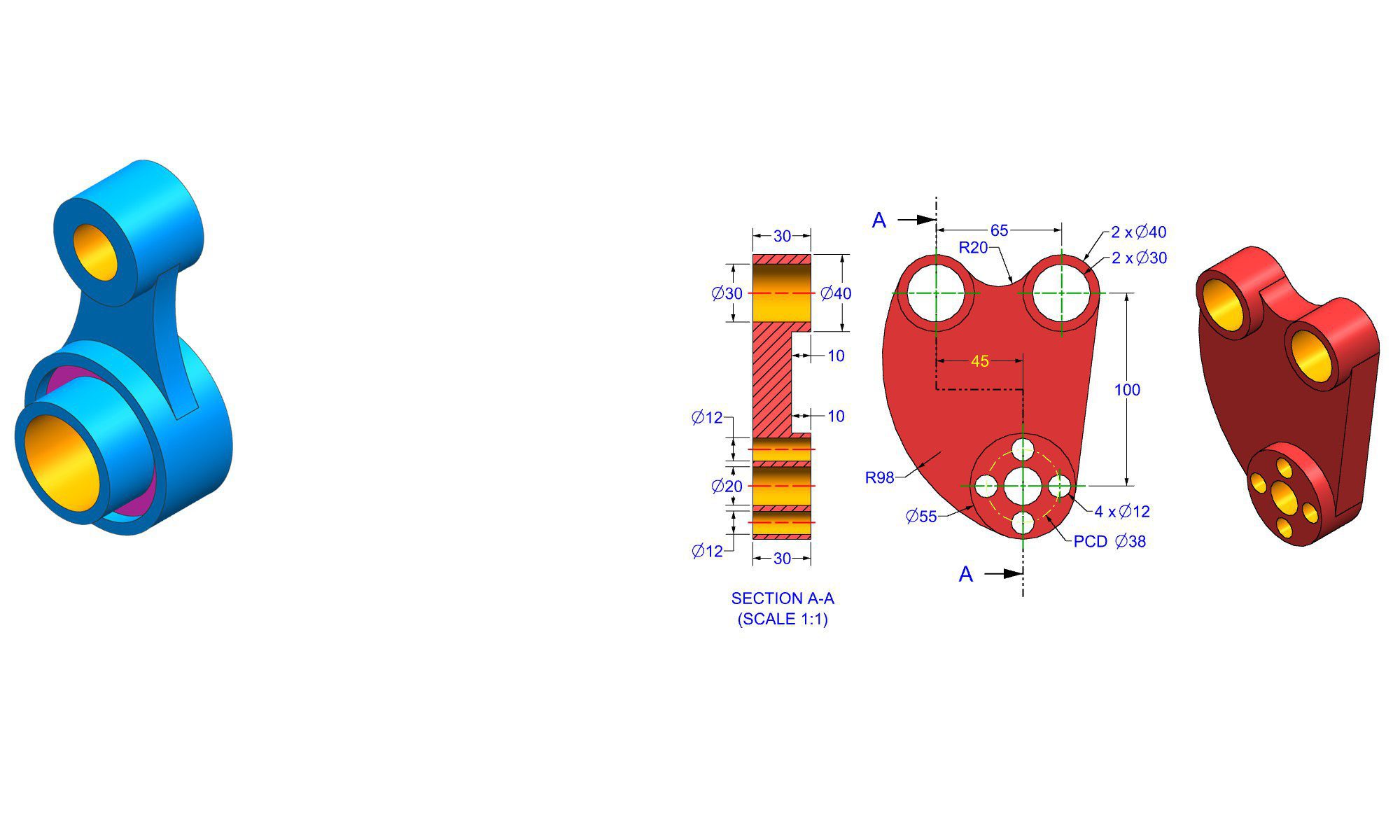

Introduction
In SolidWorks, understanding the concept of the “front plane” is fundamental for creating precise and effectively structured 3D models. The front plane acts as an initial reference surface used during the sketching and modeling process. Recognizing its significance ensures better control over your designs, eases the assembly process, and enhances overall CAD productivity. In this comprehensive guide, we will explore the meaning of the front plane in SolidWorks, how to utilize it properly, and best practices for optimizing your modeling workflow.
What is the Front Plane in SolidWorks?
The front plane in SolidWorks is one of the three default reference planes—along with the Top plane and Right plane—that come pre-established when you start a new part or assembly. It serves as a primary sketching surface, defining the feature’s orientation in the 3D space.
Key features of the front plane:
- It acts as a base sketching surface from which geometry is created.
- It is oriented perpendicular to the top and right planes.
- It facilitates the creation of symmetrical and precisely positioned features.
Understanding the front plane’s orientation and role is essential for creating clean, aligned models that meet your design intent.
How to Use the Front Plane in SolidWorks: Step-by-Step
Using the front plane effectively involves a mix of initial setup, sketching, and feature creation. Here’s a practical step-by-step guide:
1. Accessing the Front Plane
- Open a new part in SolidWorks.
- In the Feature Manager Tree, locate the default planes: Top, Front, Right.
- Select the “Front Plane” to begin your sketch or feature creation.
2. Creating a Sketch on the Front Plane
- Right-click on the “Front Plane.”
- Choose “Sketch” from the context menu.
- The sketching environment opens, with the front plane as the active sketch plane.
3. Sketching Basic Geometry
- Use sketch tools such as lines, circles, rectangles, and arcs.
- Dimension your sketch accurately using the Smart Dimension tool.
- Plan your design layout with the front plane as the primary reference.
4. Extruding or Revolving Features from the Sketch
- After completing the sketch, select features like “Extruded Boss/Base” or “Revolved Boss/Base.”
- Ensure “Sketch Plane” is set to the front plane or associated sketch.
- Adjust feature parameters to create 3D geometry aligned along the front plane.
5. Moving or Mirroring Sketches
- Use the “Mirror Entities” tool to create symmetrical features about the front plane.
- Apply relations or constraints to keep dimensions and geometry consistent with the front plane as a reference.
6. Adjusting the Front Plane Position
- If needed, right-click the front plane and select “Define” or “Move/Copy” to reposition it.
- You can also create new planes parallel or perpendicular to the front plane for advanced features.
Real-World Examples of Using the Front Plane
Understanding theoretical concepts becomes clearer with practical applications. Here are real-world examples:
- Creating a symmetric gear or pulley: Sketch half the profile on the front plane and mirror it across the plane to ensure perfect symmetry.
- Designing enclosures: Begin the primary outline on the front plane to precisely control width and height.
- Assembly alignment: Use the front plane to position components accurately relative to each other.
Common Mistakes When Using the Front Plane
Mistakes in using the front plane can lead to misaligned parts, complex revisions, or errors in manufacturing.
1. Skipping the initial sketch setup
- Failing to sketch directly on the front plane can cause misalignment issues.
2. Overlooking proper constraints
- Ignoring references or constraints related to the front plane may lead to unintended geometry movements.
3. Moving the front plane unnecessarily
- Repositioning the default planes without proper understanding can complicate downstream features.
4. Not defining coordinate systems
- Neglecting to establish origin points or planes aligned with the front plane reduces geometric control.
Best Practices and Pro Tips for Leveraging the Front Plane
- Always start your sketches on the appropriate plane to ensure geometry accuracy.
- Use mirrored features to maintain symmetry about the front plane.
- Create reference geometry like axes or points on the front plane for complex assemblies.
- Reposition the front plane deliberately when your design requires a different initial orientation.
- Keep the default planes intact unless absolutely necessary to move or redefine them.
- Use configurations or alternate planes for design variations, keeping the front plane as a consistent reference.
Comparing the Front Plane with Other Reference Planes
| Aspect | Front Plane | Top Plane | Right Plane |
|---|---|---|---|
| Default position | Vertical, front-facing | Horizontal, top-facing | Vertical, side-facing |
| Main use | Sketching front views | Sketching top views | Sketching side views |
| Orientation | Perpendicular to Top and Right planes | Perpendicular to Front and Right planes | Perpendicular to Front and Top planes |
| Commonly used in | Front view sketches | Top view sketches | Side view sketches |
Understanding these differences allows for better spatial planning and more intuitive modeling workflows.
Conclusion
The front plane in SolidWorks serves as a fundamental reference for sketching and model creation. Its proper use enhances the accuracy, symmetry, and clarity of your designs. By mastering how to utilize, modify, and position the front plane effectively, you gain greater control over your CAD projects. Whether you’re a beginner or experienced designer, leveraging this crucial reference plane will streamline your workflow and lead to more precise, professional-quality models.
FAQ
1. What is the primary function of the front plane in SolidWorks?
Ans: The primary function of the front plane is to serve as a reference surface for sketching and modeling in a front-facing orientation.
2. Can I move or redefine the default front plane in SolidWorks?
Ans: Yes, you can move or redefine the front plane by right-clicking and selecting “Define” or creating new reference planes parallel or perpendicular to it.
3. How does the front plane differ from the top and right planes?
Ans: The front plane is oriented vertically in the front view, while the top plane is horizontal, and the right plane is vertical in the side view.
4. Why is it important to sketch on the front plane?
Ans: Sketching on the front plane ensures proper orientation, alignment, and symmetry, especially for features viewed from the front.
5. What are some tips for ensuring symmetry when using the front plane?
Ans: Use mirror entities, constrain geometry symmetrically, and reference the front plane for accurate and balanced features.
6. Can the front plane be used for creating assemblies?
Ans: Yes, the front plane can serve as a reference for positioning and aligning components within an assembly.
7. Is it necessary to keep the default reference planes unchanged?
Ans: Not always, but it’s good practice to keep them until you understand the impact of modifying them; creating custom planes is often more advantageous for complex designs.