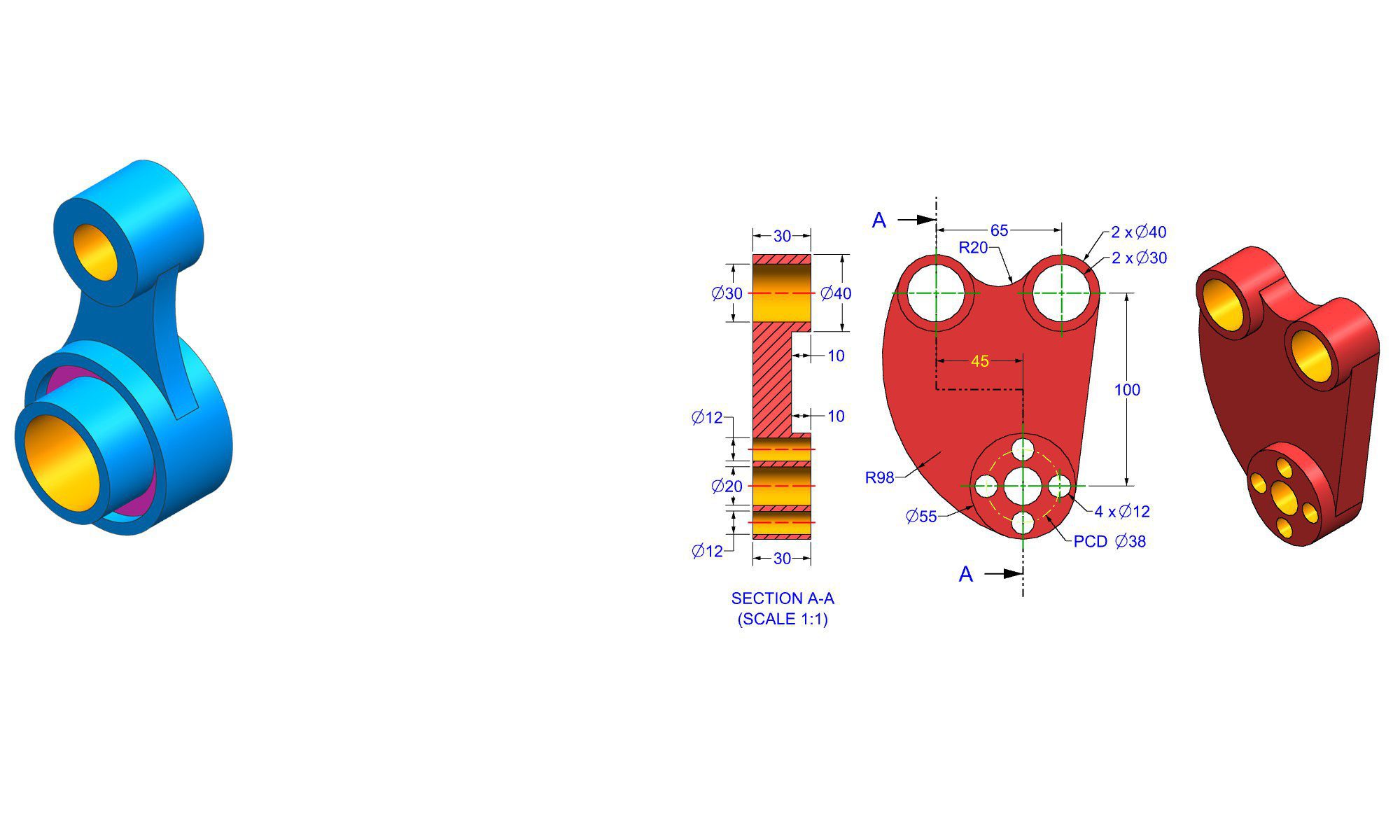


Introduction
Organizing features clearly in SolidWorks is essential for creating efficient, maintainable, and easily navigable 3D models and assemblies. Whether you’re a beginner or an experienced designer, mastering how to structure your features ensures quicker modifications, better collaboration, and cleaner CAD files. Proper feature organization not only streamlines your workflow but also helps optimize your models for simulations, manufacturing, and documentation. This comprehensive guide will walk you through actionable steps for organizing features effectively, share best practices, and cover common pitfalls to avoid.
Understanding the Importance of Organizing Features in SolidWorks
Before diving into techniques, it’s crucial to understand why feature organization matters. Well-structured models:
- Facilitate easier modifications
- Reduce file size and complexity
- Improve model clarity for collaborators
- Boost performance during regeneration and simulations
- Enable better troubleshooting of modeling issues
In SolidWorks, features are the building blocks of your part. Their order, naming, grouping, and hierarchy impact how efficiently you work and how your design communicates intent.
Step-by-step Guide to Organizing Features Clearly in SolidWorks
1. Plan Your Design Strategy Before Modeling
Starting with a plan helps you decide how to organize features from the outset.
- Break down your model into logical sections or functionalities.
- Decide on primary features (extrudes, cuts, fillets) versus secondary enhancements (drafts, chamfers).
- Determine which features can be grouped or suppressed.
Tip: Sketch rough outlines or flowcharts to visualize feature dependencies.
2. Use Feature Names Wisely
Clear, descriptive naming conventions are fundamental in organizing features.
- Avoid generic names like “Extrude1” or “Cut3.”
- Use meaningful names that describe the feature’s purpose, e.g., “MainBodyExtrusion” or “MountingHoleCut.”
- Maintain consistency, such as prefixing features with their type or stage (e.g., “EXTRUDEMain,” “CHAMFERRibs”).
Best Practice: Review and rename features regularly, especially after importing or copying models.
3. Properly Order Features
Order impacts design intent and ease of modifications.
- Place foundational features, like initial sketches and primary extrusions, at the top.
- Sequence features logically: create base shapes first, then add details.
- Avoid unnecessary dependencies that force you to reorder later.
4. Use Feature Suppression Strategically
Suppress features you don’t need immediately.
- For example, suppress complex patterns or features needed only for certain variants.
- This keeps your feature tree clean and enhances performance during editing.
Tip: Use the right-click menu to suppress or unsuppress features efficiently.
5. Utilize Feature Groups and Folders
Group related features to improve navigation.
- Create folders within the FeatureManager.
- Drag related features into a folder, e.g., all mount points or cut features.
- Use these groups to toggle visibility or perform batch operations.
Example: Group all interior features separately from exterior detailing.
6. Take Advantage of Sub-Assemblies and Part Files
Separate complex models into sub-assemblies or multiple parts.
- This modular approach keeps individual files manageable.
- Use configurations within parts to represent different feature states.
- This offers better control and reduces model complexity.
7. Use Suppress/Unsuppress and Configurations for Variability
Manage design variations through configurations and suppression.
- Create different configurations for different feature sets.
- Suppress or unsuppress features accordingly.
- This allows easy switching between design options without cluttering the feature tree.
8. Document Your Feature Tree with Comments and Descriptions
Add comments or descriptions to features.
- Right-click feature → Properties → Add description.
- Notes help you recall why a feature was created and how it fits into the overall design.
Pro Tip: Use feature comments when working in teams to improve communication.
9. Maintain a Clean and Consistent Workflow
- Regularly review the feature tree for duplicated or obsolete features.
- Delete unnecessary features to prevent clutter.
- Keep naming conventions consistent throughout your project.
10. Leverage Advanced Features for Organization
- Use ConfigurationManager for different design variants.
- Use Parent-Child relationships carefully to avoid broken dependencies.
- Explore SolidWorks Toolbox and third-party plugins for feature management.
Practical Examples of Organizing Features in SolidWorks
Example 1: Creating a Mechanical Part with Clear Feature Hierarchy
- Sketch base profile → Extrude base → Adding fillets → Cut holes → Round edges → Add patterns (e.g., holes pattern).
- Label each feature with descriptive names such as “BaseExtrusion,” “FilletRadius4,” “HoleCutØ10,” and group similar features.
Example 2: Designing an Assembly with Organized Sub-assemblies
- Sub-assembly for the chassis
- Sub-assembly for the mounting brackets
- Main assembly adding these sub-assemblies
- Suppress or unsuppress sub-assemblies as needed for different configurations
Example 3: Managing Variants with Configurations
- Standard model with full features enabled
- Lightweight version with suppressed features (e.g., detailed fillets, optional parts)
- Use configuration-specific suppression to switch between variants quickly.
Common Mistakes to Avoid
- Not naming features — leads to confusion and difficulty in modification.
- Creating overly complex feature dependencies.
- Reordering features haphazardly, causing broken references.
- Ignoring suppression tools for variants.
- Cluttering the feature tree with unnecessary features.
Pro Tips and Best Practices
- Regularly clean up your feature tree after significant iterations.
- Use the “Rollback Bar” to review feature dependencies.
- Keep your feature tree organized in a logical sequence that mirrors the manufacturing process.
- Backup your models before making extensive reorganization.
- Document your feature strategy for team projects.
Comparing Feature Organization Techniques: Manual vs. Automated
| Aspect | Manual Organization | Automated Organization |
|---|---|---|
| Ease of use | Requires discipline and planning | Uses tools like macros or custom scripts |
| Flexibility | Highly customizable | Limited by tool capabilities |
| Time consumption | Can be time-consuming | Faster if established templates or standards |
| Best suited for | Small to medium projects, detailed control | Large projects, repetitive tasks |
Automation can significantly speed up feature management when combined with best practices.
Conclusion
Organizing features clearly in SolidWorks is a fundamental skill that enhances the efficiency, clarity, and maintainability of your CAD models. From adopting good naming conventions to structuring your feature tree logically, each step contributes to a smoother design process. Remember to plan your model structure early, use suppression and grouping tools wisely, and maintain consistency throughout your project. By applying these strategies, you’ll be able to create more professional, comprehensible, and easily modifiable models.
FAQ
1. How do I rename features in SolidWorks?
Ans: Right-click the feature in the FeatureManager tree, select “Rename” or “Properties,” and enter a descriptive name.
2. What is the best way to organize features for complex assemblies?
Ans: Use sub-assemblies to break down complex models and group related features within folders or separate trees.
3. How can I suppress features temporarily in SolidWorks?
Ans: Right-click the feature or feature folder and select “Suppress” to hide it without deleting.
4. Why is feature order important in SolidWorks?
Ans: Because features depend on previous geometry; improper order can break dependencies and cause errors.
5. How do configuration features help in organizing complex models?
Ans: They allow you to create multiple design variants within one file, managing feature suppression and visibility efficiently.
6. Can I add comments or descriptions to features?
Ans: Yes, right-click the feature, select “Properties,” and enter descriptive notes for better documentation.
7. What are some common mistakes in feature organization to avoid?
Ans: Not naming features, creating unnecessary dependencies, ignoring suppression tools, and cluttering the feature tree.