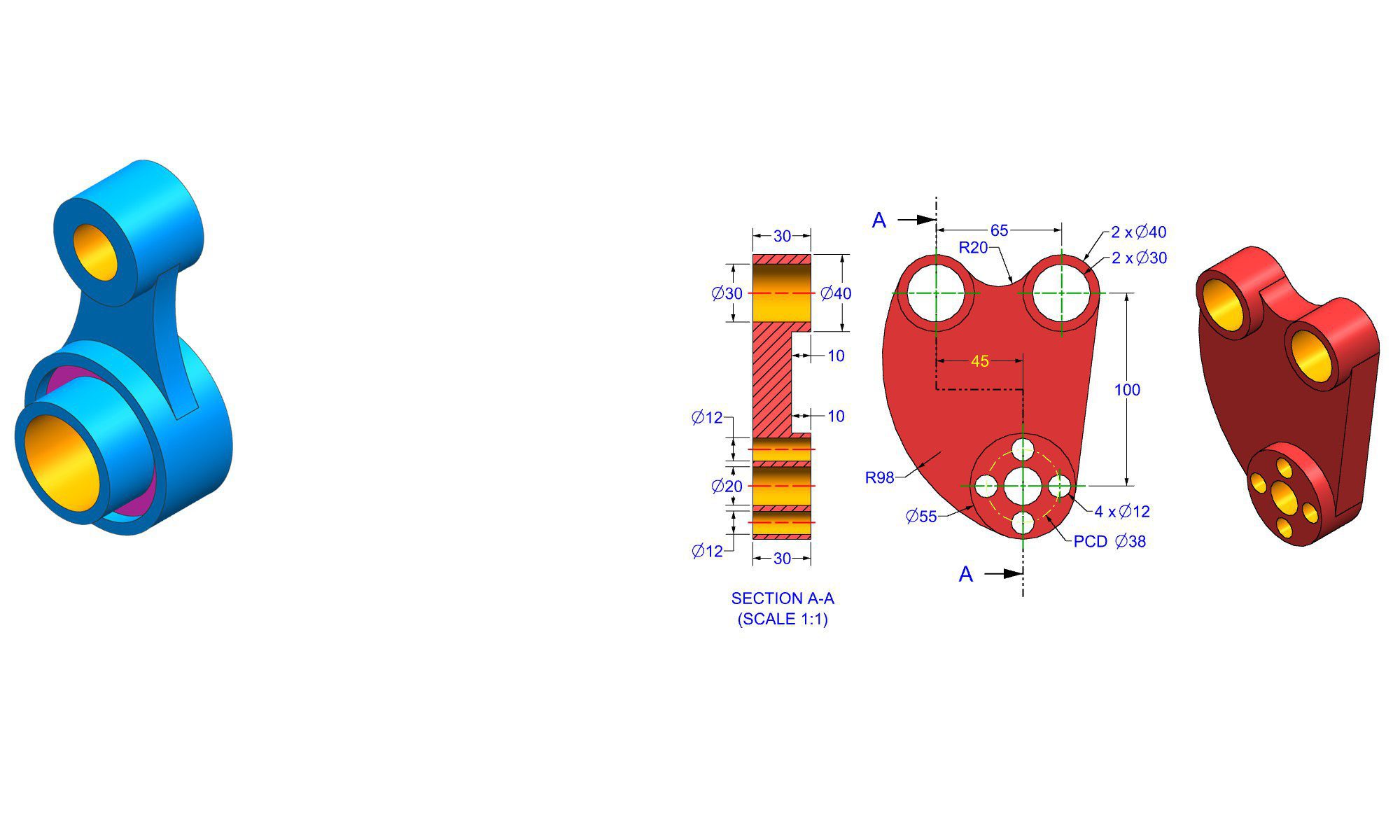

Introduction
Creating basic brackets in Fusion 360 is a fundamental skill that helps beginners and experienced users design functional parts with precision. Whether you’re designing brackets for machinery, electronics enclosures, or custom furniture, mastering how to model simple brackets efficiently is essential in CAD workflows. In this guide, you’ll learn step-by-step instructions to model basic brackets, explore practical examples, and discover best practices. This comprehensive tutorial is optimized for SEO, helping those searching for “how to model basic brackets in Fusion 360” find clear, actionable guidance.
Understanding the Basics of Modeling Brackets in Fusion 360
Before diving into step-by-step instructions, it’s important to understand what a bracket is and the common types you might model:
- L-shaped brackets for mounting purposes
- Flat brackets for support or reinforcement
- U-shaped or custom-shaped brackets for specific applications
All types generally involve creating a solid shape with holes or cutouts for mounting, fastening, or aesthetic purposes. Recognizing these features helps in planning the modeling process.
Preparing Your Workspace in Fusion 360
To model a basic bracket, start with a clean workspace:
- Open Fusion 360 and create a new design.
- Set units to millimeters or inches depending on your application.
- Organize your browser and toolbars for easy access.
Next, plan your design by sketching the basic shape on a suitable plane (XY, YZ, or XZ). Having a clear idea of dimensions is key, so gather measurements before modeling.
Step-by-Step Guide to Model a Basic L-Shaped Bracket
Here’s a detailed, beginner-friendly method to create an L-shaped bracket, which is a common type:
1. Start with a Sketch
- Select the front or top plane to sketch on.
- Click Create Sketch.
2. Draw the Base Profile
- Use the Rectangle tool.
- Draw a rectangle representing the main body (e.g., 50mm x 20mm).
- Finish the rectangle.
3. Extrude the Base
- Select the rectangle.
- Click Solid > Extrude.
- Enter the desired thickness (e.g., 5mm).
- Click OK.
4. Create the Vertical Leg
- Create a new sketch on the top face of the extruded rectangle.
- Draw a smaller rectangle on one side, representing the vertical arm (e.g., 20mm depth, 20mm height).
- Finish sketch.
5. Extrude the Vertical Leg
- Select the new rectangle.
- Extrude upward (e.g., 5mm).
- The result should resemble an L-shape.
6. Add Mounting Holes
- Create a new sketch on the top face of the vertical leg.
- Draw circles where holes are needed.
- Dimension the holes properly for mounting bolts.
- Finish sketch.
- Use Solid > Cut to extrude the circles downward, creating holes.
7. Fillet or Chamfer Edges (Optional)
- Select edges.
- Use Modify > Fillet or Chamfer for rounded or beveled edges for aesthetic or functional reasons.
8. Finalize and Save
- Review your model.
- Save your work.
- Export or prepare for manufacturing.
Practical Example: Customizing Your Bracket
Suppose you need a bracket with specific features, like slots or additional cutouts:
- Use sketch tools to add these features.
- Utilize Rectangle, Circle, or Polygon tools.
- Employ Patterns (rectangular or circular) for multiple cutouts.
- Adjust dimensions for perfect fit.
Common Mistakes to Avoid
- Not fully constraining sketches, leading to unintended movement.
- Forgetting to add fillets or chamfers for stress points.
- Misaligning holes or features, which can compromise assembly.
Pro Tips for Better Modeling
- Use parameters for dimensions for easy updates.
- Create components or bodies if designing multiple brackets.
- Keep your sketches organized with proper constraints.
Modeling Different Types of Brackets in Fusion 360
While we’ve covered a basic L-bracket, other popular brackets include:
| Bracket Type | Key Design Features | Modeling Tips |
|---|---|---|
| Flat brackets | Rectangular, multiple holes | Use pattern features for repetitive holes |
| U-shaped brackets | U-profile, mounting holes | Sketch U-shape profiles and extrude; add cutouts as needed |
| Custom-shaped | Unique contours and features | Combine sketch tools and extrusions for complex geometries |
Each type requires folding in different features, but the core workflow remains similar: sketch, extrude, add details, and refine.
Comparing Fusion 360 with Other CAD Software for Bracket Modeling
| Software | Ease of Use | Tools for Bracket Design | Modeling Flexibility | Cost |
|---|---|---|---|---|
| Fusion 360 | Beginner-friendly | Robust, parametric features | High | Subscription |
| SolidWorks | Advanced | Extensive features | Very high | Expensive |
| TinkerCAD | Very beginner | Limited, simple shapes | Basic | Free |
Fusion 360 strikes a balance between ease of use and powerful features, making it ideal for beginners and professionals alike.
Conclusion
Modeling basic brackets in Fusion 360 is accessible with a clear understanding of sketching, extrusions, and feature addition. By following the step-by-step process, customizing features, and avoiding common pitfalls, you can create precise, functional brackets for various applications. With practice, you’ll be able to adapt these techniques to more complex designs, enhancing your overall CAD proficiency.
FAQ
1. How do I create precise holes in my bracket in Fusion 360?
Ans: Use the Sketch > Circle tool to draw holes, dimension them accurately, then extrude cut to create holes in your model.
2. Can I make multiple brackets with similar features efficiently?
Ans: Yes, by creating a pattern (rectangular or circular) in Fusion 360, you can replicate holes and features across multiple locations quickly.
3. How do I ensure my bracket fits with other parts?
Ans: Use exact measurements and constraints in your sketches, and consider importing detailed models of mating parts for reference.
4. What are the best practices for creating stress-resistant brackets?
Ans: Add fillets to sharp edges, incorporate gussets or ribs if needed, and choose appropriate material thicknesses during modeling.
5. How can I prepare my bracket model for 3D printing?
Ans: Check for manifold geometry, optimize wall thicknesses, and export the model as an STL or OBJ file compatible with your 3D printer.
6. Is it possible to simulate the strength of my bracket in Fusion 360?
Ans: Yes, Fusion 360 offers simulation tools like static stress analysis to evaluate your bracket’s structural performance.
7. How can I learn more about advanced bracket designs in Fusion 360?
Ans: Explore online tutorials, Fusion 360 forums, and CAD design courses that cover complex features like assemblies and parametrization.
End of Blog

Autodesk Fusion 360 All-in-One Workbook
500+ Practice Exercises to Master Autodesk Fusion 360 through real-world practice!
This all-in-one workbook is your ultimate resource to develop hands-on CAD skills with Autodesk Fusion 360. Whether you’re a student, engineer, hobbyist, or professional, this guide is built to help you gain real design confidence through structured practice.
What’s Inside this Book:
- 200 2D Sketching Exercises – Build a strong foundation in dimension-driven 2D geometry and technical drawings
- 200 3D Modeling Exercises – Practice modeling real-world parts, from simple shapes to complex components.
- Multi-Part Assembly Projects – Understand how parts fit together and create full assemblies with detailed drawings
🎯 Why This Book?
- 500+ practice exercises following real design standards
- Designed for self-paced learning & independent practice
- Perfect for classrooms, technical interview preparation, and personal projects
- Covers 2D Sketching, 3D Modeling & Assembly Design in one workbook
- Trusted by 15,000+ CAD learners worldwide