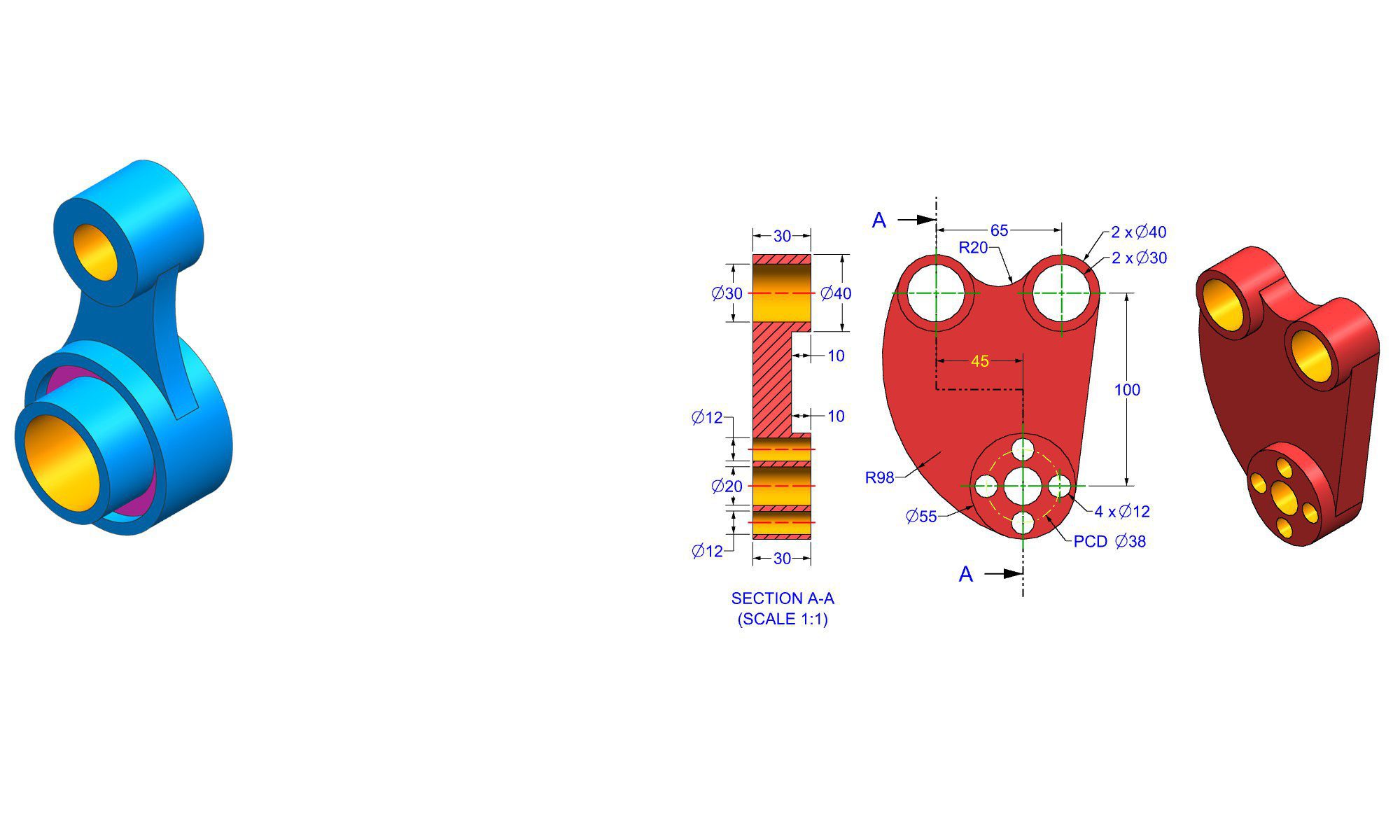

Introduction
When working with SolidWorks, having precise control over your view orientation and navigation is critical for efficient modeling and design validation. Improving view control accuracy in SolidWorks allows users to navigate models more intuitively and review details with clarity. Whether you’re a beginner or an experienced user, mastering view control techniques can significantly enhance your workflow, reduce errors, and save valuable time. In this guide, we will explore practical steps, tips, and best practices to optimize your view control accuracy in SolidWorks.
Understanding the Basics of SolidWorks View Control
Before diving into advanced techniques, it’s essential to understand how SolidWorks manages view control. The software provides various tools to adjust and orient your model:
- Standard Views: Front, Top, Right, Isometric, etc.
- View Toolbar: Quick access to view orientations.
- Keyboard shortcuts: For rapid view changes.
- View Manipulation Tools: Rotate, Pan, Zoom.
- View Orientation Dropdown: Custom views save.
- Dynamic Rotate: Free rotation of models.
A solid grasp of these tools sets the foundation for improving accuracy.
Step-by-step Guide to Improving View Control Accuracy in SolidWorks
1. Establish Save and Recall of Custom Views
Creating and saving custom views ensures that you can quickly return to precise orientations without guesswork. Here’s how:
- Rotate the model to your preferred view using mouse controls or the standard view toolbar.
- Click on the View Orientation command (spacebar shortcut).
- Select Average or click Save in the View Orientation dialog box.
- Assign a recognizable name to your custom view.
Best Practice: Use descriptive names to identify views (e.g., “Part_Axis-Angle”).
2. Use the Keyboard Shortcut and Mouse Control for Precision
Speed and precision go hand-in-hand with keyboard shortcuts:
- Press Spacebar to open the View Orientation dialog.
- Use arrow keys or the number keys to switch between views rapidly.
- Hold Shift + Mouse Wheel to zoom in smoothly.
- Use Ctrl + mouse drag to pan precisely.
3. Enable and Customize Viewport Options for Better Navigation
SolidWorks offers options that can streamline view control:
- Go to Tools > Options > System Options > View.
- Enable options like Rotate about selection for pivot-based control.
- Adjust mouse gesture sensitivity for smoother interaction.
- Set the default zoom scale for better control over zooming.
4. Use the “Isometric” and Other Standard Views Correctly
Standard views serve as reference points for accurate viewing angles:
- For an isometric view, click View > Display > Isometric.
- Use the Standard Views menu for front, top, side, etc.
- Combine these with custom views for better context during modeling.
5. Practice and Implement View Orientation Shortcuts
Setting custom shortcuts allows instant view changes:
- Go to Tools > Customize > Keyboard.
- Assign easy-to-remember shortcut keys for views like Front, Right, Isometric.
- Use these shortcuts as part of your workflow for quick navigation.
6. Accurate Rotation Using the View Cube
The View Cube provides an intuitive way to rotate models:
- Click and drag the cube to align views precisely.
- Use shift + click on specific corners or faces for exact orientations.
- Customize the View Cube appearance via View > Colors.
7. Adjust Pie Menus for Faster Access
Pie menus allow quick access to view controls:
- Right-click on the viewport edge, then select Customize Pie Menus.
- Add common view commands like Zoom, Rotate, Reset View.
- Practice using pie menus for rapid view changes.
8. Use the “Fit” and “Zoom to Area” Features
These features help focus the view accurately:
- Click View > Zoom > Fit or press F to frame the entire model.
- Use Zoom to Area (drag a rectangle) for detailed inspections.
- Combine with the Center view command for precise positioning.
9. Utilize Helper Tools for Enhanced Navigation
Third-party tools and add-ins can offer advanced controls:
- Integrated tools like SolidWorks Add-ins for enhanced view control.
- Use hardware like 3D mice for more accurate 3D navigation.
- Explore plugins that provide more precise orientation options.
Common Mistakes and How to Avoid Them
- Relying solely on mouse control: This often leads to imprecise views. Backup with custom views and shortcuts.
- Not saving views: Failing to save key orientations makes it hard to return to correct views.
- Overusing zoom without context: Zooming arbitrarily can distort your spatial awareness. Use “Zoom to Fit” regularly.
- Ignoring view cube and shortcuts: These tools dramatically improve orientation speed and accuracy.
- Neglecting to customize controls: Personalize shortcuts and pie menus for efficient workflow.
Best Practices for Maintaining View Control Accuracy
- Regularly save critical views during complex modeling.
- Practice using keyboard shortcuts to reduce reliance on mouse control.
- Use view alignment tools like Align Horizontal/Vertical for consistent orientations.
- Keep your software updated for smooth navigation features.
- Invest in hardware like a 3D mouse for professional-grade navigation.
Comparison: Manual Navigation vs. Predefined Views
| Aspect | Manual Navigation | Predefined/Custom Views |
|---|---|---|
| Speed | Slower, trial-and-error | Faster, repeatable |
| Precision | Less accurate without practice | High, if saved correctly |
| Flexibility | Complete control | Limited to saved views |
| Best for | Quick checks | Detailed review, design validation |
Using a combination of manual controls and predefined views balances flexibility with precision.
Conclusion
Improve your view control accuracy in SolidWorks by combining proper techniques, efficient shortcuts, and customization. Developing a consistent method for managing views ensures more precise modeling, faster navigation, and an overall better design experience. Remember to leverage tools like custom views, the View Cube, and keyboard shortcuts to maximize your control, especially during detailed or complex projects.
FAQ
1. How can I save my custom views in SolidWorks?
Ans: Use the View Orientation dialog to save views with descriptive names for quick recall.
2. What are the best shortcuts for switching views in SolidWorks?
Ans: Assign shortcuts to standard views like Front, Top, and Isometric via the Keyboard customization.
3. How does the View Cube help improve view accuracy?
Ans: The View Cube allows for intuitive, precise rotations by clicking or dragging to specific orientations.
4. Can using a 3D mouse enhance view control in SolidWorks?
Ans: Yes, a 3D mouse provides more precise, natural navigation for complex models.
5. What’s the advantage of using “Zoom to Fit” regularly?
Ans: It ensures the entire model is in view, maintaining spatial context and improving navigation accuracy.
6. How do I avoid common mistakes in view control?
Ans: Save important views, customize shortcuts, and use tools like the View Cube and “Fit” for consistent accuracy.
7. Are there any third-party tools that improve view control?
Ans: Yes, various add-ins and hardware options like 3D mice offer enhanced navigation and precision in SolidWorks.