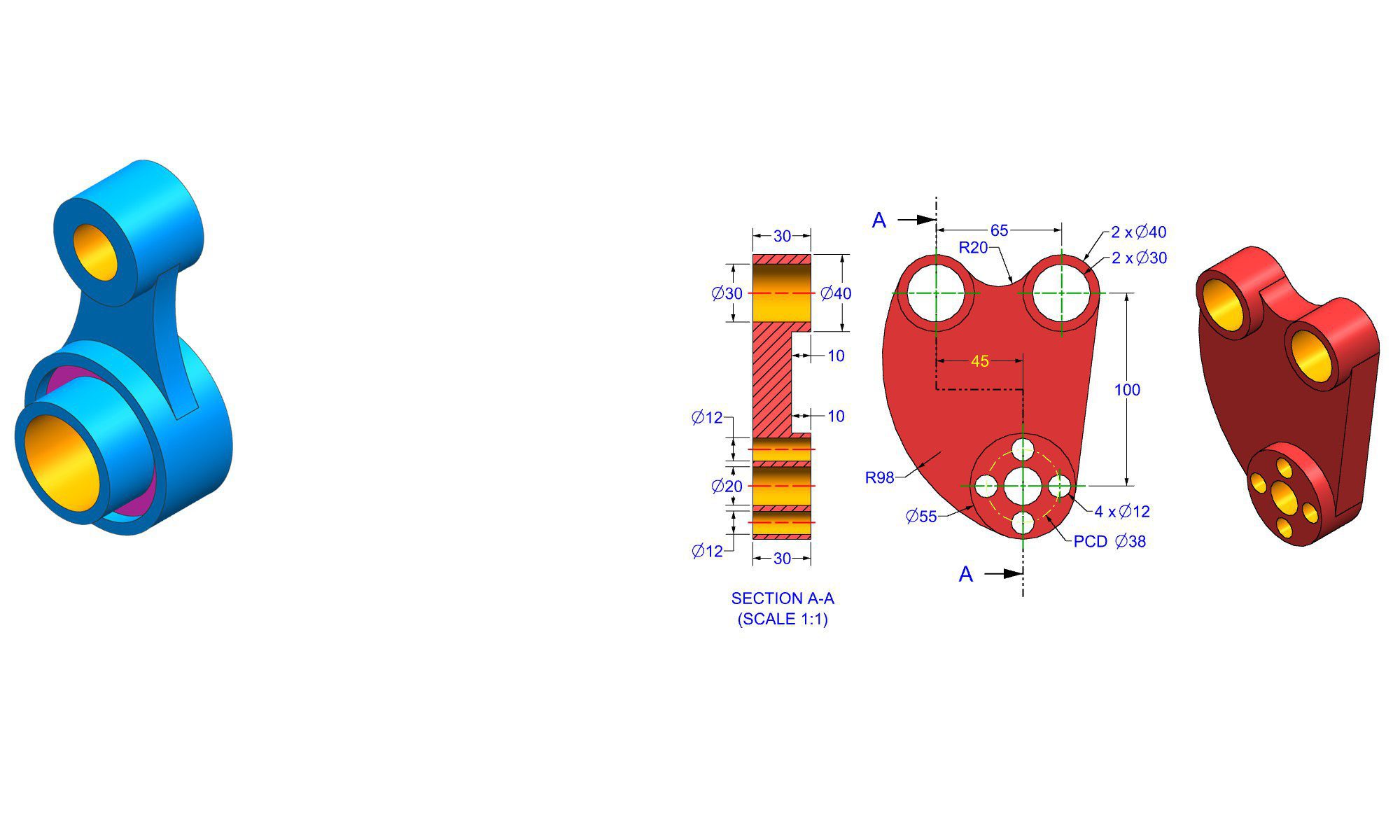

Introduction
Learning SolidWorks with confidence is essential for engineers, product designers, and hobbyists who want to bring their ideas to life through 3D modeling. As a leading CAD software, SolidWorks offers powerful tools for creating detailed part and assembly models, but mastering its features can seem daunting initially. Whether you’re a beginner or looking to improve your skills, this guide will provide practical steps, helpful tips, and best practices to accelerate your learning process. By the end, you’ll feel more confident navigating SolidWorks, avoiding common pitfalls, and applying your knowledge to real-world projects.
Why Learning SolidWorks Is Critical for Modern Design
SolidWorks is widely adopted across industries such as manufacturing, aerospace, automotive, and consumer products. Proficiency in SolidWorks enhances your ability to:
- Create precise 3D models for prototyping and production
- Improve communication with team members and clients
- Reduce design errors and optimize manufacturing processes
- Expand career opportunities in engineering and design fields
Getting started confidently requires a structured approach, consistent practice, and understanding the essential features that maximize productivity. Next, let’s explore a step-by-step method to learn SolidWorks effectively.
Step-by-Step Guide to Learning SolidWorks with Confidence
1. Set Clear Goals and Define Your Learning Path
Before diving into software, identify what you want to achieve:
- Are you aiming to create mechanical parts, assemblies, or complex systems?
- Do you need certification or just basic proficiency?
- What deadlines or project requirements do you have?
Once objectives are set, tailor your learning path. For beginners, starting with core concepts and gradually progressing to advanced features helps build a solid foundation.
2. Install SolidWorks and Familiarize with the Interface
- Download the latest version compatible with your system or access a trial through the official website.
- Spend time exploring the user interface:
- Command Manager
- Feature Tree
- Property Manager
- Heads-up View Toolbar
- Menus and toolbars
Understanding where tools are located reduces frustration during modeling sessions.
3. Master Basic Sketching Skills
Sketching forms the foundation of every model. Focus on:
- Creating standard geometric shapes (circles, rectangles, polygons)
- Using sketch relations (coincidence, parallel, perpendicular, tangent)
- Applying dimensions accurately
- Using construction lines and centers to aid in alignment
Practice sketching simple profiles like brackets, housings, or basic mechanical parts.
4. Learn Part Modeling Fundamentals
Once comfortable with sketches, proceed to create 3D parts:
- Use Extrude Boss/Base for simple solid shapes
- Apply Cut features to create holes or remove material
- Use Fillet and Chamfer to refine edges
- Understand how to use Shell and Rib features for complex geometries
Practical Tip: Always organize your features in the Feature Manager for easy editing.
5. Practice Assembling Components
Assembly modeling integrates multiple parts into a final product:
- Insert components into an assembly
- Use Mates (concentric, coincident, distance, angular) to position parts correctly
- Test the movement and interaction of parts
- Manage sub-assemblies for complex projects
Real-world example: Assemble a geared motor or a simple lever mechanism.
6. Explore Advanced Features and Simulation Tools
As your confidence grows:
- Use Pattern and Mirror features to efficiently duplicate elements
- Apply Appearance, Materials, and Decals for realistic visualization
- Experiment with Simulation tools to analyze stress, movement, and thermal effects
Pro tip: Always validate your design through simulations before manufacturing.
7. Learn Drawing and Documentation Skills
Creating detailed drawings is critical in manufacturing:
- Generate 2D drawings from your 3D models
- Add dimensions, tolerances, and annotations
- Use parts list tables and bill of materials (BOM)
- Follow industry standards (ISO, ANSI) for drawing conventions
Practicing drawing templates and annotation styles speeds up documentation.
8. Engage in Real-World Projects and Continuous Practice
Applying skills to real-world projects helps reinforce learning:
- Redesign existing components
- Participate in online challenges or competitions
- Join user communities like forums or social media groups
Regular practice builds muscle memory, and troubleshooting common issues enhances problem-solving abilities.
9. Leverage Learning Resources and Tutorials
Supplement your self-study with:
- Official SolidWorks tutorials
- YouTube channels dedicated to CAD training
- Online courses from platforms like Udemy, Coursera, or LinkedIn Learning
- Books specializing in SolidWorks modeling techniques
Learning from multiple sources ensures a well-rounded understanding.
10. Prepare for Certification and Professional Development
Obtaining certifications like the CSWA (Certified SolidWorks Associate) or CSWP (Certified SolidWorks Professional):
- Validates your skills
- Boosts employment prospects
- Provides structured learning pathways
Study official exam guides, take practice tests, and review key concepts regularly.
Practical Tips and Common Mistakes to Avoid
- Tip: Save often and maintain version control of your models.
- Mistake: Rushing to create complex models without mastering basic sketching and feature creation—this often leads to errors and frustrations.
- Tip: Use configurations and design tables to manage different model variants efficiently.
- Mistake: Ignoring design intent; always consider how parameters and relations will affect future modifications.
- Tip: Attend webinars or join local user groups to learn tips and network.
Comparing SolidWorks to Other CAD Software
| Feature | SolidWorks | Fusion 360 | AutoCAD |
|---|---|---|---|
| Ease of Learning | User-friendly, beginner-friendly | Intuitive, cloud-based | Suitable for 2D drafting |
| Industry Focus | Mechanical design, product development | Product design, collaboration | Architectural and structural design |
| Cost | Subscription-based, professional license | Free for startups, subscription | Subscription-based |
| Simulation Tools | Built-in simulation and analysis | Integrated simulation tools | Basic, requires add-ons |
| Collaboration | Local and cloud options | Cloud collaboration | Limited compared to others |
SolidWorks excels in parametric modeling and complex assemblies, making it a top choice for engineering applications.
Conclusion
Learning SolidWorks with confidence is achievable through a structured approach combining foundational skills, practical application, and continuous learning. By setting clear goals, mastering key features step-by-step, and engaging with real-world projects, you can develop proficiency that unlocks endless design possibilities. Remember, persistence and consistent practice are vital—each project and challenge is an opportunity to grow your skills further. Embrace the learning journey, and you’ll soon be creating professional-quality 3D models with confidence.
FAQ
1. What are the basic skills required to start learning SolidWorks?
Ans : Basic understanding of geometry, familiarity with computers, and willingness to learn CAD concepts are essential starting points.
2. How long does it typically take to become proficient in SolidWorks?
Ans : It varies, but with consistent practice, most beginners reach a good level of proficiency in 3–6 months.
3. Is it necessary to take formal classes to learn SolidWorks?
Ans : Not necessarily; many successful users learn through tutorials, online courses, and self-practice, but formal classes can accelerate learning.
4. What are the most important features to learn first in SolidWorks?
Ans : Sketching, basic part modeling tools, assembly creation, and drawing generation are the foundational features to master early on.
5. Can I learn SolidWorks on my own without prior CAD experience?
Ans : Yes, with dedication and the right resources, self-study can effectively teach you SolidWorks from scratch.
6. How do I improve my modeling speed in SolidWorks?
Ans : Practice regularly, learn shortcut keys, and develop templates and reusable components to streamline your workflow.