Introduction
Sketching is a fundamental skill in 3D modeling, particularly in Fusion 360, a popular computer-aided design (CAD) software. Many users new to Fusion 360 often struggle to create high-quality 3D models without a solid understanding of sketching principles. In this blog post, we’ll explore why sketching is the foundation of 3D modeling in Fusion 360 and provide practical tips to help you improve your skills.
The Importance of Sketching in 3D Modeling
Before diving into the specifics of Fusion 360, let’s discuss why sketching is essential in 3D modeling. A 3D model is essentially a collection of 2D sketches that are extruded or lofted to create the final shape. Think of it like building with blocks: you start with individual blocks (2D sketches) and then assemble them to create a 3D structure.
In Fusion 360, sketches are the building blocks of your 3D model. You create a sketch by drawing 2D shapes and curves, which are then used to create the 3D model. This process allows you to create complex shapes with precision and accuracy. Without a solid understanding of sketching, it’s challenging to create high-quality 3D models.
Understanding Sketching Fundamentals in Fusion 360
To create successful sketches in Fusion 360, you need to understand the fundamentals of sketching. Here are some key concepts to grasp:
Understanding the Coordinate System
The coordinate system is the foundation of sketching in Fusion 360. Familiarize yourself with the X, Y, and Z axes, as well as the origin point (0, 0, 0). This will help you create accurate sketches and avoid common mistakes.
Creating Basic Shapes
Fusion 360 provides a variety of basic shapes, including lines, arcs, circles, and rectangles. Practice creating these shapes to develop your sketching skills. You can also create custom shapes by combining basic shapes or using the sketching tools.
Working with Dimensions and Constraints
Dimensions and constraints are essential in maintaining the accuracy of your sketches. Learn to use dimensions to define the size of your sketches and constraints to define the relationships between them.
Practical Examples of Sketching in Fusion 360
Let’s apply the concepts we’ve discussed so far to create a simple 3D model in Fusion 360. We’ll create a basic box with a hole in it.
Creating the Box
To create the box, we’ll start by creating a sketch of the box’s shape. We’ll use the rectangle tool to create the top and bottom faces, and then use the extrude tool to create the sides.
Creating the Hole
To create the hole, we’ll create a new sketch and use the circle tool to draw a circle. We’ll then use the extrude tool to create the hole.
Advanced Sketching Techniques in Fusion 360
Once you’ve mastered the basics of sketching, you can move on to more advanced techniques. Here are a few examples:
Using Curves and Splines
Curves and splines are essential in creating smooth, continuous shapes. Learn to use the curve tool to create smooth curves and the spline tool to create complex shapes.
Applying Symmetry and Mirroring
Symmetry and mirroring are useful techniques for creating symmetrical shapes and reducing the complexity of your sketches. Learn to use the symmetry tool to create symmetrical shapes and the mirror tool to create mirrored shapes.
Conclusion
Sketching is the foundation of 3D modeling in Fusion 360. By understanding the fundamentals of sketching, including the coordinate system, basic shapes, dimensions, and constraints, you’ll be well on your way to creating high-quality 3D models. Practice creating simple sketches and gradually move on to more complex projects. Remember to experiment and explore the advanced sketching techniques in Fusion 360 to take your skills to the next level.
FAQ
Q: What is the difference between a 2D sketch and a 3D model?
A: A 2D sketch is a 2D drawing that represents a 2D shape or object. A 3D model is a 3D representation of a 3D object or shape, created by extruding or lofting 2D sketches.
Q: How do I create a new sketch in Fusion 360?
A: To create a new sketch in Fusion 360, go to the “Sketch” tab in the top menu and click on “New Sketch.” You can also create a new sketch by selecting “Sketch” from the “Create” menu.
Q: What is the purpose of dimensions in sketching?
A: Dimensions in sketching are used to define the size and shape of your sketches. They help maintain the accuracy of your sketches and ensure that your 3D model is created correctly.
Q: How do I use constraints in sketching?
A: Constraints in sketching are used to define the relationships between different elements in your sketch. They help maintain the accuracy of your sketches and ensure that your 3D model is created correctly.
Q: Can I use Fusion 360 to create 2D drawings?
A: Yes, Fusion 360 can be used to create 2D drawings. However, Fusion 360 is primarily a 3D CAD software, and its 2D drawing capabilities are more limited compared to other CAD software.
Q: What is the difference between a sketch and a part in Fusion 360?
A: A sketch is a 2D drawing that represents a 2D shape or object. A part is a 3D object or shape created by extruding or lofting a sketch.
End of Blog
CAD EXERCISES All-in-One Workbook
500+ Practice Exercises to Master CAD Through Real-World Practice!
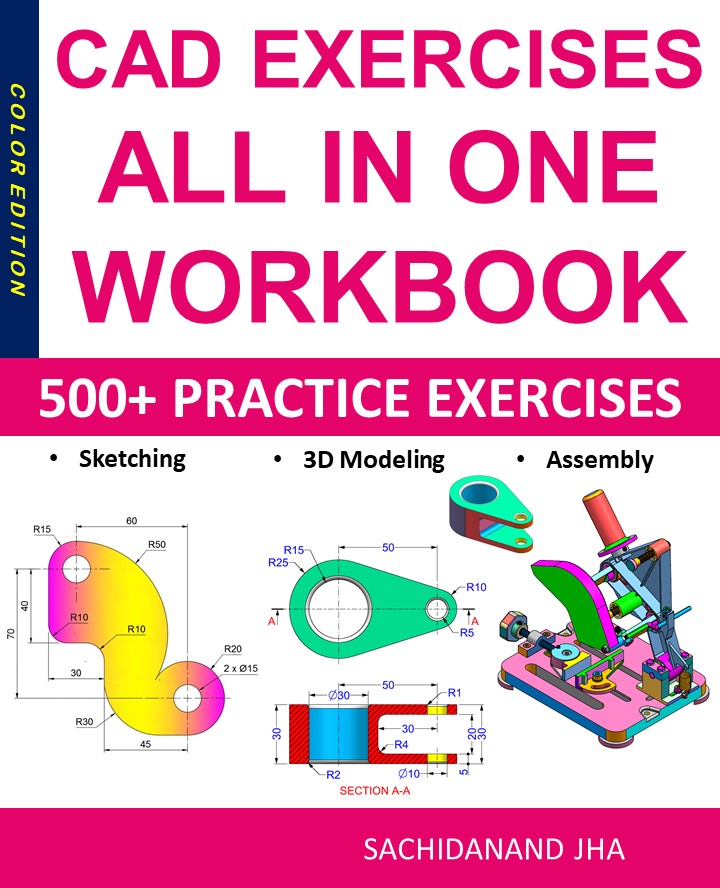
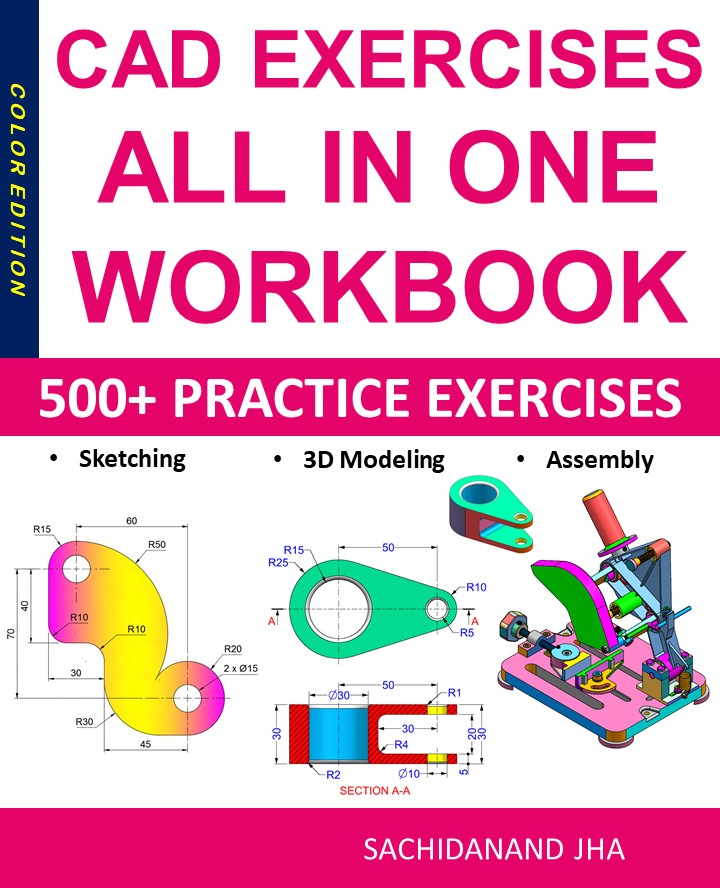
This all-in-one workbook is your ultimate resource to develop hands-on CAD skills using any CAD software.Whether you’re a student, engineer, hobbyist, or professional, this guide is designed to help you gain real design confidence through structured, practice-oriented exercises.
What’s Inside this Book:
- 200 2D Sketching Exercises – Build a strong foundation in dimension-driven 2D geometry and technical drawings
- 200 3D Modeling Exercises – Practice modeling real-world parts, from simple shapes to complex components.
- Multi-Part Assembly Projects – Understand how parts fit together and create full assemblies with detailed drawings
🎯 Why This Book?
- 500+ practice exercises following real design standards
- Designed for self-paced learning & independent practice
- Perfect for classrooms, technical interview preparation, and personal projects
- Covers 2D Sketching, 3D Modeling & Assembly Design in one workbook
- Trusted by 15,000+ CAD learners worldwide
Fusion 360 for Beginners: Mastering Sketching Essentials

Introduction
Fusion 360 is a powerful computer-aided design (CAD) software that allows users to create, edit, and simulate 3D models. One of the key features of Fusion 360 is its sketching tool, which enables users to create 2D sketches that can be used as reference for 3D models or as standalone designs. In this blog post, we will cover the basics of sketching in Fusion 360, including its purpose, how to create a sketch, and some practical examples.
What is Sketching in Fusion 360?
Sketching in Fusion 360 involves creating 2D drawings or designs using a variety of tools and functions. These sketches can be used as the foundation for 3D models, or they can be used as standalone designs. Sketching is an essential part of the design process in Fusion 360, as it allows users to visualize and communicate their ideas before moving on to 3D modeling.
Purpose of Sketching in Fusion 360
The purpose of sketching in Fusion 360 is to create a 2D representation of a design concept. This can be useful for several reasons:
- It allows users to visualize their design concept before moving on to 3D modeling.
- It provides a reference point for 3D modeling, ensuring that the 3D model is accurate and consistent with the design concept.
- It enables users to make changes and revisions to their design concept before investing time and resources into 3D modeling.
Creating a Sketch in Fusion 360
To create a sketch in Fusion 360, follow these steps:
- Open a new part or assembly in Fusion 360.
- Select the “Sketch” tab in the top toolbar.
- Choose the desired sketch plane from the “Sketch Plane” dropdown menu.
- Use the various sketch tools to create lines, arcs, and other shapes.
- Use the “Dimensions” tool to add dimensions to your sketch.
Basic Sketch Tools
The following are some of the basic sketch tools available in Fusion 360:
- Line Tool: The line tool is used to create straight lines in your sketch.
- Arc Tool: The arc tool is used to create curved lines in your sketch.
- Circle Tool: The circle tool is used to create circular shapes in your sketch.
- Rectangle Tool: The rectangle tool is used to create rectangular shapes in your sketch.
- Polygon Tool: The polygon tool is used to create polygonal shapes in your sketch.
Advanced Sketch Tools
In addition to the basic sketch tools, Fusion 360 also offers several advanced sketch tools, including:
- Trim Tool: The trim tool is used to remove or trim excess sketch elements.
- Extend Tool: The extend tool is used to extend or lengthen sketch elements.
- Split Tool: The split tool is used to split or divide sketch elements.
- Join Tool: The join tool is used to join or combine sketch elements.
Practical Examples
Here are a few practical examples of how to use the sketch tools in Fusion 360:
- Example 1: Create a simple rectangle using the rectangle tool.
- Example 2: Create a complex polygon using the polygon tool.
- Example 3: Create a circular shape using the circle tool.
Dimensions and Constraints
Dimensions and constraints are essential components of a sketch in Fusion 360. Dimensions are used to specify the size and shape of a sketch element, while constraints are used to control the movement and behavior of a sketch element.
Types of Dimensions
The following are some of the common types of dimensions used in Fusion 360:
- Linear Dimension: A linear dimension is used to specify the length of a sketch element.
- Angular Dimension: An angular dimension is used to specify the angle between two sketch elements.
- Radius Dimension: A radius dimension is used to specify the radius of a circular or curved sketch element.
Using Constraints
Constraints are used to control the movement and behavior of a sketch element. The following are some of the common types of constraints used in Fusion 360:
- Fixed Constraint: A fixed constraint is used to lock a sketch element in place.
- Coincident Constraint: A coincident constraint is used to align two or more sketch elements.
- Parallel Constraint: A parallel constraint is used to align two or more sketch elements parallel to each other.
Conclusion
Sketching in Fusion 360 is a powerful tool that allows users to create 2D designs and references for 3D models. By mastering the basics of sketching, including creating a sketch, using basic and advanced sketch tools, and adding dimensions and constraints, users can create accurate and reliable designs.
FAQ
What is the purpose of sketching in Fusion 360?
The purpose of sketching in Fusion 360 is to create a 2D representation of a design concept, which can be used as a reference point for 3D modeling or as a standalone design.
How do I create a sketch in Fusion 360?
To create a sketch in Fusion 360, open a new part or assembly, select the “Sketch” tab, choose the desired sketch plane, and use the various sketch tools to create lines, arcs, and other shapes.
What are the basic sketch tools in Fusion 360?
The basic sketch tools in Fusion 360 include the line tool, arc tool, circle tool, rectangle tool, and polygon tool.
What are the advanced sketch tools in Fusion 360?
The advanced sketch tools in Fusion 360 include the trim tool, extend tool, split tool, and join tool.
How do I add dimensions to my sketch in Fusion 360?
To add dimensions to your sketch in Fusion 360, use the “Dimensions” tool to specify the size and shape of your sketch elements.
What are the types of dimensions used in Fusion 360?
The types of dimensions used in Fusion 360 include linear dimensions, angular dimensions, and radius dimensions.
How do I use constraints in Fusion 360?
To use constraints in Fusion 360, apply a constraint to a sketch element to control its movement and behavior.
Can I undo my sketch in Fusion 360?
Yes, you can undo your sketch in Fusion 360 by using the “Undo” button or by using the keyboard shortcut Ctrl + Z (Windows) or Command + Z (Mac).
End of Blog

Autodesk Fusion 360 All-in-One Workbook
500+ Practice Exercises to Master Autodesk Fusion 360 through real-world practice!
This all-in-one workbook is your ultimate resource to develop hands-on CAD skills with Autodesk Fusion 360. Whether you’re a student, engineer, hobbyist, or professional, this guide is built to help you gain real design confidence through structured practice.
What’s Inside this Book:
- 200 2D Sketching Exercises – Build a strong foundation in dimension-driven 2D geometry and technical drawings
- 200 3D Modeling Exercises – Practice modeling real-world parts, from simple shapes to complex components.
- Multi-Part Assembly Projects – Understand how parts fit together and create full assemblies with detailed drawings
🎯 Why This Book?
- 500+ practice exercises following real design standards
- Designed for self-paced learning & independent practice
- Perfect for classrooms, technical interview preparation, and personal projects
- Covers 2D Sketching, 3D Modeling & Assembly Design in one workbook
- Trusted by 15,000+ CAD learners worldwide
Fusion 360 for Beginners: Mastering Sketching Essentials

Introduction
Fusion 360 is a powerful computer-aided design (CAD) software that allows users to create, edit, and simulate 3D models. One of the key features of Fusion 360 is its sketching tool, which enables users to create 2D sketches that can be used as reference for 3D models or as standalone designs. In this blog post, we will cover the basics of sketching in Fusion 360, including its purpose, how to create a sketch, and some practical examples.
What is Sketching in Fusion 360?
Sketching in Fusion 360 involves creating 2D drawings or designs using a variety of tools and functions. These sketches can be used as the foundation for 3D models, or they can be used as standalone designs. Sketching is an essential part of the design process in Fusion 360, as it allows users to visualize and communicate their ideas before moving on to 3D modeling.
Purpose of Sketching in Fusion 360
The purpose of sketching in Fusion 360 is to create a 2D representation of a design concept. This can be useful for several reasons:
- It allows users to visualize their design concept before moving on to 3D modeling.
- It provides a reference point for 3D modeling, ensuring that the 3D model is accurate and consistent with the design concept.
- It enables users to make changes and revisions to their design concept before investing time and resources into 3D modeling.
Creating a Sketch in Fusion 360
To create a sketch in Fusion 360, follow these steps:
- Open a new part or assembly in Fusion 360.
- Select the “Sketch” tab in the top toolbar.
- Choose the desired sketch plane from the “Sketch Plane” dropdown menu.
- Use the various sketch tools to create lines, arcs, and other shapes.
- Use the “Dimensions” tool to add dimensions to your sketch.
Basic Sketch Tools
The following are some of the basic sketch tools available in Fusion 360:
- Line Tool: The line tool is used to create straight lines in your sketch.
- Arc Tool: The arc tool is used to create curved lines in your sketch.
- Circle Tool: The circle tool is used to create circular shapes in your sketch.
- Rectangle Tool: The rectangle tool is used to create rectangular shapes in your sketch.
- Polygon Tool: The polygon tool is used to create polygonal shapes in your sketch.
Advanced Sketch Tools
In addition to the basic sketch tools, Fusion 360 also offers several advanced sketch tools, including:
- Trim Tool: The trim tool is used to remove or trim excess sketch elements.
- Extend Tool: The extend tool is used to extend or lengthen sketch elements.
- Split Tool: The split tool is used to split or divide sketch elements.
- Join Tool: The join tool is used to join or combine sketch elements.
Practical Examples
Here are a few practical examples of how to use the sketch tools in Fusion 360:
- Example 1: Create a simple rectangle using the rectangle tool.
- Example 2: Create a complex polygon using the polygon tool.
- Example 3: Create a circular shape using the circle tool.
Dimensions and Constraints
Dimensions and constraints are essential components of a sketch in Fusion 360. Dimensions are used to specify the size and shape of a sketch element, while constraints are used to control the movement and behavior of a sketch element.
Types of Dimensions
The following are some of the common types of dimensions used in Fusion 360:
- Linear Dimension: A linear dimension is used to specify the length of a sketch element.
- Angular Dimension: An angular dimension is used to specify the angle between two sketch elements.
- Radius Dimension: A radius dimension is used to specify the radius of a circular or curved sketch element.
Using Constraints
Constraints are used to control the movement and behavior of a sketch element. The following are some of the common types of constraints used in Fusion 360:
- Fixed Constraint: A fixed constraint is used to lock a sketch element in place.
- Coincident Constraint: A coincident constraint is used to align two or more sketch elements.
- Parallel Constraint: A parallel constraint is used to align two or more sketch elements parallel to each other.
Conclusion
Sketching in Fusion 360 is a powerful tool that allows users to create 2D designs and references for 3D models. By mastering the basics of sketching, including creating a sketch, using basic and advanced sketch tools, and adding dimensions and constraints, users can create accurate and reliable designs.
FAQ
What is the purpose of sketching in Fusion 360?
The purpose of sketching in Fusion 360 is to create a 2D representation of a design concept, which can be used as a reference point for 3D modeling or as a standalone design.
How do I create a sketch in Fusion 360?
To create a sketch in Fusion 360, open a new part or assembly, select the “Sketch” tab, choose the desired sketch plane, and use the various sketch tools to create lines, arcs, and other shapes.
What are the basic sketch tools in Fusion 360?
The basic sketch tools in Fusion 360 include the line tool, arc tool, circle tool, rectangle tool, and polygon tool.
What are the advanced sketch tools in Fusion 360?
The advanced sketch tools in Fusion 360 include the trim tool, extend tool, split tool, and join tool.
How do I add dimensions to my sketch in Fusion 360?
To add dimensions to your sketch in Fusion 360, use the “Dimensions” tool to specify the size and shape of your sketch elements.
What are the types of dimensions used in Fusion 360?
The types of dimensions used in Fusion 360 include linear dimensions, angular dimensions, and radius dimensions.
How do I use constraints in Fusion 360?
To use constraints in Fusion 360, apply a constraint to a sketch element to control its movement and behavior.
Can I undo my sketch in Fusion 360?
Yes, you can undo your sketch in Fusion 360 by using the “Undo” button or by using the keyboard shortcut Ctrl + Z (Windows) or Command + Z (Mac).
End of Blog
Autodesk Fusion 360 All-in-One Workbook
500+ Practice Exercises to Master Autodesk Fusion 360 through real-world practice!
This all-in-one workbook is your ultimate resource to develop hands-on CAD skills with Autodesk Fusion 360. Whether you’re a student, engineer, hobbyist, or professional, this guide is built to help you gain real design confidence through structured practice.
What’s Inside this Book:
- 200 2D Sketching Exercises – Build a strong foundation in dimension-driven 2D geometry and technical drawings
- 200 3D Modeling Exercises – Practice modeling real-world parts, from simple shapes to complex components.
- Multi-Part Assembly Projects – Understand how parts fit together and create full assemblies with detailed drawings
🎯 Why This Book?
- 500+ practice exercises following real design standards
- Designed for self-paced learning & independent practice
- Perfect for classrooms, technical interview preparation, and personal projects
- Covers 2D Sketching, 3D Modeling & Assembly Design in one workbook
- Trusted by 15,000+ CAD learners worldwide
How to Use Fusion 360 – Complete Beginner Guide (2025)

Fusion 360 is one of the most powerful and beginner-friendly CAD/CAM/CAE tools available today. Developed by Autodesk, Fusion 360 is widely used for 3D modeling, product design, mechanical engineering, CNC machining, and 3D printing. Whether you are a student, hobbyist, or professional designer, learning Fusion 360 can significantly boost your design and manufacturing skills.
In this guide, you’ll learn how to use Fusion 360 step by step, from setting up your workspace to creating your first 3D model and exporting it for manufacturing.
What Is Fusion 360?
Fusion 360 is a cloud-based 3D CAD, CAM, and CAE software that combines design, engineering, and manufacturing tools in one platform. Unlike traditional CAD software, Fusion 360 allows parametric modeling, direct modeling, simulation, and collaboration in a single workflow.
Key Features of Fusion 360
-
Parametric & direct 3D modeling
-
Sketch-based design
-
Assembly & joint system
-
Simulation & stress analysis
-
CAM for CNC machining
-
Cloud collaboration & version control
How to Download and Install Fusion 360
Before learning how to use Fusion 360, you need to install it properly.
Steps to Install Fusion 360
-
Visit the Autodesk Fusion 360 official website
-
Sign in with your Autodesk account
-
Choose the correct license:
-
Personal Use (Free for hobbyists)
-
Student/Educational License
-
Commercial License
-
-
Download and install Fusion 360
-
Launch the software and sign in
Once installed, Fusion 360 automatically updates via the cloud.
Understanding the Fusion 360 Interface
When you open Fusion 360, the interface may feel overwhelming, but it’s well organized.
Main Areas of Fusion 360
-
Toolbar – Design, Solid, Surface, Mesh, and Sheet Metal tools
-
Browser Panel – Shows sketches, bodies, components, and timelines
-
Canvas – Main workspace where you model
-
Timeline – Tracks design history and parametric changes
Understanding the timeline is crucial, as it allows you to edit any step later without breaking your model.
Creating Your First Sketch in Fusion 360
Sketching is the foundation of all 3D models in Fusion 360.
Steps to Create a Sketch
-
Click Create Sketch
-
Select a plane (XY, YZ, or XZ)
-
Use sketch tools like:
-
Line
-
Rectangle
-
Circle
-
Arc
-
-
Apply dimensions (D key) to fully constrain the sketch
-
Finish the sketch
💡 Tip: Always aim for a fully constrained sketch (black lines), which ensures stability.
Turning a Sketch into a 3D Model
Once your sketch is ready, you can convert it into a solid body.
Common 3D Modeling Tools
-
Extrude (E) – Create 3D shapes from sketches
-
Revolve – Rotate a profile around an axis
-
Loft – Blend shapes between profiles
-
Sweep – Extrude along a path
Example:
-
Select a sketch profile
-
Press E (Extrude)
-
Enter distance
-
Click OK
You now have your first 3D model in Fusion 360.
Using Components and Assemblies
Fusion 360 uses a component-based workflow, which is essential for real-world designs.
Why Use Components?
-
Better organization
-
Easier assemblies
-
Motion simulation
-
Improved performance
How to Create Components
-
Right-click in the Browser
-
Select New Component
-
Model parts inside components
-
Use Joints to connect parts
This approach is ideal for mechanical designs and product assemblies.
Applying Materials and Appearance
Fusion 360 allows you to add realistic materials to your model.
Steps to Apply Materials
-
Press A (Appearance)
-
Choose a material (metal, plastic, wood, etc.)
-
Drag and drop onto your model
-
Adjust color, texture, and finish
This is useful for rendering, presentations, and client previews.
Rendering and Visualization
Fusion 360 includes a powerful rendering engine.
Rendering Workflow
-
Switch to Render Workspace
-
Set environment and lighting
-
Choose materials
-
Adjust camera angle
-
Click Render
You can render locally or use cloud rendering for faster results.
Exporting Files for Manufacturing
Fusion 360 supports multiple export formats depending on your use case.
Common Export Formats
-
STL – 3D printing
-
STEP / IGES – CAD file sharing
-
DXF – Laser cutting / CNC
-
G-code – CNC machining (CAM workspace)
To export:
-
Go to File → Export
-
Choose format
-
Save locally or to the cloud
Tips to Learn Fusion 360 Faster
-
Learn keyboard shortcuts (E, D, L, P)
-
Use parametric design properly
-
Name sketches and components
-
Watch Autodesk tutorials
-
Practice real-world projects
-
Avoid editing bodies directly—edit sketches instead
Final Thoughts
Fusion 360 is an all-in-one design and manufacturing solution that is both beginner-friendly and industry-ready. By mastering sketches, parametric modeling, components, and exporting workflows, you can design professional-grade products efficiently.
Whether you want to create mechanical parts, 3D printable models, or CNC-ready designs, Fusion 360 gives you everything you need in one powerful platform.
Tinkercad Complete Guide 2025: Learn 3D Design, Circuits & Coding Easily
Tinkercad: The Complete Beginner’s Guide to 3D Design, Circuits, and Coding (2025)
Tinkercad is one of the most beginner-friendly design tools available today. Developed by Autodesk, Tinkercad is a free, web-based application that allows users to create 3D models, simulate electronic circuits, and explore block-based coding—all directly from a browser. Its simplicity and accessibility make it a popular choice for students, educators, hobbyists, and first-time designers.
In this comprehensive guide, we’ll explore what Tinkercad is, its key features, benefits, use cases, and how to get started effectively in 2025.
What Is Tinkercad?
Tinkercad is an online CAD (Computer-Aided Design) platform that focuses on ease of use rather than complexity. Unlike professional CAD software that requires extensive training, Tinkercad uses a drag-and-drop interface that allows users to build designs using simple geometric shapes.
Tinkercad supports three main workspaces:
-
3D Design
-
Circuits
-
Codeblocks
Because it runs entirely in a web browser, there is no installation required, making it ideal for classrooms and quick prototyping.
Key Features of Tinkercad
1. Easy 3D Design Interface
Tinkercad’s 3D design workspace lets users create models by combining basic shapes such as cubes, cylinders, and spheres. Shapes can be resized, rotated, aligned, grouped, and modified with simple controls.
This intuitive approach makes Tinkercad perfect for:
-
Beginners learning CAD fundamentals
-
Students exploring 3D modeling
-
Hobbyists designing objects for 3D printing
2. Tinkercad Circuits
One of Tinkercad’s standout features is its circuits simulator. Users can build electronic circuits using virtual components such as:
-
Arduino boards
-
LEDs and resistors
-
Sensors and motors
-
Breadboards
The circuit simulation runs in real time, allowing users to test designs safely without physical hardware.
3. Block-Based and Text Coding
Tinkercad supports block-based coding (similar to Scratch) and text-based Arduino code. This makes it an excellent platform for learning programming concepts alongside electronics.
Students can:
-
Write logic using visual blocks
-
Convert blocks into Arduino C++ code
-
Understand how software interacts with hardware
4. Cloud-Based Collaboration
All projects are stored in the cloud, making it easy to access designs from anywhere. Users can also share projects via links, allowing teachers and teams to collaborate efficiently.
5. 3D Printing Ready
Tinkercad allows users to export models in STL and OBJ formats, which are widely supported by 3D printers and slicing software. This makes it a popular tool for quick 3D printing projects.
Benefits of Using Tinkercad
Beginner-Friendly
Tinkercad is designed for users with no prior CAD experience. The learning curve is minimal, and most users can create their first model within minutes.
Free to Use
Unlike many CAD tools, Tinkercad is completely free. All features are accessible with a simple Autodesk account.
Ideal for Education
Tinkercad is widely used in STEM education. Teachers can create classrooms, assign projects, and monitor student progress easily.
Safe Electronics Simulation
The circuit simulator eliminates the risk of damaging physical components, making it perfect for learning electronics safely.
Cross-Platform Access
Since it’s browser-based, Tinkercad works on Windows, macOS, Linux, and Chromebooks without installation.
Common Use Cases of Tinkercad
1. Learning 3D Modeling
Students and beginners use Tinkercad to understand core concepts like scaling, alignment, grouping, and spatial thinking.
2. 3D Printing Projects
Hobbyists design phone stands, keychains, enclosures, and custom parts for home 3D printers.
3. Electronics Prototyping
Tinkercad Circuits is commonly used to simulate Arduino projects before building them physically.
4. Classroom STEM Projects
Teachers use Tinkercad to introduce CAD, electronics, and coding in a unified learning environment.
How to Get Started with Tinkercad
Step 1: Create an Account
Visit the Tinkercad website and sign in using an Autodesk account or a supported login method.
Step 2: Choose a Workspace
Select 3D Design, Circuits, or Codeblocks depending on your project goals.
Step 3: Start Designing
Drag shapes onto the workplane, adjust dimensions, and combine them to form your model.
Step 4: Simulate or Export
-
Run simulations for circuits
-
Export 3D designs as STL files for printing
Tinkercad vs Professional CAD Software
While Tinkercad is not intended to replace advanced CAD tools like Fusion 360 or SolidWorks, it serves as an excellent entry point.
| Feature | Tinkercad | Professional CAD |
|---|---|---|
| Learning Curve | Very Low | High |
| Cost | Free | Paid |
| Browser-Based | Yes | Mostly No |
| Advanced Engineering | No | Yes |
Tinkercad is best for learning and simple projects, while professional CAD software is better suited for complex engineering tasks.
Limitations of Tinkercad
Despite its advantages, Tinkercad has some limitations:
-
Not suitable for complex mechanical designs
-
Limited parametric modeling
-
Basic rendering and visualization tools
However, these limitations are expected given its beginner-focused design.
Final Thoughts
Tinkercad is an excellent starting point for anyone interested in 3D design, electronics, or coding. Its simplicity, free access, and educational focus make it one of the most valuable tools for beginners and classrooms worldwide.
Whether you’re a student learning CAD, a teacher introducing STEM concepts, or a hobbyist exploring 3D printing, Tinkercad provides a powerful yet accessible platform to bring ideas to life.
If you’re just beginning your design .
End of Blog
CAD EXERCISES All-in-One Workbook
500+ Practice Exercises to Master CAD Through Real-World Practice!
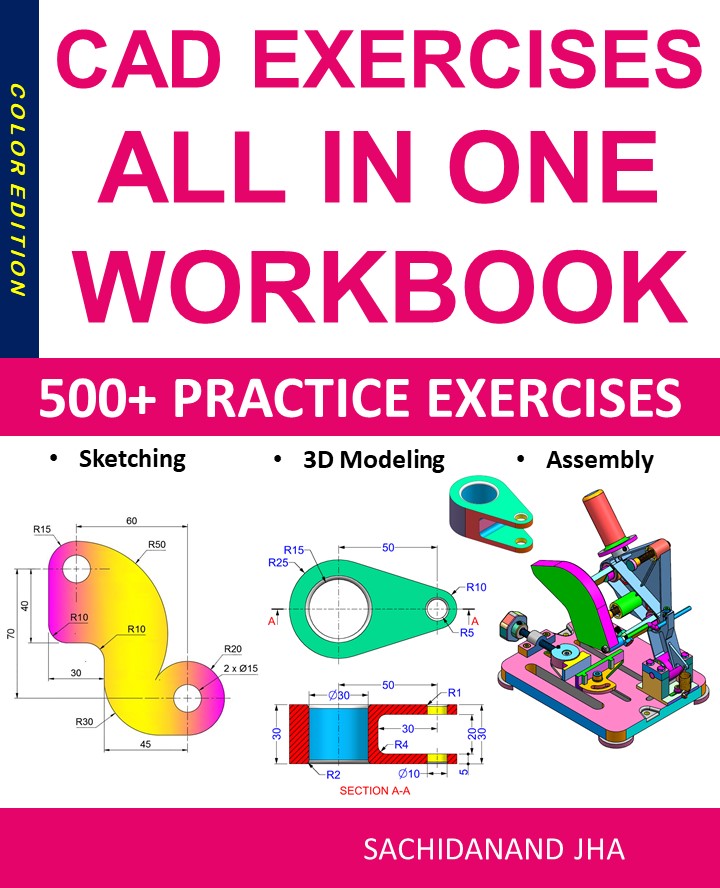
This all-in-one workbook is your ultimate resource to develop hands-on CAD skills using any CAD software.Whether you’re a student, engineer, hobbyist, or professional, this guide is designed to help you gain real design confidence through structured, practice-oriented exercises.
What’s Inside this Book:
- 200 2D Sketching Exercises – Build a strong foundation in dimension-driven 2D geometry and technical drawings
- 200 3D Modeling Exercises – Practice modeling real-world parts, from simple shapes to complex components.
- Multi-Part Assembly Projects – Understand how parts fit together and create full assemblies with detailed drawings
🎯 Why This Book?
- 500+ practice exercises following real design standards
- Designed for self-paced learning & independent practice
- Perfect for classrooms, technical interview preparation, and personal projects
- Covers 2D Sketching, 3D Modeling & Assembly Design in one workbook
- Trusted by 15,000+ CAD learners worldwide
Tinkercad Complete Guide 2025: Learn 3D Design, Circuits & Coding Easily
Tinkercad: The Complete Beginner’s Guide to 3D Design, Circuits, and Coding (2025)
Tinkercad is one of the most beginner-friendly design tools available today. Developed by Autodesk, Tinkercad is a free, web-based application that allows users to create 3D models, simulate electronic circuits, and explore block-based coding—all directly from a browser. Its simplicity and accessibility make it a popular choice for students, educators, hobbyists, and first-time designers.
In this comprehensive guide, we’ll explore what Tinkercad is, its key features, benefits, use cases, and how to get started effectively in 2025.
What Is Tinkercad?
Tinkercad is an online CAD (Computer-Aided Design) platform that focuses on ease of use rather than complexity. Unlike professional CAD software that requires extensive training, Tinkercad uses a drag-and-drop interface that allows users to build designs using simple geometric shapes.
Tinkercad supports three main workspaces:
-
3D Design
-
Circuits
-
Codeblocks
Because it runs entirely in a web browser, there is no installation required, making it ideal for classrooms and quick prototyping.
Key Features of Tinkercad
1. Easy 3D Design Interface
Tinkercad’s 3D design workspace lets users create models by combining basic shapes such as cubes, cylinders, and spheres. Shapes can be resized, rotated, aligned, grouped, and modified with simple controls.
This intuitive approach makes Tinkercad perfect for:
-
Beginners learning CAD fundamentals
-
Students exploring 3D modeling
-
Hobbyists designing objects for 3D printing
2. Tinkercad Circuits
One of Tinkercad’s standout features is its circuits simulator. Users can build electronic circuits using virtual components such as:
-
Arduino boards
-
LEDs and resistors
-
Sensors and motors
-
Breadboards
The circuit simulation runs in real time, allowing users to test designs safely without physical hardware.
3. Block-Based and Text Coding
Tinkercad supports block-based coding (similar to Scratch) and text-based Arduino code. This makes it an excellent platform for learning programming concepts alongside electronics.
Students can:
-
Write logic using visual blocks
-
Convert blocks into Arduino C++ code
-
Understand how software interacts with hardware
4. Cloud-Based Collaboration
All projects are stored in the cloud, making it easy to access designs from anywhere. Users can also share projects via links, allowing teachers and teams to collaborate efficiently.
5. 3D Printing Ready
Tinkercad allows users to export models in STL and OBJ formats, which are widely supported by 3D printers and slicing software. This makes it a popular tool for quick 3D printing projects.
Benefits of Using Tinkercad
Beginner-Friendly
Tinkercad is designed for users with no prior CAD experience. The learning curve is minimal, and most users can create their first model within minutes.
Free to Use
Unlike many CAD tools, Tinkercad is completely free. All features are accessible with a simple Autodesk account.
Ideal for Education
Tinkercad is widely used in STEM education. Teachers can create classrooms, assign projects, and monitor student progress easily.
Safe Electronics Simulation
The circuit simulator eliminates the risk of damaging physical components, making it perfect for learning electronics safely.
Cross-Platform Access
Since it’s browser-based, Tinkercad works on Windows, macOS, Linux, and Chromebooks without installation.
Common Use Cases of Tinkercad
1. Learning 3D Modeling
Students and beginners use Tinkercad to understand core concepts like scaling, alignment, grouping, and spatial thinking.
2. 3D Printing Projects
Hobbyists design phone stands, keychains, enclosures, and custom parts for home 3D printers.
3. Electronics Prototyping
Tinkercad Circuits is commonly used to simulate Arduino projects before building them physically.
4. Classroom STEM Projects
Teachers use Tinkercad to introduce CAD, electronics, and coding in a unified learning environment.
How to Get Started with Tinkercad
Step 1: Create an Account
Visit the Tinkercad website and sign in using an Autodesk account or a supported login method.
Step 2: Choose a Workspace
Select 3D Design, Circuits, or Codeblocks depending on your project goals.
Step 3: Start Designing
Drag shapes onto the workplane, adjust dimensions, and combine them to form your model.
Step 4: Simulate or Export
-
Run simulations for circuits
-
Export 3D designs as STL files for printing
Tinkercad vs Professional CAD Software
While Tinkercad is not intended to replace advanced CAD tools like Fusion 360 or SolidWorks, it serves as an excellent entry point.
| Feature | Tinkercad | Professional CAD |
|---|---|---|
| Learning Curve | Very Low | High |
| Cost | Free | Paid |
| Browser-Based | Yes | Mostly No |
| Advanced Engineering | No | Yes |
Tinkercad is best for learning and simple projects, while professional CAD software is better suited for complex engineering tasks.
Limitations of Tinkercad
Despite its advantages, Tinkercad has some limitations:
-
Not suitable for complex mechanical designs
-
Limited parametric modeling
-
Basic rendering and visualization tools
However, these limitations are expected given its beginner-focused design.
Final Thoughts
Tinkercad is an excellent starting point for anyone interested in 3D design, electronics, or coding. Its simplicity, free access, and educational focus make it one of the most valuable tools for beginners and classrooms worldwide.
Whether you’re a student learning CAD, a teacher introducing STEM concepts, or a hobbyist exploring 3D printing, Tinkercad provides a powerful yet accessible platform to bring ideas to life.
If you’re just beginning your design journey in 2025, Tinkercad is the perfect place to start.
End of Blog
CAD EXERCISES All-in-One Workbook
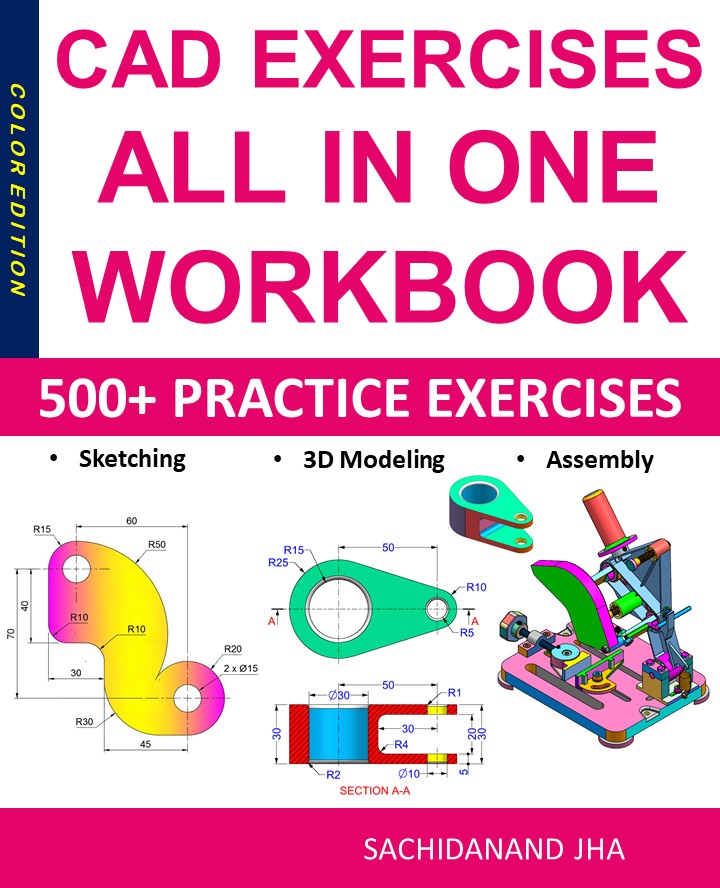
500+ Practice Exercises to Master CAD Through Real-World Practice!
This all-in-one workbook is your ultimate resource to develop hands-on CAD skills using any CAD software.Whether you’re a student, engineer, hobbyist, or professional, this guide is designed to help you gain real design confidence through structured, practice-oriented exercises.
What’s Inside this Book:
- 200 2D Sketching Exercises – Build a strong foundation in dimension-driven 2D geometry and technical drawings
- 200 3D Modeling Exercises – Practice modeling real-world parts, from simple shapes to complex components.
- Multi-Part Assembly Projects – Understand how parts fit together and create full assemblies with detailed drawings
🎯 Why This Book?
- 500+ practice exercises following real design standards
- Designed for self-paced learning & independent practice
- Perfect for classrooms, technical interview preparation, and personal projects
- Covers 2D Sketching, 3D Modeling & Assembly Design in one workbook
- Trusted by 15,000+ CAD learners worldwide
Fusion 360 Software: Complete Guide to Features, Benefits & Uses in 2026

Fusion 360: The Complete Guide to Autodesk’s Cloud-Based CAD Software
Fusion 360 is one of the most advanced and versatile design tools available today. Developed by Autodesk, Fusion 360 combines CAD (Computer-Aided Design), CAM (Computer-Aided Manufacturing), and CAE (Computer-Aided Engineering) into a single cloud-based platform. This unified approach has made Fusion 360 a favorite among engineers, product designers, startups, and manufacturers worldwide.
In this guide, we’ll explore what Fusion 360 is, its key features, benefits, applications, and why it stands out in the modern CAD landscape.
What Is Fusion 360?
Fusion 360 is a professional 3D design and engineering software developed by Autodesk. Unlike traditional desktop-only CAD tools, Fusion 360 operates on a cloud-connected environment, enabling real-time collaboration, automatic updates, and secure data storage.
Fusion 360 supports:
-
3D parametric modeling
-
Freeform and surface modeling
-
Mechanical assemblies
-
Simulation and analysis
-
CNC machining and manufacturing workflows
This all-in-one approach eliminates the need for multiple disconnected tools.
Key Features of Fusion 360
Fusion 360 is packed with powerful features designed for modern product development.
1. Parametric and Direct Modeling
Fusion 360 allows both parametric modeling (dimension-driven designs) and direct modeling for flexible edits. Designers can quickly iterate without breaking design intent.
2. Cloud-Based Collaboration
All projects are stored securely in the cloud, allowing teams to:
-
Collaborate in real time
-
Track design history
-
Access designs from anywhere
3. Integrated CAM
Fusion 360 includes built-in CAM tools for:
-
CNC milling
-
Turning
-
Cutting
-
Additive manufacturing
This makes it ideal for manufacturing-ready designs.
4. Simulation and Analysis (CAE)
Engineers can test designs using:
-
Stress and strain analysis
-
Thermal simulations
-
Motion studies
Early testing helps reduce design failures and production costs.
5. Generative Design
Fusion 360 uses AI-driven generative design to automatically create optimized design options based on materials, constraints, and manufacturing methods.
Benefits of Using Fusion 360
Fusion 360 offers several advantages over traditional CAD software.
Faster Product Development
By combining CAD, CAM, and CAE in one platform, Fusion 360 reduces workflow complexity and speeds up development cycles.
Cost-Effective Solution
Fusion 360 is more affordable than many high-end CAD tools and offers flexible subscription plans for startups, students, and hobbyists.
Easy Learning Curve
With an intuitive interface and extensive tutorials, Fusion 360 is beginner-friendly while still powerful enough for professionals.
Automatic Updates
Users always have access to the latest features without manual upgrades.
Applications of Fusion 360
Fusion 360 is used across a wide range of industries.
Product Design and Prototyping
Designers create functional prototypes and test them digitally before physical production.
Mechanical Engineering
Engineers design complex mechanical parts and assemblies with precision.
Manufacturing and CNC Machining
Fusion 360’s CAM tools generate toolpaths directly from CAD models, ensuring accuracy and efficiency.
Electronics Design
Fusion 360 supports PCB design and integrates electronic and mechanical workflows.
Education and Training
Students and educators use Fusion 360 to learn modern design and manufacturing processes.
Fusion 360 vs Traditional CAD Software
Fusion 360 differs from traditional CAD tools in several ways:
-
Cloud-based collaboration instead of local file storage
-
Integrated manufacturing tools instead of third-party plugins
-
Subscription-based pricing instead of expensive perpetual licenses
-
Continuous feature updates instead of yearly releases
These advantages make Fusion 360 especially appealing to modern design teams.
Fusion 360 Pricing Overview
Fusion 360 offers multiple licensing options:
-
Free licenses for students, educators, and personal use
-
Commercial subscriptions for professionals and businesses
-
Startup plans with reduced pricing
This flexible pricing makes Fusion 360 accessible to users at all levels.
Future of Fusion 360
Autodesk continues to enhance Fusion 360 with:
-
AI-assisted design tools
-
Advanced generative design
-
Improved cloud performance
-
Deeper manufacturing integrations
As digital manufacturing and Industry 4.0 grow, Fusion 360 is positioned to remain a leading design platform.
Final Thoughts
Fusion 360 is more than just CAD software—it’s a complete product development ecosystem. By integrating design, engineering, and manufacturing into a single cloud-based platform, Fusion 360 empowers teams to innovate faster and smarter.
Whether you’re a student, startup founder, or professional engineer, Fusion 360 offers the tools needed to turn ideas into real-world products efficiently.
End of Blog
CAD EXERCISES All-in-One Workbook
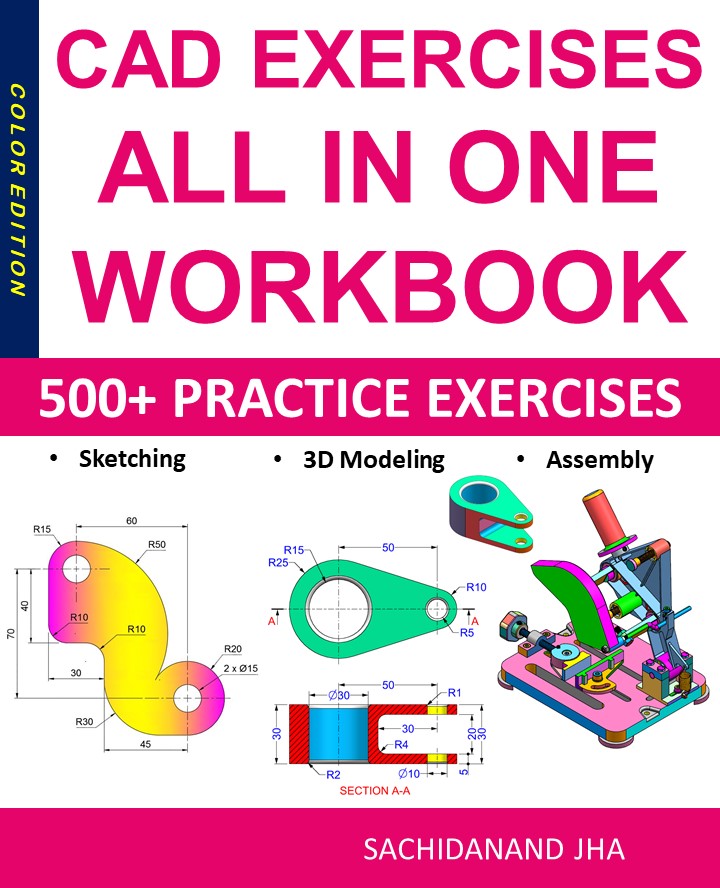
500+ Practice Exercises to Master CAD Through Real-World Practice!
This all-in-one workbook is your ultimate resource to develop hands-on CAD skills using any CAD software.Whether you’re a student, engineer, hobbyist, or professional, this guide is designed to help you gain real design confidence through structured, practice-oriented exercises.
What’s Inside this Book:
- 200 2D Sketching Exercises – Build a strong foundation in dimension-driven 2D geometry and technical drawings
- 200 3D Modeling Exercises – Practice modeling real-world parts, from simple shapes to complex components.
- Multi-Part Assembly Projects – Understand how parts fit together and create full assemblies with detailed drawings
🎯 Why This Book?
- 500+ practice exercises following real design standards
- Designed for self-paced learning & independent practice
- Perfect for classrooms, technical interview preparation, and personal projects
- Covers 2D Sketching, 3D Modeling & Assembly Design in one workbook
- Trusted by 15,000+ CAD learners worldwide
Fusion 360 Software: Complete Guide to Features, Benefits & Uses in 2026

Fusion 360: The Complete Guide to Autodesk’s Cloud-Based CAD Software
Fusion 360 is one of the most advanced and versatile design tools available today. Developed by Autodesk, Fusion 360 combines CAD (Computer-Aided Design), CAM (Computer-Aided Manufacturing), and CAE (Computer-Aided Engineering) into a single cloud-based platform. This unified approach has made Fusion 360 a favorite among engineers, product designers, startups, and manufacturers worldwide.
In this guide, we’ll explore what Fusion 360 is, its key features, benefits, applications, and why it stands out in the modern CAD landscape.
What Is Fusion 360?
Fusion 360 is a professional 3D design and engineering software developed by Autodesk. Unlike traditional desktop-only CAD tools, Fusion 360 operates on a cloud-connected environment, enabling real-time collaboration, automatic updates, and secure data storage.
Fusion 360 supports:
-
3D parametric modeling
-
Freeform and surface modeling
-
Mechanical assemblies
-
Simulation and analysis
-
CNC machining and manufacturing workflows
This all-in-one approach eliminates the need for multiple disconnected tools.
Key Features of Fusion 360
Fusion 360 is packed with powerful features designed for modern product development.
1. Parametric and Direct Modeling
Fusion 360 allows both parametric modeling (dimension-driven designs) and direct modeling for flexible edits. Designers can quickly iterate without breaking design intent.
2. Cloud-Based Collaboration
All projects are stored securely in the cloud, allowing teams to:
-
Collaborate in real time
-
Track design history
-
Access designs from anywhere
3. Integrated CAM
Fusion 360 includes built-in CAM tools for:
-
CNC milling
-
Turning
-
Cutting
-
Additive manufacturing
This makes it ideal for manufacturing-ready designs.
4. Simulation and Analysis (CAE)
Engineers can test designs using:
-
Stress and strain analysis
-
Thermal simulations
-
Motion studies
Early testing helps reduce design failures and production costs.
5. Generative Design
Fusion 360 uses AI-driven generative design to automatically create optimized design options based on materials, constraints, and manufacturing methods.
Benefits of Using Fusion 360
Fusion 360 offers several advantages over traditional CAD software.
Faster Product Development
By combining CAD, CAM, and CAE in one platform, Fusion 360 reduces workflow complexity and speeds up development cycles.
Cost-Effective Solution
Fusion 360 is more affordable than many high-end CAD tools and offers flexible subscription plans for startups, students, and hobbyists.
Easy Learning Curve
With an intuitive interface and extensive tutorials, Fusion 360 is beginner-friendly while still powerful enough for professionals.
Automatic Updates
Users always have access to the latest features without manual upgrades.
Applications of Fusion 360
Fusion 360 is used across a wide range of industries.
Product Design and Prototyping
Designers create functional prototypes and test them digitally before physical production.
Mechanical Engineering
Engineers design complex mechanical parts and assemblies with precision.
Manufacturing and CNC Machining
Fusion 360’s CAM tools generate toolpaths directly from CAD models, ensuring accuracy and efficiency.
Electronics Design
Fusion 360 supports PCB design and integrates electronic and mechanical workflows.
Education and Training
Students and educators use Fusion 360 to learn modern design and manufacturing processes.
Fusion 360 vs Traditional CAD Software
Fusion 360 differs from traditional CAD tools in several ways:
-
Cloud-based collaboration instead of local file storage
-
Integrated manufacturing tools instead of third-party plugins
-
Subscription-based pricing instead of expensive perpetual licenses
-
Continuous feature updates instead of yearly releases
These advantages make Fusion 360 especially appealing to modern design teams.
Fusion 360 Pricing Overview
Fusion 360 offers multiple licensing options:
-
Free licenses for students, educators, and personal use
-
Commercial subscriptions for professionals and businesses
-
Startup plans with reduced pricing
This flexible pricing makes Fusion 360 accessible to users at all levels.
Future of Fusion 360
Autodesk continues to enhance Fusion 360 with:
-
AI-assisted design tools
-
Advanced generative design
-
Improved cloud performance
-
Deeper manufacturing integrations
As digital manufacturing and Industry 4.0 grow, Fusion 360 is positioned to remain a leading design platform.
Final Thoughts
Fusion 360 is more than just CAD software—it’s a complete product development ecosystem. By integrating design, engineering, and manufacturing into a single cloud-based platform, Fusion 360 empowers teams to innovate faster and smarter.
Whether you’re a student, startup founder, or professional engineer, Fusion 360 offers the tools needed to turn idea
End of Blog
CAD EXERCISES All-in-One Workbook
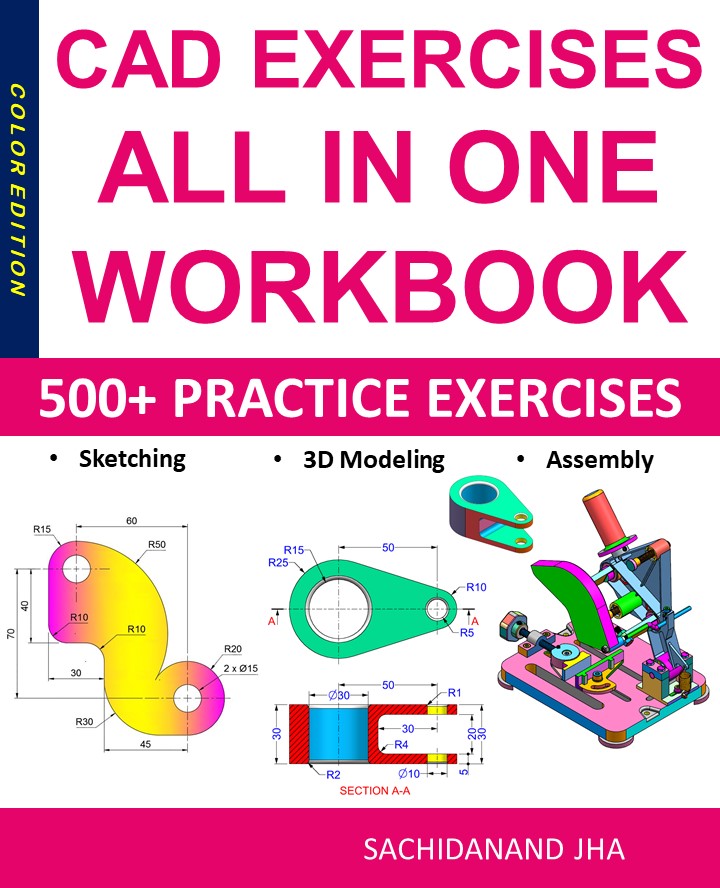
500+ Practice Exercises to Master CAD Through Real-World Practice!
This all-in-one workbook is your ultimate resource to develop hands-on CAD skills using any CAD software.Whether you’re a student, engineer, hobbyist, or professional, this guide is designed to help you gain real design confidence through structured, practice-oriented exercises.
What’s Inside this Book:
- 200 2D Sketching Exercises – Build a strong foundation in dimension-driven 2D geometry and technical drawings
- 200 3D Modeling Exercises – Practice modeling real-world parts, from simple shapes to complex components.
- Multi-Part Assembly Projects – Understand how parts fit together and create full assemblies with detailed drawings
🎯 Why This Book?
- 500+ practice exercises following real design standards
- Designed for self-paced learning & independent practice
- Perfect for classrooms, technical interview preparation, and personal projects
- Covers 2D Sketching, 3D Modeling & Assembly Design in one workbook
- Trusted by 15,000+ CAD learners worldwide
How to Use Fusion 360 – Complete Beginner Guide (2025)

Fusion 360 is one of the most powerful and beginner-friendly CAD/CAM/CAE tools available today. Developed by Autodesk, Fusion 360 is widely used for 3D modeling, product design, mechanical engineering, CNC machining, and 3D printing. Whether you are a student, hobbyist, or professional designer, learning Fusion 360 can significantly boost your design and manufacturing skills.
In this guide, you’ll learn how to use Fusion 360 step by step, from setting up your workspace to creating your first 3D model and exporting it for manufacturing.
What Is Fusion 360?
Fusion 360 is a cloud-based 3D CAD, CAM, and CAE software that combines design, engineering, and manufacturing tools in one platform. Unlike traditional CAD software, Fusion 360 allows parametric modeling, direct modeling, simulation, and collaboration in a single workflow.
Key Features of Fusion 360
-
Parametric & direct 3D modeling
-
Sketch-based design
-
Assembly & joint system
-
Simulation & stress analysis
-
CAM for CNC machining
-
Cloud collaboration & version control
How to Download and Install Fusion 360
Before learning how to use Fusion 360, you need to install it properly.
Steps to Install Fusion 360
-
Visit the Autodesk Fusion 360 official website
-
Sign in with your Autodesk account
-
Choose the correct license:
-
Personal Use (Free for hobbyists)
-
Student/Educational License
-
Commercial License
-
-
Download and install Fusion 360
-
Launch the software and sign in
Once installed, Fusion 360 automatically updates via the cloud.
Understanding the Fusion 360 Interface
When you open Fusion 360, the interface may feel overwhelming, but it’s well organized.
Main Areas of Fusion 360
-
Toolbar – Design, Solid, Surface, Mesh, and Sheet Metal tools
-
Browser Panel – Shows sketches, bodies, components, and timelines
-
Canvas – Main workspace where you model
-
Timeline – Tracks design history and parametric changes
Understanding the timeline is crucial, as it allows you to edit any step later without breaking your model.
Creating Your First Sketch in Fusion 360
Sketching is the foundation of all 3D models in Fusion 360.
Steps to Create a Sketch
-
Click Create Sketch
-
Select a plane (XY, YZ, or XZ)
-
Use sketch tools like:
-
Line
-
Rectangle
-
Circle
-
Arc
-
-
Apply dimensions (D key) to fully constrain the sketch
-
Finish the sketch
💡 Tip: Always aim for a fully constrained sketch (black lines), which ensures stability.
Turning a Sketch into a 3D Model
Once your sketch is ready, you can convert it into a solid body.
Common 3D Modeling Tools
-
Extrude (E) – Create 3D shapes from sketches
-
Revolve – Rotate a profile around an axis
-
Loft – Blend shapes between profiles
-
Sweep – Extrude along a path
Example:
-
Select a sketch profile
-
Press E (Extrude)
-
Enter distance
-
Click OK
You now have your first 3D model in Fusion 360.
Using Components and Assemblies
Fusion 360 uses a component-based workflow, which is essential for real-world designs.
Why Use Components?
-
Better organization
-
Easier assemblies
-
Motion simulation
-
Improved performance
How to Create Components
-
Right-click in the Browser
-
Select New Component
-
Model parts inside components
-
Use Joints to connect parts
This approach is ideal for mechanical designs and product assemblies.
Applying Materials and Appearance
Fusion 360 allows you to add realistic materials to your model.
Steps to Apply Materials
-
Press A (Appearance)
-
Choose a material (metal, plastic, wood, etc.)
-
Drag and drop onto your model
-
Adjust color, texture, and finish
This is useful for rendering, presentations, and client previews.
Rendering and Visualization
Fusion 360 includes a powerful rendering engine.
Rendering Workflow
-
Switch to Render Workspace
-
Set environment and lighting
-
Choose materials
-
Adjust camera angle
-
Click Render
You can render locally or use cloud rendering for faster results.
Exporting Files for Manufacturing
Fusion 360 supports multiple export formats depending on your use case.
Common Export Formats
-
STL – 3D printing
-
STEP / IGES – CAD file sharing
-
DXF – Laser cutting / CNC
-
G-code – CNC machining (CAM workspace)
To export:
-
Go to File → Export
-
Choose format
-
Save locally or to the cloud
Tips to Learn Fusion 360 Faster
-
Learn keyboard shortcuts (E, D, L, P)
-
Use parametric design properly
-
Name sketches and components
-
Watch Autodesk tutorials
-
Practice real-world projects
-
Avoid editing bodies directly—edit sketches instead
Final Thoughts
Fusion 360 is an all-in-one design and manufacturing solution that is both beginner-friendly and industry-ready. By mastering sketches, parametric modeling, components, and exporting workflows, you can design professional-grade products efficiently.
Whether you want to create mechanical parts, 3D printable models, or CNC-ready designs, Fusion 360 gives you everything you need in one powerful platform.