

CATIA Software: The Complete Guide to Advanced CAD
CATIA is one of the most advanced and powerful CAD (Computer-Aided Design) software solutions in the world. Developed by Dassault Systèmes, CATIA is widely used in high-end industries such as aerospace, automotive, defense, and industrial equipment manufacturing. Its ability to handle complex surface modeling, large assemblies, and multi-disciplinary engineering makes it a cornerstone of modern product development.
In this comprehensive guide, we’ll explore what CATIA is, its key features, benefits, applications, and why it remains a top choice for enterprise-level design teams.
What Is CATIA?
CATIA (Computer Aided Three-Dimensional Interactive Application) is a professional CAD, CAE, and CAM software suite developed by Dassault Systèmes. It supports the entire product lifecycle—from concept design and engineering to manufacturing and maintenance.
CATIA is best known for:
-
Advanced 3D modeling capabilities
-
High-precision surface design
-
Large-scale assembly management
-
End-to-end product lifecycle support
CATIA is part of the 3DEXPERIENCE platform, enabling collaboration and data management across global teams.
Key Features of CATIA
CATIA offers an extensive range of tools tailored for complex engineering challenges.
1. Advanced Surface Modeling
CATIA excels in Class-A surface modeling, making it ideal for:
-
Automotive body design
-
Aircraft exteriors
-
Consumer product aesthetics
Its surface continuity and precision are unmatched in the CAD industry.
2. Parametric and Solid Modeling
CATIA supports robust parametric modeling, allowing engineers to manage design changes efficiently while maintaining design intent.
3. Large Assembly Design
CATIA can handle extremely large and complex assemblies, such as:
-
Aircraft structures
-
Automotive platforms
-
Industrial machinery
This makes it suitable for enterprise-scale projects.
4. Integrated CAE and CAM
CATIA integrates engineering analysis and manufacturing tools, enabling:
-
Structural analysis
-
Kinematic simulations
-
CNC machining preparation
5. PLM and Collaboration
Through the 3DEXPERIENCE platform, CATIA provides:
-
Centralized data management
-
Version control
-
Cross-team collaboration
Benefits of Using CATIA
Industry-Grade Precision
CATIA is designed for mission-critical industries where accuracy, safety, and compliance are essential.
End-to-End Product Development
From concept to production, CATIA supports the entire product lifecycle without relying on external tools.
Scalability for Enterprises
CATIA is ideal for large organizations managing thousands of parts and complex workflows.
Customization and Automation
Advanced scripting and customization options allow companies to automate repetitive design tasks.
Applications of CATIA
Aerospace Industry
CATIA is widely used to design:
-
Aircraft fuselages
-
Wings and structural components
-
Jet engines and interiors
Major aerospace manufacturers rely on CATIA for its precision and scalability.
Automotive Industry
CATIA is a standard tool for:
-
Vehicle body design
-
Powertrain development
-
Interior and exterior styling
Industrial Equipment
Manufacturers use CATIA to design heavy machinery, tools, and production systems.
Shipbuilding and Defense
CATIA supports complex naval and defense projects requiring large assemblies and strict standards.
Consumer Products
High-end consumer product companies use CATIA for premium design and surface quality.
CATIA vs Other CAD Software
CATIA stands apart from most CAD tools due to:
-
Superior surface modeling capabilities
-
Enterprise-level scalability
-
Deep PLM integration
-
Advanced multi-disciplinary workflows
While tools like SolidWorks and Fusion 360 are popular for mid-range design, CATIA dominates high-complexity, high-precision engineering environments.
CATIA Licensing and Cost
CATIA follows a modular licensing model:
-
Different workbenches for specific tasks
-
Enterprise-focused pricing
-
Licenses often bundled with 3DEXPERIENCE services
While expensive, CATIA’s capabilities justify the cost for large organizations.
Future of CATIA
CATIA continues to evolve with:
-
AI-driven design optimization
-
Enhanced cloud collaboration
-
Digital twin integration
-
Model-based systems engineering (MBSE)
These innovations ensure CATIA remains relevant in the era of smart manufacturing and Industry 4.0.
Final Thoughts
CATIA is not just a CAD tool—it is a complete product engineering platform. Its unmatched surface modeling, scalability, and lifecycle management capabilities make it indispensable for industries where precision and complexity are non-negotiable.
For organizations involved in aerospace, automotive, or advanced manufacturing, CATIA remains one of the most powerful design solutions available today.
End of Blog
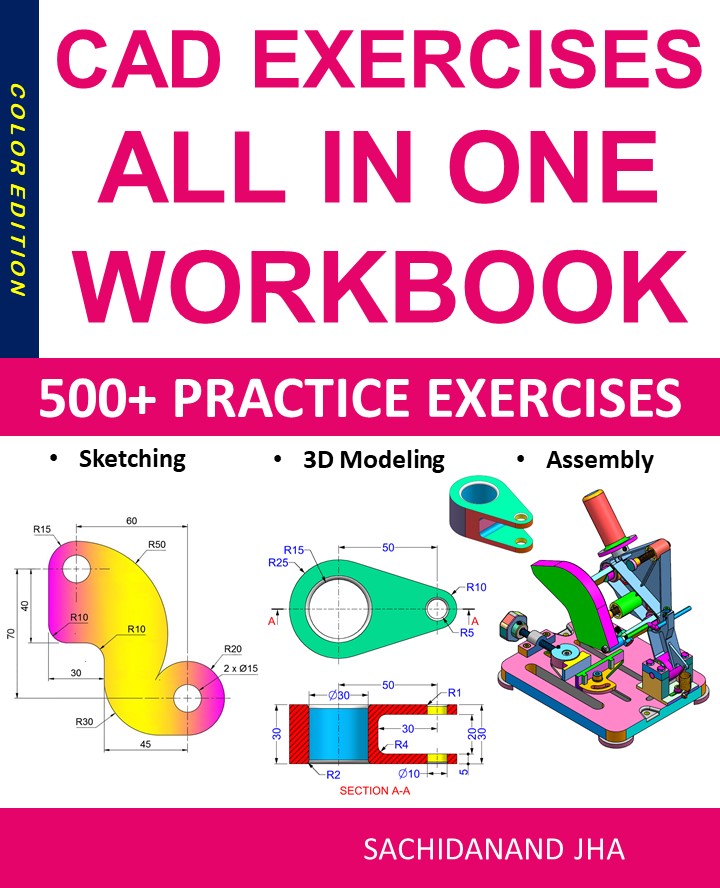
CAD EXERCISES All-in-One Workbook
500+ Practice Exercises to Master CAD Through Real-World Practice!
This all-in-one workbook is your ultimate resource to develop hands-on CAD skills using any CAD software.Whether you’re a student, engineer, hobbyist, or professional, this guide is designed to help you gain real design confidence through structured, practice-oriented exercises.
What’s Inside this Book:
- 200 2D Sketching Exercises – Build a strong foundation in dimension-driven 2D geometry and technical drawings
- 200 3D Modeling Exercises – Practice modeling real-world parts, from simple shapes to complex components.
- Multi-Part Assembly Projects – Understand how parts fit together and create full assemblies with detailed drawings
🎯 Why This Book?
- 500+ practice exercises following real design standards
- Designed for self-paced learning & independent practice
- Perfect for classrooms, technical interview preparation, and personal projects
- Covers 2D Sketching, 3D Modeling & Assembly Design in one workbook
- Trusted by 15,000+ CAD learners worldwide