Master Fusion 360: Unlock Sketch Mode with Expert Tips

Master Fusion 360: Unlock Sketch Mode with Expert Tips

Introduction

Entering Sketch Mode in Fusion 360 is a fundamental skill for users of this powerful 3D CAD software. As a beginner, navigating the interface and understanding how to create and work with sketches can be overwhelming. In this comprehensive guide, we’ll walk you through the process of entering Sketch Mode, highlighting the key steps and best practices for creating accurate and efficient sketches.

Preparing for Sketch Mode

Before entering Sketch Mode, it’s essential to understand the fundamental concepts of Fusion 360 and its interface. Familiarize yourself with the user interface, including the toolbar, menus, and workspace. Make sure you have a clear understanding of the different modes in Fusion 360, such as Part, Assembly, and Sketch Mode.

Creating a New Sketch

To enter Sketch Mode, you need to create a new sketch. You can do this by going to the Create tab in the toolbar and selecting Sketch. Alternatively, you can use the Sketch tool in the Part tab. When creating a new sketch, you can choose from various sketch planes, such as the XY Plane, XZ Plane, or YZ Plane. You can also create a custom sketch plane by selecting the Create Plane tool.

Selecting a Sketch Plane

When selecting a sketch plane, consider the orientation and position of the plane relative to your part or assembly. For example, if you’re creating a part with a cylindrical shape, it’s best to create a sketch on the XY Plane. To select a sketch plane, click on the desired plane in the browser or use the Plane tool in the Sketch tab.

Understanding Sketch Entities

In Sketch Mode, you’ll work with various entities, including lines, curves, arcs, and splines. These entities are the building blocks of your sketch, and understanding how to create and manipulate them is crucial for creating accurate and efficient sketches. In the next section, we’ll delve deeper into the world of sketch entities.

Working with Sketch Entities

Sketch entities are the foundation of any sketch in Fusion 360. Understanding how to create and manipulate these entities is essential for creating accurate and efficient sketches.

Creating Lines and Curves

Lines and curves are the most basic sketch entities. You can create lines and curves using the Line and Curve tools in the Sketch tab. To create a line, select the Line tool and click on two points in the sketch plane. To create a curve, select the Curve tool and click on multiple points in the sketch plane.

Working with Arcs and Splines

Arcs and splines are more advanced sketch entities that can be used to create complex shapes. You can create arcs using the Arc tool in the Sketch tab. To create an arc, select the Arc tool and click on two points in the sketch plane. Splines are created using the Spline tool. To create a spline, select the Spline tool and click on multiple points in the sketch plane.

Understanding Constraints and Dimensions

Constraints and dimensions are essential for creating accurate and efficient sketches. Constraints define the relationships between sketch entities, while dimensions define the size and shape of the entities. In the next section, we’ll explore the world of constraints and dimensions.

Understanding Constraints and Dimensions

Constraints and dimensions are crucial for creating accurate and efficient sketches. Understanding how to apply constraints and dimensions is essential for achieving the desired shape and size of your part or assembly.

Applying Constraints

Constraints define the relationships between sketch entities. You can apply various constraints, including Coincidence, Perpendicular, and Tangent. To apply a constraint, select two or more sketch entities and click on the desired constraint in the Constraints panel.

Understanding Dimensions

Dimensions define the size and shape of sketch entities. You can add various dimensions, including Length, Width, and Angle. To add a dimension, select a sketch entity and click on the desired dimension in the Dimensions panel.

Understanding Assembly Constraints

Assembly constraints define the relationships between parts in an assembly. You can apply various assembly constraints, including Mate and Joint. To apply an assembly constraint, select two or more parts in the assembly and click on the desired constraint in the Constraints panel.

Conclusion

Entering Sketch Mode in Fusion 360 is a fundamental skill for users of this powerful 3D CAD software. By following the steps outlined in this comprehensive guide, you’ll be able to create accurate and efficient sketches with ease. Remember to always practice and experiment with different sketch entities, constraints, and dimensions to master the art of sketching in Fusion 360.

FAQ

Q: What is Sketch Mode in Fusion 360?

A: Sketch Mode is a fundamental mode in Fusion 360 where you can create and work with sketches. Sketches are two-dimensional representations of a part or assembly.

Q: How do I enter Sketch Mode in Fusion 360?

A: To enter Sketch Mode, go to the Create tab in the toolbar and select Sketch. Alternatively, you can use the Sketch tool in the Part tab.

Q: What are sketch entities?

A: Sketch entities are the building blocks of a sketch in Fusion 360. They include lines, curves, arcs, and splines.

Q: How do I create a new sketch in Fusion 360?

A: To create a new sketch, go to the Create tab in the toolbar and select Sketch. Alternatively, you can use the Sketch tool in the Part tab.

Q: What are constraints in Fusion 360?

A: Constraints define the relationships between sketch entities. You can apply various constraints, including Coincidence, Perpendicular, and Tangent.

Q: What are dimensions in Fusion 360?

A: Dimensions define the size and shape of sketch entities. You can add various dimensions, including Length, Width, and Angle.

Q: How do I save a sketch in Fusion 360?

A: To save a sketch, go to the File menu and select Save. You can also use the Ctrl+S shortcut to save the sketch.


End of Blog


Fusion 360 Workbook Cover

After purchasing, a download link will be sent instantly to your email.

Buy Now For $27.99

Are you a student or Unemployed? Get this bundle for $19.99

Offer for Students Buy Now For $19.99

Buy Paperback on Amazon.com

Autodesk Fusion 360 All-in-One Workbook

500+ Practice Exercises to Master Autodesk Fusion 360 through real-world practice!

This all-in-one workbook is your ultimate resource to develop hands-on CAD skills with Autodesk Fusion 360. Whether you’re a student, engineer, hobbyist, or professional, this guide is built to help you gain real design confidence through structured practice.

What’s Inside this Book:

  • 200 2D Sketching Exercises – Build a strong foundation in dimension-driven 2D geometry and technical drawings
  • 200 3D Modeling Exercises – Practice modeling real-world parts, from simple shapes to complex components.
  • Multi-Part Assembly Projects – Understand how parts fit together and create full assemblies with detailed drawings

🎯 Why This Book?

  • 500+ practice exercises following real design standards
  • Designed for self-paced learning & independent practice
  • Perfect for classrooms, technical interview preparation, and personal projects
  • Covers 2D Sketching, 3D Modeling & Assembly Design in one workbook
  • Trusted by 15,000+ CAD learners worldwide

After purchasing, a download link will be sent instantly to your email.

Buy Now For $27.99

Are you a student or Unemployed? Get this bundle for $19.99

Offer for Students Buy Now For $19.99

Buy Paperback on Amazon.com

Master 3D Modeling in Fusion 360: Where Sketching Sets the Stage

Master 3D Modeling in Fusion 360: Where Sketching Sets the Stage

Introduction

Sketching is a fundamental skill in 3D modeling, particularly in Fusion 360, a popular computer-aided design (CAD) software. Many users new to Fusion 360 often struggle to create high-quality 3D models without a solid understanding of sketching principles. In this blog post, we’ll explore why sketching is the foundation of 3D modeling in Fusion 360 and provide practical tips to help you improve your skills.

The Importance of Sketching in 3D Modeling

Before diving into the specifics of Fusion 360, let’s discuss why sketching is essential in 3D modeling. A 3D model is essentially a collection of 2D sketches that are extruded or lofted to create the final shape. Think of it like building with blocks: you start with individual blocks (2D sketches) and then assemble them to create a 3D structure.

In Fusion 360, sketches are the building blocks of your 3D model. You create a sketch by drawing 2D shapes and curves, which are then used to create the 3D model. This process allows you to create complex shapes with precision and accuracy. Without a solid understanding of sketching, it’s challenging to create high-quality 3D models.

Understanding Sketching Fundamentals in Fusion 360

To create successful sketches in Fusion 360, you need to understand the fundamentals of sketching. Here are some key concepts to grasp:

Understanding the Coordinate System

The coordinate system is the foundation of sketching in Fusion 360. Familiarize yourself with the X, Y, and Z axes, as well as the origin point (0, 0, 0). This will help you create accurate sketches and avoid common mistakes.

Creating Basic Shapes

Fusion 360 provides a variety of basic shapes, including lines, arcs, circles, and rectangles. Practice creating these shapes to develop your sketching skills. You can also create custom shapes by combining basic shapes or using the sketching tools.

Working with Dimensions and Constraints

Dimensions and constraints are essential in maintaining the accuracy of your sketches. Learn to use dimensions to define the size of your sketches and constraints to define the relationships between them.

Practical Examples of Sketching in Fusion 360

Let’s apply the concepts we’ve discussed so far to create a simple 3D model in Fusion 360. We’ll create a basic box with a hole in it.

Creating the Box

To create the box, we’ll start by creating a sketch of the box’s shape. We’ll use the rectangle tool to create the top and bottom faces, and then use the extrude tool to create the sides.

Creating the Hole

To create the hole, we’ll create a new sketch and use the circle tool to draw a circle. We’ll then use the extrude tool to create the hole.

Advanced Sketching Techniques in Fusion 360

Once you’ve mastered the basics of sketching, you can move on to more advanced techniques. Here are a few examples:

Using Curves and Splines

Curves and splines are essential in creating smooth, continuous shapes. Learn to use the curve tool to create smooth curves and the spline tool to create complex shapes.

Applying Symmetry and Mirroring

Symmetry and mirroring are useful techniques for creating symmetrical shapes and reducing the complexity of your sketches. Learn to use the symmetry tool to create symmetrical shapes and the mirror tool to create mirrored shapes.

Conclusion

Sketching is the foundation of 3D modeling in Fusion 360. By understanding the fundamentals of sketching, including the coordinate system, basic shapes, dimensions, and constraints, you’ll be well on your way to creating high-quality 3D models. Practice creating simple sketches and gradually move on to more complex projects. Remember to experiment and explore the advanced sketching techniques in Fusion 360 to take your skills to the next level.

FAQ

Q: What is the difference between a 2D sketch and a 3D model?

A: A 2D sketch is a 2D drawing that represents a 2D shape or object. A 3D model is a 3D representation of a 3D object or shape, created by extruding or lofting 2D sketches.

Q: How do I create a new sketch in Fusion 360?

A: To create a new sketch in Fusion 360, go to the “Sketch” tab in the top menu and click on “New Sketch.” You can also create a new sketch by selecting “Sketch” from the “Create” menu.

Q: What is the purpose of dimensions in sketching?

A: Dimensions in sketching are used to define the size and shape of your sketches. They help maintain the accuracy of your sketches and ensure that your 3D model is created correctly.

Q: How do I use constraints in sketching?

A: Constraints in sketching are used to define the relationships between different elements in your sketch. They help maintain the accuracy of your sketches and ensure that your 3D model is created correctly.

Q: Can I use Fusion 360 to create 2D drawings?

A: Yes, Fusion 360 can be used to create 2D drawings. However, Fusion 360 is primarily a 3D CAD software, and its 2D drawing capabilities are more limited compared to other CAD software.

Q: What is the difference between a sketch and a part in Fusion 360?

A: A sketch is a 2D drawing that represents a 2D shape or object. A part is a 3D object or shape created by extruding or lofting a sketch.


End of Blog


Fusion 360 Workbook Cover

After purchasing, a download link will be sent instantly to your email.

Buy Now For $27.99

Are you a student or Unemployed? Get this bundle for $19.99

Offer for Students Buy Now For $19.99

Buy Paperback on Amazon.com

Autodesk Fusion 360 All-in-One Workbook

500+ Practice Exercises to Master Autodesk Fusion 360 through real-world practice!

This all-in-one workbook is your ultimate resource to develop hands-on CAD skills with Autodesk Fusion 360. Whether you’re a student, engineer, hobbyist, or professional, this guide is built to help you gain real design confidence through structured practice.

What’s Inside this Book:

  • 200 2D Sketching Exercises – Build a strong foundation in dimension-driven 2D geometry and technical drawings
  • 200 3D Modeling Exercises – Practice modeling real-world parts, from simple shapes to complex components.
  • Multi-Part Assembly Projects – Understand how parts fit together and create full assemblies with detailed drawings

🎯 Why This Book?

  • 500+ practice exercises following real design standards
  • Designed for self-paced learning & independent practice
  • Perfect for classrooms, technical interview preparation, and personal projects
  • Covers 2D Sketching, 3D Modeling & Assembly Design in one workbook
  • Trusted by 15,000+ CAD learners worldwide

After purchasing, a download link will be sent instantly to your email.

Buy Now For $27.99

Are you a student or Unemployed? Get this bundle for $19.99

Offer for Students Buy Now For $19.99

Buy Paperback on Amazon.com

Fusion 360 for Beginners: Mastering Sketching Essentials

Fusion 360 for Beginners: Mastering Sketching Essentials

Introduction

Fusion 360 is a powerful computer-aided design (CAD) software that allows users to create, edit, and simulate 3D models. One of the key features of Fusion 360 is its sketching tool, which enables users to create 2D sketches that can be used as reference for 3D models or as standalone designs. In this blog post, we will cover the basics of sketching in Fusion 360, including its purpose, how to create a sketch, and some practical examples.

What is Sketching in Fusion 360?

Sketching in Fusion 360 involves creating 2D drawings or designs using a variety of tools and functions. These sketches can be used as the foundation for 3D models, or they can be used as standalone designs. Sketching is an essential part of the design process in Fusion 360, as it allows users to visualize and communicate their ideas before moving on to 3D modeling.

Purpose of Sketching in Fusion 360

The purpose of sketching in Fusion 360 is to create a 2D representation of a design concept. This can be useful for several reasons:

  • It allows users to visualize their design concept before moving on to 3D modeling.
  • It provides a reference point for 3D modeling, ensuring that the 3D model is accurate and consistent with the design concept.
  • It enables users to make changes and revisions to their design concept before investing time and resources into 3D modeling.

Creating a Sketch in Fusion 360

To create a sketch in Fusion 360, follow these steps:

  1. Open a new part or assembly in Fusion 360.
  2. Select the “Sketch” tab in the top toolbar.
  3. Choose the desired sketch plane from the “Sketch Plane” dropdown menu.
  4. Use the various sketch tools to create lines, arcs, and other shapes.
  5. Use the “Dimensions” tool to add dimensions to your sketch.

Basic Sketch Tools

The following are some of the basic sketch tools available in Fusion 360:

  • Line Tool: The line tool is used to create straight lines in your sketch.
  • Arc Tool: The arc tool is used to create curved lines in your sketch.
  • Circle Tool: The circle tool is used to create circular shapes in your sketch.
  • Rectangle Tool: The rectangle tool is used to create rectangular shapes in your sketch.
  • Polygon Tool: The polygon tool is used to create polygonal shapes in your sketch.

Advanced Sketch Tools

In addition to the basic sketch tools, Fusion 360 also offers several advanced sketch tools, including:

  • Trim Tool: The trim tool is used to remove or trim excess sketch elements.
  • Extend Tool: The extend tool is used to extend or lengthen sketch elements.
  • Split Tool: The split tool is used to split or divide sketch elements.
  • Join Tool: The join tool is used to join or combine sketch elements.

Practical Examples

Here are a few practical examples of how to use the sketch tools in Fusion 360:

  • Example 1: Create a simple rectangle using the rectangle tool.
  • Example 2: Create a complex polygon using the polygon tool.
  • Example 3: Create a circular shape using the circle tool.

Dimensions and Constraints

Dimensions and constraints are essential components of a sketch in Fusion 360. Dimensions are used to specify the size and shape of a sketch element, while constraints are used to control the movement and behavior of a sketch element.

Types of Dimensions

The following are some of the common types of dimensions used in Fusion 360:

  • Linear Dimension: A linear dimension is used to specify the length of a sketch element.
  • Angular Dimension: An angular dimension is used to specify the angle between two sketch elements.
  • Radius Dimension: A radius dimension is used to specify the radius of a circular or curved sketch element.

Using Constraints

Constraints are used to control the movement and behavior of a sketch element. The following are some of the common types of constraints used in Fusion 360:

  • Fixed Constraint: A fixed constraint is used to lock a sketch element in place.
  • Coincident Constraint: A coincident constraint is used to align two or more sketch elements.
  • Parallel Constraint: A parallel constraint is used to align two or more sketch elements parallel to each other.

Conclusion

Sketching in Fusion 360 is a powerful tool that allows users to create 2D designs and references for 3D models. By mastering the basics of sketching, including creating a sketch, using basic and advanced sketch tools, and adding dimensions and constraints, users can create accurate and reliable designs.

FAQ

What is the purpose of sketching in Fusion 360?

The purpose of sketching in Fusion 360 is to create a 2D representation of a design concept, which can be used as a reference point for 3D modeling or as a standalone design.

How do I create a sketch in Fusion 360?

To create a sketch in Fusion 360, open a new part or assembly, select the “Sketch” tab, choose the desired sketch plane, and use the various sketch tools to create lines, arcs, and other shapes.

What are the basic sketch tools in Fusion 360?

The basic sketch tools in Fusion 360 include the line tool, arc tool, circle tool, rectangle tool, and polygon tool.

What are the advanced sketch tools in Fusion 360?

The advanced sketch tools in Fusion 360 include the trim tool, extend tool, split tool, and join tool.

How do I add dimensions to my sketch in Fusion 360?

To add dimensions to your sketch in Fusion 360, use the “Dimensions” tool to specify the size and shape of your sketch elements.

What are the types of dimensions used in Fusion 360?

The types of dimensions used in Fusion 360 include linear dimensions, angular dimensions, and radius dimensions.

How do I use constraints in Fusion 360?

To use constraints in Fusion 360, apply a constraint to a sketch element to control its movement and behavior.

Can I undo my sketch in Fusion 360?

Yes, you can undo your sketch in Fusion 360 by using the “Undo” button or by using the keyboard shortcut Ctrl + Z (Windows) or Command + Z (Mac).


End of Blog


Fusion 360 Workbook Cover

After purchasing, a download link will be sent instantly to your email.

Buy Now For $27.99

Are you a student or Unemployed? Get this bundle for $19.99

Offer for Students Buy Now For $19.99

Buy Paperback on Amazon.com

Autodesk Fusion 360 All-in-One Workbook

500+ Practice Exercises to Master Autodesk Fusion 360 through real-world practice!

This all-in-one workbook is your ultimate resource to develop hands-on CAD skills with Autodesk Fusion 360. Whether you’re a student, engineer, hobbyist, or professional, this guide is built to help you gain real design confidence through structured practice.

What’s Inside this Book:

  • 200 2D Sketching Exercises – Build a strong foundation in dimension-driven 2D geometry and technical drawings
  • 200 3D Modeling Exercises – Practice modeling real-world parts, from simple shapes to complex components.
  • Multi-Part Assembly Projects – Understand how parts fit together and create full assemblies with detailed drawings

🎯 Why This Book?

  • 500+ practice exercises following real design standards
  • Designed for self-paced learning & independent practice
  • Perfect for classrooms, technical interview preparation, and personal projects
  • Covers 2D Sketching, 3D Modeling & Assembly Design in one workbook
  • Trusted by 15,000+ CAD learners worldwide

After purchasing, a download link will be sent instantly to your email.

Buy Now For $27.99

Are you a student or Unemployed? Get this bundle for $19.99

Offer for Students Buy Now For $19.99

Buy Paperback on Amazon.com

Drawing Faces from Scratch in Fusion 360: A Step-by-Step Guide

Drawing Faces from Scratch in Fusion 360: A Step-by-Step Guide

Introduction

Fusion 360, a powerful computer-aided design (CAD) software, offers a wide range of tools to create detailed 3D models. One of the essential tasks in 3D modeling is creating a sketch on a face, which serves as the foundation for more complex designs. In this blog post, we will guide you through the step-by-step process of starting a sketch on a face in Fusion 360.

Setting Up the Sketch Environment

Before creating a sketch, it’s essential to understand the basic concepts of Fusion 360’s sketching environment. Familiarize yourself with the different tools and settings that will be used throughout this tutorial.

  1. Launch Fusion 360: Open Fusion 360 on your computer and create a new part or open an existing one.
  2. Enter Sketch Mode: Click on the “Sketch” tab in the top navigation bar to enter the sketching environment.
  3. Select a Face: Click on the face where you want to create the sketch. You can also use the “Select Face” tool (hotkey: F) to select the face.

Creating a New Sketch

Now that you have set up the sketch environment, it’s time to create a new sketch on the selected face.

Step 1: Create a New Sketch

  1. Create a New Sketch: Click on the “Create Sketch” button in the “Sketch” tab.
  2. Select the Face: Make sure the face you selected earlier is still highlighted.
  3. Choose a Sketch Type: Fusion 360 offers two types of sketches: “2D Sketch” and “3D Sketch.” For this tutorial, we will use the “2D Sketch” option.

Step 2: Define the Sketch Plane

The sketch plane is the 2D plane where you will create your sketch. You can define the sketch plane manually or let Fusion 360 automatically detect it.

  1. Define the Sketch Plane: Click on the “Define Sketch Plane” button.
  2. Select a Reference: Choose a reference point on the face to define the sketch plane.

Adding Entities to the Sketch

Now that you have created a new sketch, it’s time to add entities to it.

Step 1: Add a Point

  1. Create a Point: Click on the “Point” tool (hotkey: P) and click on the face to create a point.
  2. Verify the Point: Make sure the point is created on the face and is not intersecting with any other entities.

Step 2: Add a Line

  1. Create a Line: Click on the “Line” tool (hotkey: L) and click on two points to create a line.
  2. Verify the Line: Make sure the line is created on the face and is not intersecting with any other entities.

Modifying the Sketch Entities

As you add more entities to the sketch, you may need to modify them to achieve the desired result.

Step 1: Move an Entity

  1. Select an Entity: Click on the entity you want to move.
  2. Move the Entity: Click on the “Move” tool (hotkey: M) and drag the entity to its new location.

Step 2: Rotate an Entity

  1. Select an Entity: Click on the entity you want to rotate.
  2. Rotate the Entity: Click on the “Rotate” tool (hotkey: R) and drag the entity to its new orientation.

Conclusion

Creating a sketch on a face in Fusion 360 is a fundamental skill that requires practice and patience. By following the steps outlined in this tutorial, you should now be able to create a sketch on a face and add entities to it. Remember to experiment with different tools and settings to achieve the desired result.

FAQ

Q: What is the difference between a 2D sketch and a 3D sketch in Fusion 360?

A: A 2D sketch is a 2D plane where you can create 2D entities, while a 3D sketch is a 3D space where you can create 3D entities.

Q: How do I select a face in Fusion 360?

A: You can select a face by clicking on it or using the “Select Face” tool (hotkey: F).

Q: What is the purpose of defining a sketch plane in Fusion 360?

A: Defining a sketch plane sets the 2D plane where you will create your sketch.

Q: Can I modify a sketch entity after it’s created?

A: Yes, you can modify a sketch entity by using the “Move,” “Rotate,” or “Scale” tools.

Q: How do I save a sketch in Fusion 360?

A: You can save a sketch by clicking on the “File” menu and selecting “Save As.”

Q: Can I reuse a sketch in another part or assembly in Fusion 360?

A: Yes, you can reuse a sketch by copying and pasting it into another part or assembly.

Q: What is the difference between a sketch and a feature in Fusion 360?

A: A sketch is a 2D or 3D plane where you create entities, while a feature is a 3D entity that is created from a sketch.


End of Blog


Fusion 360 Workbook Cover

After purchasing, a download link will be sent instantly to your email.

Buy Now For $27.99

Are you a student or Unemployed? Get this bundle for $19.99

Offer for Students Buy Now For $19.99

Buy Paperback on Amazon.com

Autodesk Fusion 360 All-in-One Workbook

500+ Practice Exercises to Master Autodesk Fusion 360 through real-world practice!

This all-in-one workbook is your ultimate resource to develop hands-on CAD skills with Autodesk Fusion 360. Whether you’re a student, engineer, hobbyist, or professional, this guide is built to help you gain real design confidence through structured practice.

What’s Inside this Book:

  • 200 2D Sketching Exercises – Build a strong foundation in dimension-driven 2D geometry and technical drawings
  • 200 3D Modeling Exercises – Practice modeling real-world parts, from simple shapes to complex components.
  • Multi-Part Assembly Projects – Understand how parts fit together and create full assemblies with detailed drawings

🎯 Why This Book?

  • 500+ practice exercises following real design standards
  • Designed for self-paced learning & independent practice
  • Perfect for classrooms, technical interview preparation, and personal projects
  • Covers 2D Sketching, 3D Modeling & Assembly Design in one workbook
  • Trusted by 15,000+ CAD learners worldwide

After purchasing, a download link will be sent instantly to your email.

Buy Now For $27.99

Are you a student or Unemployed? Get this bundle for $19.99

Offer for Students Buy Now For $19.99

Buy Paperback on Amazon.com

Drawing Faces from Scratch in Fusion 360: A Step-by-Step Guide

Drawing Faces from Scratch in Fusion 360: A Step-by-Step Guide

Introduction

Fusion 360, a powerful computer-aided design (CAD) software, offers a wide range of tools to create detailed 3D models. One of the essential tasks in 3D modeling is creating a sketch on a face, which serves as the foundation for more complex designs. In this blog post, we will guide you through the step-by-step process of starting a sketch on a face in Fusion 360.

Setting Up the Sketch Environment

Before creating a sketch, it’s essential to understand the basic concepts of Fusion 360’s sketching environment. Familiarize yourself with the different tools and settings that will be used throughout this tutorial.

  1. Launch Fusion 360: Open Fusion 360 on your computer and create a new part or open an existing one.
  2. Enter Sketch Mode: Click on the “Sketch” tab in the top navigation bar to enter the sketching environment.
  3. Select a Face: Click on the face where you want to create the sketch. You can also use the “Select Face” tool (hotkey: F) to select the face.

Creating a New Sketch

Now that you have set up the sketch environment, it’s time to create a new sketch on the selected face.

Step 1: Create a New Sketch

  1. Create a New Sketch: Click on the “Create Sketch” button in the “Sketch” tab.
  2. Select the Face: Make sure the face you selected earlier is still highlighted.
  3. Choose a Sketch Type: Fusion 360 offers two types of sketches: “2D Sketch” and “3D Sketch.” For this tutorial, we will use the “2D Sketch” option.

Step 2: Define the Sketch Plane

The sketch plane is the 2D plane where you will create your sketch. You can define the sketch plane manually or let Fusion 360 automatically detect it.

  1. Define the Sketch Plane: Click on the “Define Sketch Plane” button.
  2. Select a Reference: Choose a reference point on the face to define the sketch plane.

Adding Entities to the Sketch

Now that you have created a new sketch, it’s time to add entities to it.

Step 1: Add a Point

  1. Create a Point: Click on the “Point” tool (hotkey: P) and click on the face to create a point.
  2. Verify the Point: Make sure the point is created on the face and is not intersecting with any other entities.

Step 2: Add a Line

  1. Create a Line: Click on the “Line” tool (hotkey: L) and click on two points to create a line.
  2. Verify the Line: Make sure the line is created on the face and is not intersecting with any other entities.

Modifying the Sketch Entities

As you add more entities to the sketch, you may need to modify them to achieve the desired result.

Step 1: Move an Entity

  1. Select an Entity: Click on the entity you want to move.
  2. Move the Entity: Click on the “Move” tool (hotkey: M) and drag the entity to its new location.

Step 2: Rotate an Entity

  1. Select an Entity: Click on the entity you want to rotate.
  2. Rotate the Entity: Click on the “Rotate” tool (hotkey: R) and drag the entity to its new orientation.

Conclusion

Creating a sketch on a face in Fusion 360 is a fundamental skill that requires practice and patience. By following the steps outlined in this tutorial, you should now be able to create a sketch on a face and add entities to it. Remember to experiment with different tools and settings to achieve the desired result.

FAQ

Q: What is the difference between a 2D sketch and a 3D sketch in Fusion 360?

A: A 2D sketch is a 2D plane where you can create 2D entities, while a 3D sketch is a 3D space where you can create 3D entities.

Q: How do I select a face in Fusion 360?

A: You can select a face by clicking on it or using the “Select Face” tool (hotkey: F).

Q: What is the purpose of defining a sketch plane in Fusion 360?

A: Defining a sketch plane sets the 2D plane where you will create your sketch.

Q: Can I modify a sketch entity after it’s created?

A: Yes, you can modify a sketch entity by using the “Move,” “Rotate,” or “Scale” tools.

Q: How do I save a sketch in Fusion 360?

A: You can save a sketch by clicking on the “File” menu and selecting “Save As.”

Q: Can I reuse a sketch in another part or assembly in Fusion 360?

A: Yes, you can reuse a sketch by copying and pasting it into another part or assembly.

Q: What is the difference between a sketch and a feature in Fusion 360?

A: A sketch is a 2D or 3D plane where you create entities, while a feature is a 3D entity that is created from a sketch.


End of Blog


Fusion 360 Workbook Cover

After purchasing, a download link will be sent instantly to your email.

Buy Now For $27.99

Are you a student or Unemployed? Get this bundle for $19.99

Offer for Students Buy Now For $19.99

Buy Paperback on Amazon.com

Autodesk Fusion 360 All-in-One Workbook

500+ Practice Exercises to Master Autodesk Fusion 360 through real-world practice!

This all-in-one workbook is your ultimate resource to develop hands-on CAD skills with Autodesk Fusion 360. Whether you’re a student, engineer, hobbyist, or professional, this guide is built to help you gain real design confidence through structured practice.

What’s Inside this Book:

  • 200 2D Sketching Exercises – Build a strong foundation in dimension-driven 2D geometry and technical drawings
  • 200 3D Modeling Exercises – Practice modeling real-world parts, from simple shapes to complex components.
  • Multi-Part Assembly Projects – Understand how parts fit together and create full assemblies with detailed drawings

🎯 Why This Book?

  • 500+ practice exercises following real design standards
  • Designed for self-paced learning & independent practice
  • Perfect for classrooms, technical interview preparation, and personal projects
  • Covers 2D Sketching, 3D Modeling & Assembly Design in one workbook
  • Trusted by 15,000+ CAD learners worldwide
After purchasing, a download link will be sent instantly to your email.

Buy Now For $27.99

Are you a student or Unemployed? Get this bundle for $19.99

Offer for Students Buy Now For $19.99

Buy Paperback on Amazon.com

Drawing Faces from Scratch in Fusion 360: A Step-by-Step Guide

Drawing Faces from Scratch in Fusion 360: A Step-by-Step Guide

Introduction

Fusion 360, a powerful computer-aided design (CAD) software, offers a wide range of tools to create detailed 3D models. One of the essential tasks in 3D modeling is creating a sketch on a face, which serves as the foundation for more complex designs. In this blog post, we will guide you through the step-by-step process of starting a sketch on a face in Fusion 360.

Setting Up the Sketch Environment

Before creating a sketch, it’s essential to understand the basic concepts of Fusion 360’s sketching environment. Familiarize yourself with the different tools and settings that will be used throughout this tutorial.

  1. Launch Fusion 360: Open Fusion 360 on your computer and create a new part or open an existing one.
  2. Enter Sketch Mode: Click on the “Sketch” tab in the top navigation bar to enter the sketching environment.
  3. Select a Face: Click on the face where you want to create the sketch. You can also use the “Select Face” tool (hotkey: F) to select the face.

Creating a New Sketch

Now that you have set up the sketch environment, it’s time to create a new sketch on the selected face.

Step 1: Create a New Sketch

  1. Create a New Sketch: Click on the “Create Sketch” button in the “Sketch” tab.
  2. Select the Face: Make sure the face you selected earlier is still highlighted.
  3. Choose a Sketch Type: Fusion 360 offers two types of sketches: “2D Sketch” and “3D Sketch.” For this tutorial, we will use the “2D Sketch” option.

Step 2: Define the Sketch Plane

The sketch plane is the 2D plane where you will create your sketch. You can define the sketch plane manually or let Fusion 360 automatically detect it.

  1. Define the Sketch Plane: Click on the “Define Sketch Plane” button.
  2. Select a Reference: Choose a reference point on the face to define the sketch plane.

Adding Entities to the Sketch

Now that you have created a new sketch, it’s time to add entities to it.

Step 1: Add a Point

  1. Create a Point: Click on the “Point” tool (hotkey: P) and click on the face to create a point.
  2. Verify the Point: Make sure the point is created on the face and is not intersecting with any other entities.

Step 2: Add a Line

  1. Create a Line: Click on the “Line” tool (hotkey: L) and click on two points to create a line.
  2. Verify the Line: Make sure the line is created on the face and is not intersecting with any other entities.

Modifying the Sketch Entities

As you add more entities to the sketch, you may need to modify them to achieve the desired result.

Step 1: Move an Entity

  1. Select an Entity: Click on the entity you want to move.
  2. Move the Entity: Click on the “Move” tool (hotkey: M) and drag the entity to its new location.

Step 2: Rotate an Entity

  1. Select an Entity: Click on the entity you want to rotate.
  2. Rotate the Entity: Click on the “Rotate” tool (hotkey: R) and drag the entity to its new orientation.

Conclusion

Creating a sketch on a face in Fusion 360 is a fundamental skill that requires practice and patience. By following the steps outlined in this tutorial, you should now be able to create a sketch on a face and add entities to it. Remember to experiment with different tools and settings to achieve the desired result.

FAQ

Q: What is the difference between a 2D sketch and a 3D sketch in Fusion 360?

A: A 2D sketch is a 2D plane where you can create 2D entities, while a 3D sketch is a 3D space where you can create 3D entities.

Q: How do I select a face in Fusion 360?

A: You can select a face by clicking on it or using the “Select Face” tool (hotkey: F).

Q: What is the purpose of defining a sketch plane in Fusion 360?

A: Defining a sketch plane sets the 2D plane where you will create your sketch.

Q: Can I modify a sketch entity after it’s created?

A: Yes, you can modify a sketch entity by using the “Move,” “Rotate,” or “Scale” tools.

Q: How do I save a sketch in Fusion 360?

A: You can save a sketch by clicking on the “File” menu and selecting “Save As.”

Q: Can I reuse a sketch in another part or assembly in Fusion 360?

A: Yes, you can reuse a sketch by copying and pasting it into another part or assembly.

Q: What is the difference between a sketch and a feature in Fusion 360?

A: A sketch is a 2D or 3D plane where you create entities, while a feature is a 3D entity that is created from a sketch.


End of Blog


Fusion 360 Workbook Cover

After purchasing, a download link will be sent instantly to your email.

Buy Now For $27.99

Are you a student or Unemployed? Get this bundle for $19.99

Offer for Students Buy Now For $19.99

Buy Paperback on Amazon.com

Autodesk Fusion 360 All-in-One Workbook

500+ Practice Exercises to Master Autodesk Fusion 360 through real-world practice!

This all-in-one workbook is your ultimate resource to develop hands-on CAD skills with Autodesk Fusion 360. Whether you’re a student, engineer, hobbyist, or professional, this guide is built to help you gain real design confidence through structured practice.

What’s Inside this Book:

  • 200 2D Sketching Exercises – Build a strong foundation in dimension-driven 2D geometry and technical drawings
  • 200 3D Modeling Exercises – Practice modeling real-world parts, from simple shapes to complex components.
  • Multi-Part Assembly Projects – Understand how parts fit together and create full assemblies with detailed drawings

🎯 Why This Book?

  • 500+ practice exercises following real design standards
  • Designed for self-paced learning & independent practice
  • Perfect for classrooms, technical interview preparation, and personal projects
  • Covers 2D Sketching, 3D Modeling & Assembly Design in one workbook
  • Trusted by 15,000+ CAD learners worldwide

After purchasing, a download link will be sent instantly to your email.

Buy Now For $27.99

Are you a student or Unemployed? Get this bundle for $19.99

Offer for Students Buy Now For $19.99

Buy Paperback on Amazon.com

Master Fusion 360: Unlock Sketch Mode with Expert Tips

Master Fusion 360: Unlock Sketch Mode with Expert Tips

Introduction

Entering Sketch Mode in Fusion 360 is a fundamental skill for users of this powerful 3D CAD software. As a beginner, navigating the interface and understanding how to create and work with sketches can be overwhelming. In this comprehensive guide, we’ll walk you through the process of entering Sketch Mode, highlighting the key steps and best practices for creating accurate and efficient sketches.

Preparing for Sketch Mode

Before entering Sketch Mode, it’s essential to understand the fundamental concepts of Fusion 360 and its interface. Familiarize yourself with the user interface, including the toolbar, menus, and workspace. Make sure you have a clear understanding of the different modes in Fusion 360, such as Part, Assembly, and Sketch Mode.

Creating a New Sketch

To enter Sketch Mode, you need to create a new sketch. You can do this by going to the Create tab in the toolbar and selecting Sketch. Alternatively, you can use the Sketch tool in the Part tab. When creating a new sketch, you can choose from various sketch planes, such as the XY Plane, XZ Plane, or YZ Plane. You can also create a custom sketch plane by selecting the Create Plane tool.

Selecting a Sketch Plane

When selecting a sketch plane, consider the orientation and position of the plane relative to your part or assembly. For example, if you’re creating a part with a cylindrical shape, it’s best to create a sketch on the XY Plane. To select a sketch plane, click on the desired plane in the browser or use the Plane tool in the Sketch tab.

Understanding Sketch Entities

In Sketch Mode, you’ll work with various entities, including lines, curves, arcs, and splines. These entities are the building blocks of your sketch, and understanding how to create and manipulate them is crucial for creating accurate and efficient sketches. In the next section, we’ll delve deeper into the world of sketch entities.

Working with Sketch Entities

Sketch entities are the foundation of any sketch in Fusion 360. Understanding how to create and manipulate these entities is essential for creating accurate and efficient sketches.

Creating Lines and Curves

Lines and curves are the most basic sketch entities. You can create lines and curves using the Line and Curve tools in the Sketch tab. To create a line, select the Line tool and click on two points in the sketch plane. To create a curve, select the Curve tool and click on multiple points in the sketch plane.

Working with Arcs and Splines

Arcs and splines are more advanced sketch entities that can be used to create complex shapes. You can create arcs using the Arc tool in the Sketch tab. To create an arc, select the Arc tool and click on two points in the sketch plane. Splines are created using the Spline tool. To create a spline, select the Spline tool and click on multiple points in the sketch plane.

Understanding Constraints and Dimensions

Constraints and dimensions are essential for creating accurate and efficient sketches. Constraints define the relationships between sketch entities, while dimensions define the size and shape of the entities. In the next section, we’ll explore the world of constraints and dimensions.

Understanding Constraints and Dimensions

Constraints and dimensions are crucial for creating accurate and efficient sketches. Understanding how to apply constraints and dimensions is essential for achieving the desired shape and size of your part or assembly.

Applying Constraints

Constraints define the relationships between sketch entities. You can apply various constraints, including Coincidence, Perpendicular, and Tangent. To apply a constraint, select two or more sketch entities and click on the desired constraint in the Constraints panel.

Understanding Dimensions

Dimensions define the size and shape of sketch entities. You can add various dimensions, including Length, Width, and Angle. To add a dimension, select a sketch entity and click on the desired dimension in the Dimensions panel.

Understanding Assembly Constraints

Assembly constraints define the relationships between parts in an assembly. You can apply various assembly constraints, including Mate and Joint. To apply an assembly constraint, select two or more parts in the assembly and click on the desired constraint in the Constraints panel.

Conclusion

Entering Sketch Mode in Fusion 360 is a fundamental skill for users of this powerful 3D CAD software. By following the steps outlined in this comprehensive guide, you’ll be able to create accurate and efficient sketches with ease. Remember to always practice and experiment with different sketch entities, constraints, and dimensions to master the art of sketching in Fusion 360.

FAQ

Q: What is Sketch Mode in Fusion 360?

A: Sketch Mode is a fundamental mode in Fusion 360 where you can create and work with sketches. Sketches are two-dimensional representations of a part or assembly.

Q: How do I enter Sketch Mode in Fusion 360?

A: To enter Sketch Mode, go to the Create tab in the toolbar and select Sketch. Alternatively, you can use the Sketch tool in the Part tab.

Q: What are sketch entities?

A: Sketch entities are the building blocks of a sketch in Fusion 360. They include lines, curves, arcs, and splines.

Q: How do I create a new sketch in Fusion 360?

A: To create a new sketch, go to the Create tab in the toolbar and select Sketch. Alternatively, you can use the Sketch tool in the Part tab.

Q: What are constraints in Fusion 360?

A: Constraints define the relationships between sketch entities. You can apply various constraints, including Coincidence, Perpendicular, and Tangent.

Q: What are dimensions in Fusion 360?

A: Dimensions define the size and shape of sketch entities. You can add various dimensions, including Length, Width, and Angle.

Q: How do I save a sketch in Fusion 360?

A: To save a sketch, go to the File menu and select Save. You can also use the Ctrl+S shortcut to save the sketch.


End of Blog


Fusion 360 Workbook Cover

After purchasing, a download link will be sent instantly to your email.

Buy Now For $27.99

Are you a student or Unemployed? Get this bundle for $19.99

Offer for Students Buy Now For $19.99

Buy Paperback on Amazon.com

Autodesk Fusion 360 All-in-One Workbook

500+ Practice Exercises to Master Autodesk Fusion 360 through real-world practice!

This all-in-one workbook is your ultimate resource to develop hands-on CAD skills with Autodesk Fusion 360. Whether you’re a student, engineer, hobbyist, or professional, this guide is built to help you gain real design confidence through structured practice.

What’s Inside this Book:

  • 200 2D Sketching Exercises – Build a strong foundation in dimension-driven 2D geometry and technical drawings
  • 200 3D Modeling Exercises – Practice modeling real-world parts, from simple shapes to complex components.
  • Multi-Part Assembly Projects – Understand how parts fit together and create full assemblies with detailed drawings

🎯 Why This Book?

  • 500+ practice exercises following real design standards
  • Designed for self-paced learning & independent practice
  • Perfect for classrooms, technical interview preparation, and personal projects
  • Covers 2D Sketching, 3D Modeling & Assembly Design in one workbook
  • Trusted by 15,000+ CAD learners worldwide
After purchasing, a download link will be sent instantly to your email.

Buy Now For $27.99

Are you a student or Unemployed? Get this bundle for $19.99

Offer for Students Buy Now For $19.99

Buy Paperback on Amazon.com

Master Fusion 360: Unlock Sketch Mode with Expert Tips

Master Fusion 360: Unlock Sketch Mode with Expert Tips

Introduction

Entering Sketch Mode in Fusion 360 is a fundamental skill for users of this powerful 3D CAD software. As a beginner, navigating the interface and understanding how to create and work with sketches can be overwhelming. In this comprehensive guide, we’ll walk you through the process of entering Sketch Mode, highlighting the key steps and best practices for creating accurate and efficient sketches.

Preparing for Sketch Mode

Before entering Sketch Mode, it’s essential to understand the fundamental concepts of Fusion 360 and its interface. Familiarize yourself with the user interface, including the toolbar, menus, and workspace. Make sure you have a clear understanding of the different modes in Fusion 360, such as Part, Assembly, and Sketch Mode.

Creating a New Sketch

To enter Sketch Mode, you need to create a new sketch. You can do this by going to the Create tab in the toolbar and selecting Sketch. Alternatively, you can use the Sketch tool in the Part tab. When creating a new sketch, you can choose from various sketch planes, such as the XY Plane, XZ Plane, or YZ Plane. You can also create a custom sketch plane by selecting the Create Plane tool.

Selecting a Sketch Plane

When selecting a sketch plane, consider the orientation and position of the plane relative to your part or assembly. For example, if you’re creating a part with a cylindrical shape, it’s best to create a sketch on the XY Plane. To select a sketch plane, click on the desired plane in the browser or use the Plane tool in the Sketch tab.

Understanding Sketch Entities

In Sketch Mode, you’ll work with various entities, including lines, curves, arcs, and splines. These entities are the building blocks of your sketch, and understanding how to create and manipulate them is crucial for creating accurate and efficient sketches. In the next section, we’ll delve deeper into the world of sketch entities.

Working with Sketch Entities

Sketch entities are the foundation of any sketch in Fusion 360. Understanding how to create and manipulate these entities is essential for creating accurate and efficient sketches.

Creating Lines and Curves

Lines and curves are the most basic sketch entities. You can create lines and curves using the Line and Curve tools in the Sketch tab. To create a line, select the Line tool and click on two points in the sketch plane. To create a curve, select the Curve tool and click on multiple points in the sketch plane.

Working with Arcs and Splines

Arcs and splines are more advanced sketch entities that can be used to create complex shapes. You can create arcs using the Arc tool in the Sketch tab. To create an arc, select the Arc tool and click on two points in the sketch plane. Splines are created using the Spline tool. To create a spline, select the Spline tool and click on multiple points in the sketch plane.

Understanding Constraints and Dimensions

Constraints and dimensions are essential for creating accurate and efficient sketches. Constraints define the relationships between sketch entities, while dimensions define the size and shape of the entities. In the next section, we’ll explore the world of constraints and dimensions.

Understanding Constraints and Dimensions

Constraints and dimensions are crucial for creating accurate and efficient sketches. Understanding how to apply constraints and dimensions is essential for achieving the desired shape and size of your part or assembly.

Applying Constraints

Constraints define the relationships between sketch entities. You can apply various constraints, including Coincidence, Perpendicular, and Tangent. To apply a constraint, select two or more sketch entities and click on the desired constraint in the Constraints panel.

Understanding Dimensions

Dimensions define the size and shape of sketch entities. You can add various dimensions, including Length, Width, and Angle. To add a dimension, select a sketch entity and click on the desired dimension in the Dimensions panel.

Understanding Assembly Constraints

Assembly constraints define the relationships between parts in an assembly. You can apply various assembly constraints, including Mate and Joint. To apply an assembly constraint, select two or more parts in the assembly and click on the desired constraint in the Constraints panel.

Conclusion

Entering Sketch Mode in Fusion 360 is a fundamental skill for users of this powerful 3D CAD software. By following the steps outlined in this comprehensive guide, you’ll be able to create accurate and efficient sketches with ease. Remember to always practice and experiment with different sketch entities, constraints, and dimensions to master the art of sketching in Fusion 360.

FAQ

Q: What is Sketch Mode in Fusion 360?

A: Sketch Mode is a fundamental mode in Fusion 360 where you can create and work with sketches. Sketches are two-dimensional representations of a part or assembly.

Q: How do I enter Sketch Mode in Fusion 360?

A: To enter Sketch Mode, go to the Create tab in the toolbar and select Sketch. Alternatively, you can use the Sketch tool in the Part tab.

Q: What are sketch entities?

A: Sketch entities are the building blocks of a sketch in Fusion 360. They include lines, curves, arcs, and splines.

Q: How do I create a new sketch in Fusion 360?

A: To create a new sketch, go to the Create tab in the toolbar and select Sketch. Alternatively, you can use the Sketch tool in the Part tab.

Q: What are constraints in Fusion 360?

A: Constraints define the relationships between sketch entities. You can apply various constraints, including Coincidence, Perpendicular, and Tangent.

Q: What are dimensions in Fusion 360?

A: Dimensions define the size and shape of sketch entities. You can add various dimensions, including Length, Width, and Angle.

Q: How do I save a sketch in Fusion 360?

A: To save a sketch, go to the File menu and select Save. You can also use the Ctrl+S shortcut to save the sketch.


End of Blog


Fusion 360 Workbook Cover

After purchasing, a download link will be sent instantly to your email.

Buy Now For $27.99

Are you a student or Unemployed? Get this bundle for $19.99

Offer for Students Buy Now For $19.99

Buy Paperback on Amazon.com

Autodesk Fusion 360 All-in-One Workbook

500+ Practice Exercises to Master Autodesk Fusion 360 through real-world practice!

This all-in-one workbook is your ultimate resource to develop hands-on CAD skills with Autodesk Fusion 360. Whether you’re a student, engineer, hobbyist, or professional, this guide is built to help you gain real design confidence through structured practice.

What’s Inside this Book:

  • 200 2D Sketching Exercises – Build a strong foundation in dimension-driven 2D geometry and technical drawings
  • 200 3D Modeling Exercises – Practice modeling real-world parts, from simple shapes to complex components.
  • Multi-Part Assembly Projects – Understand how parts fit together and create full assemblies with detailed drawings

🎯 Why This Book?

  • 500+ practice exercises following real design standards
  • Designed for self-paced learning & independent practice
  • Perfect for classrooms, technical interview preparation, and personal projects
  • Covers 2D Sketching, 3D Modeling & Assembly Design in one workbook
  • Trusted by 15,000+ CAD learners worldwide
After purchasing, a download link will be sent instantly to your email.

Buy Now For $27.99

Are you a student or Unemployed? Get this bundle for $19.99

Offer for Students Buy Now For $19.99

Buy Paperback on Amazon.com

Master 3D Modeling in Fusion 360: Where Sketching Sets the Stage

Master 3D Modeling in Fusion 360: Where Sketching Sets the Stage

Introduction

Sketching is a fundamental skill in 3D modeling, particularly in Fusion 360, a popular computer-aided design (CAD) software. Many users new to Fusion 360 often struggle to create high-quality 3D models without a solid understanding of sketching principles. In this blog post, we’ll explore why sketching is the foundation of 3D modeling in Fusion 360 and provide practical tips to help you improve your skills.

The Importance of Sketching in 3D Modeling

Before diving into the specifics of Fusion 360, let’s discuss why sketching is essential in 3D modeling. A 3D model is essentially a collection of 2D sketches that are extruded or lofted to create the final shape. Think of it like building with blocks: you start with individual blocks (2D sketches) and then assemble them to create a 3D structure.

In Fusion 360, sketches are the building blocks of your 3D model. You create a sketch by drawing 2D shapes and curves, which are then used to create the 3D model. This process allows you to create complex shapes with precision and accuracy. Without a solid understanding of sketching, it’s challenging to create high-quality 3D models.

Understanding Sketching Fundamentals in Fusion 360

To create successful sketches in Fusion 360, you need to understand the fundamentals of sketching. Here are some key concepts to grasp:

Understanding the Coordinate System

The coordinate system is the foundation of sketching in Fusion 360. Familiarize yourself with the X, Y, and Z axes, as well as the origin point (0, 0, 0). This will help you create accurate sketches and avoid common mistakes.

Creating Basic Shapes

Fusion 360 provides a variety of basic shapes, including lines, arcs, circles, and rectangles. Practice creating these shapes to develop your sketching skills. You can also create custom shapes by combining basic shapes or using the sketching tools.

Working with Dimensions and Constraints

Dimensions and constraints are essential in maintaining the accuracy of your sketches. Learn to use dimensions to define the size of your sketches and constraints to define the relationships between them.

Practical Examples of Sketching in Fusion 360

Let’s apply the concepts we’ve discussed so far to create a simple 3D model in Fusion 360. We’ll create a basic box with a hole in it.

Creating the Box

To create the box, we’ll start by creating a sketch of the box’s shape. We’ll use the rectangle tool to create the top and bottom faces, and then use the extrude tool to create the sides.

Creating the Hole

To create the hole, we’ll create a new sketch and use the circle tool to draw a circle. We’ll then use the extrude tool to create the hole.

Advanced Sketching Techniques in Fusion 360

Once you’ve mastered the basics of sketching, you can move on to more advanced techniques. Here are a few examples:

Using Curves and Splines

Curves and splines are essential in creating smooth, continuous shapes. Learn to use the curve tool to create smooth curves and the spline tool to create complex shapes.

Applying Symmetry and Mirroring

Symmetry and mirroring are useful techniques for creating symmetrical shapes and reducing the complexity of your sketches. Learn to use the symmetry tool to create symmetrical shapes and the mirror tool to create mirrored shapes.

Conclusion

Sketching is the foundation of 3D modeling in Fusion 360. By understanding the fundamentals of sketching, including the coordinate system, basic shapes, dimensions, and constraints, you’ll be well on your way to creating high-quality 3D models. Practice creating simple sketches and gradually move on to more complex projects. Remember to experiment and explore the advanced sketching techniques in Fusion 360 to take your skills to the next level.

FAQ

Q: What is the difference between a 2D sketch and a 3D model?

A: A 2D sketch is a 2D drawing that represents a 2D shape or object. A 3D model is a 3D representation of a 3D object or shape, created by extruding or lofting 2D sketches.

Q: How do I create a new sketch in Fusion 360?

A: To create a new sketch in Fusion 360, go to the “Sketch” tab in the top menu and click on “New Sketch.” You can also create a new sketch by selecting “Sketch” from the “Create” menu.

Q: What is the purpose of dimensions in sketching?

A: Dimensions in sketching are used to define the size and shape of your sketches. They help maintain the accuracy of your sketches and ensure that your 3D model is created correctly.

Q: How do I use constraints in sketching?

A: Constraints in sketching are used to define the relationships between different elements in your sketch. They help maintain the accuracy of your sketches and ensure that your 3D model is created correctly.

Q: Can I use Fusion 360 to create 2D drawings?

A: Yes, Fusion 360 can be used to create 2D drawings. However, Fusion 360 is primarily a 3D CAD software, and its 2D drawing capabilities are more limited compared to other CAD software.

Q: What is the difference between a sketch and a part in Fusion 360?

A: A sketch is a 2D drawing that represents a 2D shape or object. A part is a 3D object or shape created by extruding or lofting a sketch.


End of Blog


CAD Exercises Workbook Cover

After purchasing, a download link will be sent instantly to your email.

Buy Now For $27.99

Are you a student or Unemployed? Get this bundle for $19.99

Offer for Students Buy Now For $19.99

Buy Paperback on Amazon.com

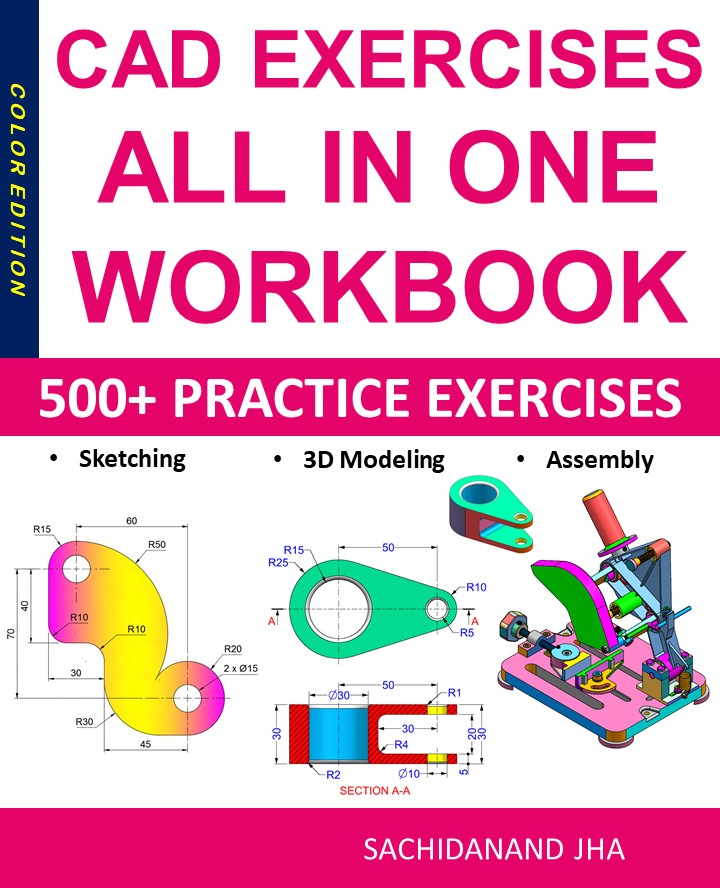
CAD EXERCISES All-in-One Workbook

500+ Practice Exercises to Master CAD Through Real-World Practice!

This all-in-one workbook is your ultimate resource to develop hands-on CAD skills using any CAD software.Whether you’re a student, engineer, hobbyist, or professional, this guide is designed to help you gain real design confidence through structured, practice-oriented exercises.

What’s Inside this Book:

  • 200 2D Sketching Exercises – Build a strong foundation in dimension-driven 2D geometry and technical drawings
  • 200 3D Modeling Exercises – Practice modeling real-world parts, from simple shapes to complex components.
  • Multi-Part Assembly Projects – Understand how parts fit together and create full assemblies with detailed drawings

🎯 Why This Book?

  • 500+ practice exercises following real design standards
  • Designed for self-paced learning & independent practice
  • Perfect for classrooms, technical interview preparation, and personal projects
  • Covers 2D Sketching, 3D Modeling & Assembly Design in one workbook
  • Trusted by 15,000+ CAD learners worldwide
After purchasing, a download link will be sent instantly to your email.

Buy Now For $27.99

Are you a student or Unemployed? Get this bundle for $19.99

Offer for Students Buy Now For $19.99

Buy Paperback on Amazon.com

Fusion 360 for Beginners: Mastering Sketching Essentials

Introduction

Fusion 360 is a powerful computer-aided design (CAD) software that allows users to create, edit, and simulate 3D models. One of the key features of Fusion 360 is its sketching tool, which enables users to create 2D sketches that can be used as reference for 3D models or as standalone designs. In this blog post, we will cover the basics of sketching in Fusion 360, including its purpose, how to create a sketch, and some practical examples.

What is Sketching in Fusion 360?

Sketching in Fusion 360 involves creating 2D drawings or designs using a variety of tools and functions. These sketches can be used as the foundation for 3D models, or they can be used as standalone designs. Sketching is an essential part of the design process in Fusion 360, as it allows users to visualize and communicate their ideas before moving on to 3D modeling.

Purpose of Sketching in Fusion 360

The purpose of sketching in Fusion 360 is to create a 2D representation of a design concept. This can be useful for several reasons:

  • It allows users to visualize their design concept before moving on to 3D modeling.
  • It provides a reference point for 3D modeling, ensuring that the 3D model is accurate and consistent with the design concept.
  • It enables users to make changes and revisions to their design concept before investing time and resources into 3D modeling.

Creating a Sketch in Fusion 360

To create a sketch in Fusion 360, follow these steps:

  1. Open a new part or assembly in Fusion 360.
  2. Select the “Sketch” tab in the top toolbar.
  3. Choose the desired sketch plane from the “Sketch Plane” dropdown menu.
  4. Use the various sketch tools to create lines, arcs, and other shapes.
  5. Use the “Dimensions” tool to add dimensions to your sketch.

Basic Sketch Tools

The following are some of the basic sketch tools available in Fusion 360:

  • Line Tool: The line tool is used to create straight lines in your sketch.
  • Arc Tool: The arc tool is used to create curved lines in your sketch.
  • Circle Tool: The circle tool is used to create circular shapes in your sketch.
  • Rectangle Tool: The rectangle tool is used to create rectangular shapes in your sketch.
  • Polygon Tool: The polygon tool is used to create polygonal shapes in your sketch.

Advanced Sketch Tools

In addition to the basic sketch tools, Fusion 360 also offers several advanced sketch tools, including:

  • Trim Tool: The trim tool is used to remove or trim excess sketch elements.
  • Extend Tool: The extend tool is used to extend or lengthen sketch elements.
  • Split Tool: The split tool is used to split or divide sketch elements.
  • Join Tool: The join tool is used to join or combine sketch elements.

Practical Examples

Here are a few practical examples of how to use the sketch tools in Fusion 360:

  • Example 1: Create a simple rectangle using the rectangle tool.
  • Example 2: Create a complex polygon using the polygon tool.
  • Example 3: Create a circular shape using the circle tool.

Dimensions and Constraints

Dimensions and constraints are essential components of a sketch in Fusion 360. Dimensions are used to specify the size and shape of a sketch element, while constraints are used to control the movement and behavior of a sketch element.

Types of Dimensions

The following are some of the common types of dimensions used in Fusion 360:

  • Linear Dimension: A linear dimension is used to specify the length of a sketch element.
  • Angular Dimension: An angular dimension is used to specify the angle between two sketch elements.
  • Radius Dimension: A radius dimension is used to specify the radius of a circular or curved sketch element.

Using Constraints

Constraints are used to control the movement and behavior of a sketch element. The following are some of the common types of constraints used in Fusion 360:

  • Fixed Constraint: A fixed constraint is used to lock a sketch element in place.
  • Coincident Constraint: A coincident constraint is used to align two or more sketch elements.
  • Parallel Constraint: A parallel constraint is used to align two or more sketch elements parallel to each other.

Conclusion

Sketching in Fusion 360 is a powerful tool that allows users to create 2D designs and references for 3D models. By mastering the basics of sketching, including creating a sketch, using basic and advanced sketch tools, and adding dimensions and constraints, users can create accurate and reliable designs.

FAQ

What is the purpose of sketching in Fusion 360?

The purpose of sketching in Fusion 360 is to create a 2D representation of a design concept, which can be used as a reference point for 3D modeling or as a standalone design.

How do I create a sketch in Fusion 360?

To create a sketch in Fusion 360, open a new part or assembly, select the “Sketch” tab, choose the desired sketch plane, and use the various sketch tools to create lines, arcs, and other shapes.

What are the basic sketch tools in Fusion 360?

The basic sketch tools in Fusion 360 include the line tool, arc tool, circle tool, rectangle tool, and polygon tool.

What are the advanced sketch tools in Fusion 360?

The advanced sketch tools in Fusion 360 include the trim tool, extend tool, split tool, and join tool.

How do I add dimensions to my sketch in Fusion 360?

To add dimensions to your sketch in Fusion 360, use the “Dimensions” tool to specify the size and shape of your sketch elements.

What are the types of dimensions used in Fusion 360?

The types of dimensions used in Fusion 360 include linear dimensions, angular dimensions, and radius dimensions.

How do I use constraints in Fusion 360?

To use constraints in Fusion 360, apply a constraint to a sketch element to control its movement and behavior.

Can I undo my sketch in Fusion 360?

Yes, you can undo your sketch in Fusion 360 by using the “Undo” button or by using the keyboard shortcut Ctrl + Z (Windows) or Command + Z (Mac).


End of Blog


Fusion 360 Workbook Cover

After purchasing, a download link will be sent instantly to your email.

Buy Now For $27.99

Are you a student or Unemployed? Get this bundle for $19.99

Offer for Students Buy Now For $19.99

Buy Paperback on Amazon.com

Autodesk Fusion 360 All-in-One Workbook

500+ Practice Exercises to Master Autodesk Fusion 360 through real-world practice!

This all-in-one workbook is your ultimate resource to develop hands-on CAD skills with Autodesk Fusion 360. Whether you’re a student, engineer, hobbyist, or professional, this guide is built to help you gain real design confidence through structured practice.

What’s Inside this Book:

  • 200 2D Sketching Exercises – Build a strong foundation in dimension-driven 2D geometry and technical drawings
  • 200 3D Modeling Exercises – Practice modeling real-world parts, from simple shapes to complex components.
  • Multi-Part Assembly Projects – Understand how parts fit together and create full assemblies with detailed drawings

🎯 Why This Book?

  • 500+ practice exercises following real design standards
  • Designed for self-paced learning & independent practice
  • Perfect for classrooms, technical interview preparation, and personal projects
  • Covers 2D Sketching, 3D Modeling & Assembly Design in one workbook
  • Trusted by 15,000+ CAD learners worldwide
After purchasing, a download link will be sent instantly to your email.

Buy Now For $27.99

Are you a student or Unemployed? Get this bundle for $19.99

Offer for Students Buy Now For $19.99

Buy Paperback on Amazon.com