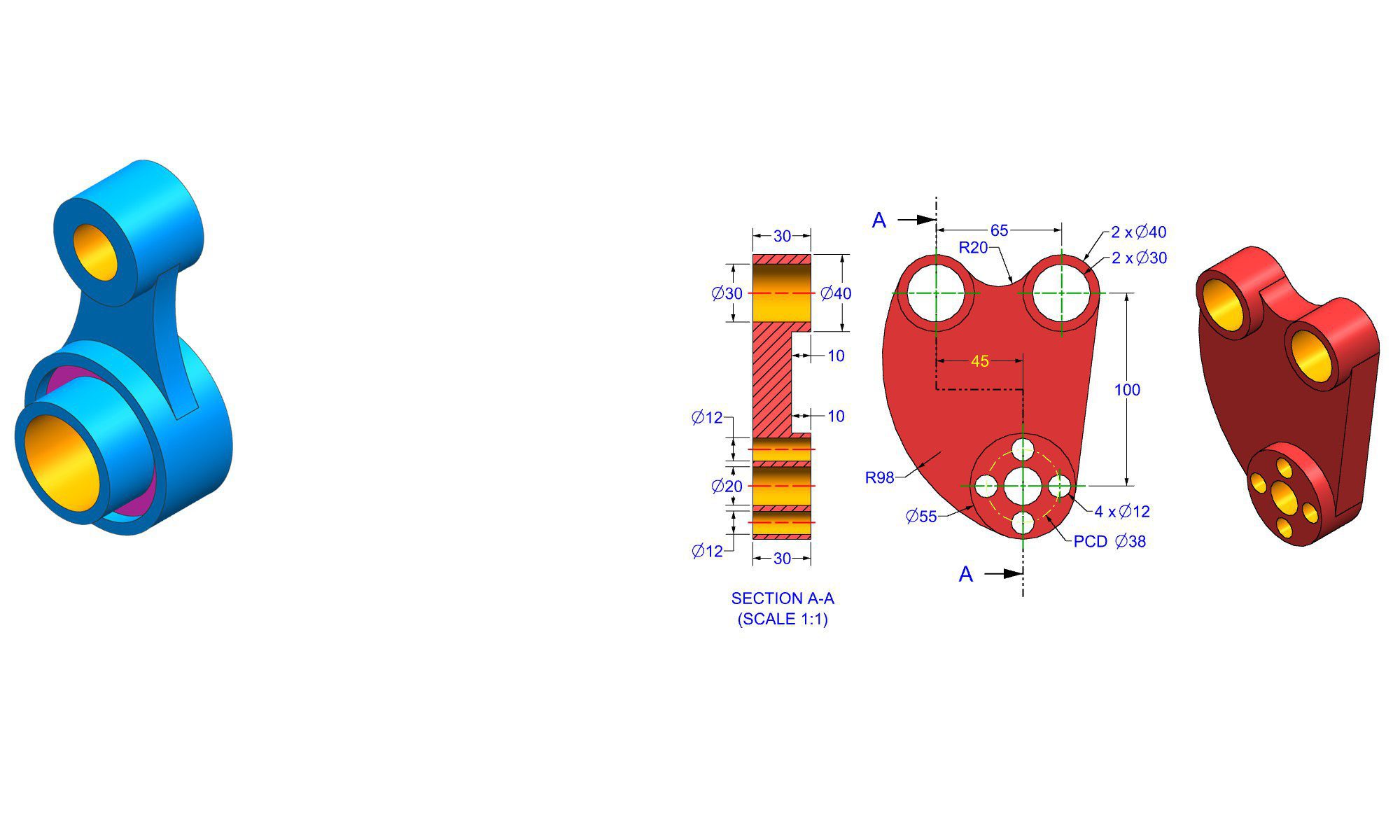


Introduction
Creating your first solid model in Fusion 360 can seem daunting at first, especially if you’re new to CAD design. However, with a methodical step-by-step approach, you can quickly learn how to develop a robust 3D model from basic shapes. This guide will walk you through the essential stages of creating your initial solid model in Fusion 360, focusing on clarity, practicality, and best practices. Whether you’re designing a simple part or preparing for a complex project, understanding the fundamentals will set you up for success. Let’s dive into how to create your first solid model step by step in Fusion 360.
Understanding the Basics of Fusion 360
Before beginning your first model, it’s important to grasp some core concepts of Fusion 360:
- Workspace and interface: The environment where you sketch, model, and analyze.
- Sketch: The 2D drawing or outline of your model.
- Features: The tools used to extrude, cut, or modify your sketches into 3D forms.
- Timeline: The sequence of modeling steps, allowing you to edit history and features dynamically.
Having a solid understanding of these foundational elements will make the creation process smoother.
Step-by-step Guide to Creating Your First Solid Model in Fusion 360
Creating a solid model in Fusion 360 involves multiple stages, from initial sketches to final refining. Below is a detailed step-by-step breakdown.
1. Set Up Your Workspace
- Launch Fusion 360 and sign in to your account.
- Create a new design project by clicking File > New Design.
- Save your project with a descriptive name.
- Familiarize yourself with the interface—toolbar, browser, canvas, and timeline.
2. Create a New Sketch
- Click on Create Sketch in the toolbar.
- Select a plane to sketch on (XY, YZ, or XZ). For beginners, starting with the XY plane is most common.
- Your workspace switches to sketch mode, showing a grid and axes.
3. Draw Your Base Shape
- Use sketch tools: and select rectangle, circle, or polygon based on your design.
- For example, click on Rectangle:
- Click on the origin point.
- Drag to define the size.
- Enter precise dimensions in the dimension box for accuracy.
- Ensure your sketch is fully constrained (shapes appear with black lines).
4. Dimension the Sketch
- Use the Dimension tool (hotkey “D”) to specify exact measurements.
- Dimension critical features like length, width, or hole diameters.
- Proper dimensioning ensures your design is precise and scalable.
5. Finish the Sketch
- Click Finish Sketch to exit sketch mode.
- Your sketch now appears as a flat profile in the workspace.
6. Create a 3D Solid from the Sketch
- Select the Extrude command (hotkey “E”).
- Click on your sketch profile.
- Drag the arrow to extend the shape in the desired direction or enter an exact distance value.
- Make sure “New Body” is selected in the dialog box—this creates a new solid in your workspace.
7. Refine Your Model with Additional Features
- Use other features such as:
- Fillet to round edges.
- Shell to hollow out the object.
- Cut to remove material, such as holes.
- Pattern to replicate features uniformly.
- These tools add complexity and realism to your model.
8. Add Details and Final Touches
- Use Sketch and Feature tools to add features like holes, fillets, chamfers, or cutouts.
- Manipulate your model until it meets your specifications.
- Regularly save your work to prevent data loss.
9. Analyze and Review Your Model
- Use the Inspect tools:
- Measure dimensions.
- Check for interference or errors.
- Make adjustments via the timeline if necessary.
10. Export or Prepare for Manufacturing
- Once complete, export your model for 3D printing or CNC machining:
- Go to File > Export.
- Choose the file format (e.g., STL for 3D printing).
- Save and share your model.
Practical Real-World Example: Designing a Simple Drink Coaster
Let’s apply this process to designing a basic drink coaster:
- Sketch a circle with a diameter of 100mm.
- Extrude it to 5mm height.
- Add a smaller concentric hole (say 20mm diameter) in the center.
- Fillet the top edges for a smooth finish.
- Shell the bottom to create a hollow cavity, reducing weight.
- Export as an STL file for 3D printing.
This practical approach demonstrates how basic shapes and features combine to create useful objects.
Common Mistakes and How to Avoid Them
- Not fully constraining sketches: Leads to unintended distortions.
- Ignoring units: Always set and double-check your measurement units.
- Overlooking details: Small features like fillets or holes can significantly affect functionality.
- Skipping save points: Regular saving prevents accidental data loss.
- Ignoring design intent: Keep sketches and features organized for easy edits.
Pro Tips for Creating Solid Models in Fusion 360
- Use parametric design: Define parameters (e.g., dimensions) in the spreadsheet for easy updates.
- Keep your timeline tidy: Group related features to facilitate modifications.
- Use templates for common shapes and settings.
- View your model from multiple angles regularly.
- Utilize Fusion 360’s analysis tools to validate your design.
Comparison: Fusion 360 vs Other CAD Software for Beginners
| Feature | Fusion 360 | TinkerCAD | SketchUp |
|---|---|---|---|
| Ease of Use | Moderate, but powerful | Very beginner-friendly | Beginner-friendly, basic |
| Features | Extensive, including parametric design | Limited, mainly simple shapes | Focused on visualization |
| Price | Free for hobbyists/educators | Free | Paid, with free trial |
| Learning Curve | Slightly steeper | Very gentle | Gentle |
Fusion 360 strikes a balance between powerful features and beginner-friendliness, making it ideal for those learning to create solid models.
Conclusion
Creating your first solid model in Fusion 360 is a rewarding process that combines basic sketching, extruding, and feature addition to bring your ideas to life. By following this step-by-step guide, you can confidently start designing simple parts and gradually move toward more complex projects. Understanding core concepts and adopting best practices will enhance your skills and streamline future modeling tasks. With patience and practice, Fusion 360 can become an invaluable tool for your CAD journey.
FAQ
1. What are the essential tools I need to learn first in Fusion 360?
Ans : The key tools include Sketch, Extrude, Fillet, and the Timeline, which are fundamental for creating and editing models.
2. How do I ensure my sketches are accurately constrained?
Ans : Use dimensions and constraints to define relationships between sketch geometry, preventing unintended changes.
3. Can I create complex models starting with basic shapes?
Ans : Yes, combining simple extrusions, cuts, and patterns allows you to build complex and detailed designs.
4. What file format should I export for 3D printing?
Ans : Export your model as an STL (.stl) file for most 3D printers.
5. Is Fusion 360 suitable for both beginners and professional designers?
Ans : Yes, Fusion 360 caters to all skill levels, from beginners to advanced users, with scalable features.
6. How do I fix common errors like overlapping or open sketches?
Ans : Use constraints and the sketch checker tool to identify and resolve issues before extruding.
7. Can I modify my first model after creating it?
Ans : Absolutely, Fusion 360’s parametric design allows you to go back and edit features at any time.
End of Blog

Autodesk Fusion 360 All-in-One Workbook
500+ Practice Exercises to Master Autodesk Fusion 360 through real-world practice!
This all-in-one workbook is your ultimate resource to develop hands-on CAD skills with Autodesk Fusion 360. Whether you’re a student, engineer, hobbyist, or professional, this guide is built to help you gain real design confidence through structured practice.
What’s Inside this Book:
- 200 2D Sketching Exercises – Build a strong foundation in dimension-driven 2D geometry and technical drawings
- 200 3D Modeling Exercises – Practice modeling real-world parts, from simple shapes to complex components.
- Multi-Part Assembly Projects – Understand how parts fit together and create full assemblies with detailed drawings
🎯 Why This Book?
- 500+ practice exercises following real design standards
- Designed for self-paced learning & independent practice
- Perfect for classrooms, technical interview preparation, and personal projects
- Covers 2D Sketching, 3D Modeling & Assembly Design in one workbook
- Trusted by 15,000+ CAD learners worldwide