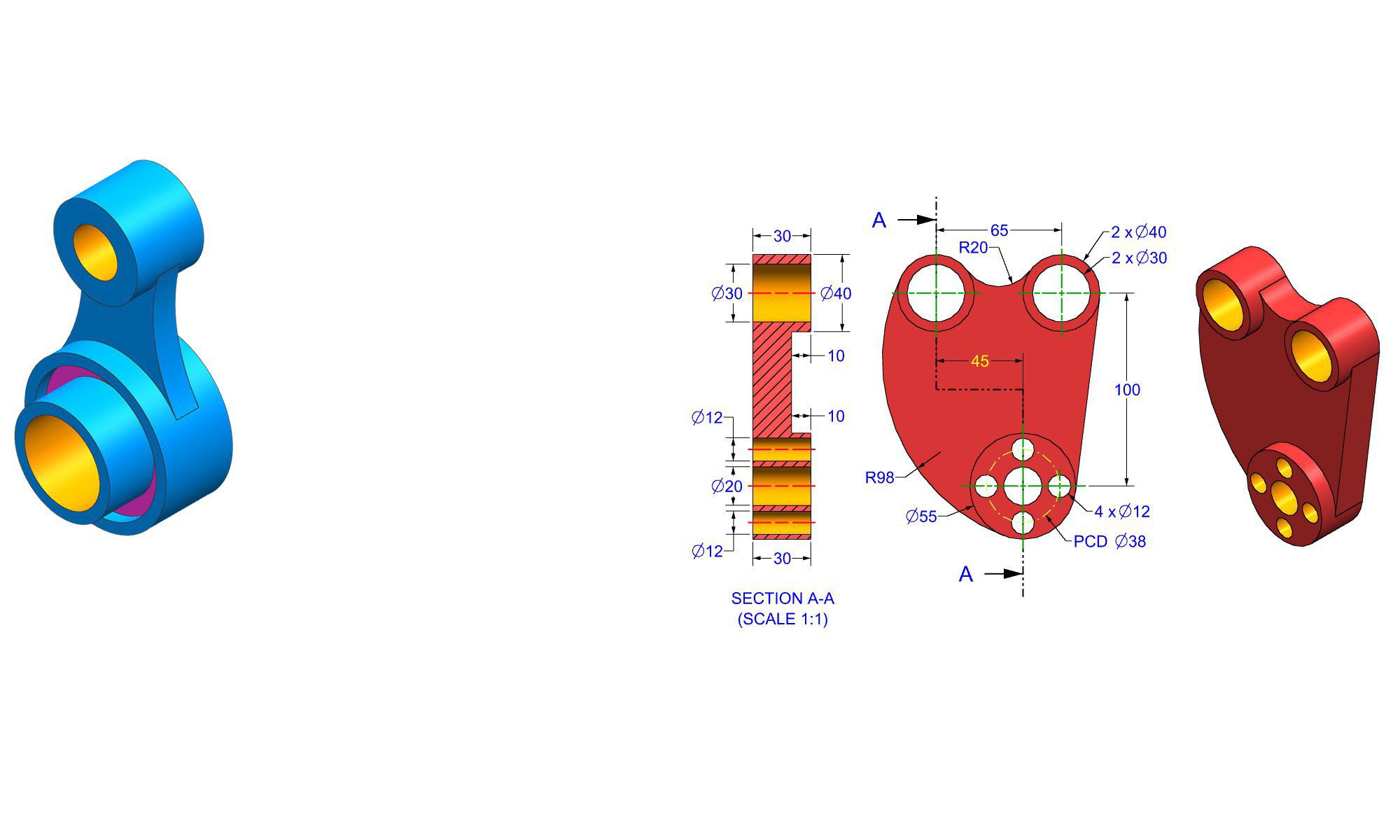

Introduction
When starting out with FreeCAD, a popular open-source CAD software, beginners often find themselves facing a variety of error messages. While these messages can seem intimidating, they are actually powerful tools for learning. Error messages serve as guides, pointing you toward what needs correction and helping you develop a deeper understanding of the software’s inner workings. In this post, we’ll explore why error messages help beginners learn in FreeCAD, how to interpret them effectively, and practical strategies to turn errors into learning opportunities. Understanding these messages can make your learning curve smoother, leading to more confident and efficient use of FreeCAD.
Why Error Messages Help Beginners Learn in FreeCAD
Error messages are more than just notifications of mistakes—they are educational signals. For beginners, these messages are invaluable because they provide immediate, specific feedback about what went wrong. Here’s how they aid the learning process:
1. They Highlight Common Mistakes
When starting with FreeCAD, beginners often make similar errors, such as incorrect sketch constraints or improper parameter inputs. Error messages flag these issues explicitly, helping users identify and understand their mistakes rather than guessing what went wrong.
2. They Encourage Problem-Solving Skills
Interpreting an error message requires critical thinking. Instead of passively following instructions, beginners learn to analyze the message, determine the root cause, and apply solutions—boosting problem-solving skills in CAD design.
3. They Foster Deeper Understanding of Software Functionality
Each error message reveals how FreeCAD processes commands and enforces constraints. Over time, users develop an intuitive understanding of features, limitations, and best practices, leading to more sophisticated design skills.
4. They Help in Debugging and Troubleshooting
Learning how to troubleshoot errors effectively reduces frustration and dependence on external help. This self-sufficiency accelerates overall learning and boosts confidence.
5. They Prevent Further Errors
By correcting errors as they occur, users avoid compounding mistakes that can be more difficult to debug later. This step-by-step correction process solidifies understanding.
How to Interpret Error Messages Effectively in FreeCAD
Interpreting error messages is a skill that develops with practice. Here are step-by-step instructions to make the most of them:
1. Read the Message Carefully
- Pay attention to the exact wording of the error message.
- Look for keywords indicating the nature of the problem, such as “constraint invalid” or “parameter missing.”
2. Note the Context
- Identify when the error occurred. Was it during sketch creation, feature addition, or parameter adjustment?
- Remember what operation was being performed, as this narrows down potential issues.
3. Check the Part of the Model or Step Involved
- FreeCAD often highlights problematic areas or points of failure.
- Examine the associated sketch or feature parameters mentioned in the message.
4. Consult the Error Documentation or Community Forums
- Use official documentation or user forums for explanations of specific messages.
- Search for similar errors to find common solutions and explanations.
5. Apply the Corrective Action and Test
- Make adjustments based on the information in the message.
- Retry the operation to confirm that the issue is resolved.
6. Keep a Record of Common Errors
- Maintain a personal log of errors and solutions encountered.
- Over time, this becomes a quick reference, speeding up troubleshooting.
Practical Examples of Error Messages in FreeCAD
Understanding real-world examples can clarify how error messages help learning. Here are common scenarios:
Example 1: Sketch Constraint Error
Error: “Constraint not valid”
This indicates an invalid or conflicting constraint.
How it helps: It prompts you to review constraints—perhaps a dimension conflicts with others or duplicates an existing constraint, teaching you the importance of consistent constraints.
Example 2: Parameter Input Error
Error: “Invalid value for parameter”
This occurs when an input isn’t accepted, such as a negative radius where only positive values are valid.
How it helps: It clarifies acceptable parameter ranges, strengthening your understanding of geometric constraints.
Example 3: Missing Dependencies
Error: “Feature cannot be created because of missing dependencies”
This suggests earlier steps or features are incomplete or incorrect.
How it helps: It teaches the importance of proper feature order and dependency management in parametrical modeling.
Common Mistakes and How Error Messages Address Them
Beginners often make mistakes that trigger error messages. Recognizing these can improve your learning process:
| Mistake | How the error message helps |
|---|---|
| Incorrect constraint application | Flags conflicting or redundant constraints |
| Entering invalid input values | Indicates acceptable value ranges |
| Skipping parameter dependencies | Warns that previous steps are incomplete |
| Applying features to incompatible geometry | Shows incompatible operation errors |
Best Practices for Using Error Messages as Learning Tools
To maximize the educational value of error messages, consider these tips:
1. Stay Patient and Curious
Viewing errors as learning opportunities rather than setbacks keeps motivation high.
2. Use Error Messages to Build a Knowledge Base
Maintain notes on common errors and their solutions. This tailored resource accelerates your learning curve.
3. Explore Outside Resources
Join FreeCAD forums, tutorials, and community groups to clarify confusing messages and learn from others’ experiences.
4. Practice Systematic Debugging
Develop a routine: read the message, analyze the context, search for solutions, and apply corrections systematically.
5. Validate Each Adjustment
After fixing an error, test the change to ensure the problem is resolved and no new issues are introduced.
Comparing Error Message-Driven Learning to Traditional Methods
| Aspect | Error Message-Driven Learning | Traditional Trial-and-Error Learning |
|---|---|---|
| Feedback | Immediate, specific | Often delayed or vague |
| Learning speed | Faster, targeted | Slower, less focused |
| Confidence | Builds with problem-solving | May foster frustration |
| Deep understanding | Encouraged through troubleshooting | Might rely on guesswork |
Error messages act as direct feedback loops, making the learning process more efficient and meaningful in FreeCAD.
Conclusion
Error messages in FreeCAD are far more than mere notifications of mistakes; they are essential tools that guide beginners through the complex terrain of CAD modeling. By learning to interpret and leverage these messages effectively, new users develop critical problem-solving skills, deepen their software understanding, and progress more confidently in their design projects. Embracing errors as learning opportunities transforms frustration into growth, ultimately making your FreeCAD journey more productive and rewarding.
FAQ
1. Why are error messages important for beginners in FreeCAD?
Ans: They provide immediate, specific feedback that helps beginners identify, understand, and correct mistakes, accelerating learning.
2. How can I better interpret FreeCAD error messages?
Ans: Carefully read the message, note the context, check related features or steps, and consult documentation or community forums for explanations.
3. What common mistakes trigger error messages in FreeCAD?
Ans: Incorrect constraints, invalid inputs, missing dependencies, or incompatible operations are common causes.
4. How should I respond to an error message to improve my learning?
Ans: View it as an educational signal, analyze what caused it, research solutions, and correct the issue step-by-step.
5. Can troubleshooting error messages help me become more proficient in FreeCAD?
Ans: Yes, systematically resolving errors builds deeper understanding of the software’s functionality and modeling principles.
6. Are error messages unique to FreeCAD or common in CAD software?
Ans: Error messages are common across CAD programs but vary in detail; understanding them in FreeCAD enhances general CAD troubleshooting skills.
7. How do I prevent errors in future FreeCAD projects?
Ans: Follow best practices, double-check constraints and parameters, and learn common pitfalls to reduce the likelihood of errors.
End of Blog

FREECAD All-in-One Workbook
500+ Practice Exercises to Master FreeCAD through real-world practice!
This all-in-one workbook is your ultimate resource to develop hands-on CAD skills with FreeCAD. Whether you’re a student, engineer, hobbyist, or professional, this guide is built to help you gain real design confidence through structured practice.
What’s Inside this Book:
- 200 2D Sketching Exercises – Build a strong foundation in dimension-driven 2D geometry and technical drawings
- 200 3D Modeling Exercises – Practice modeling real-world parts, from simple shapes to complex components.
- Multi-Part Assembly Projects – Understand how parts fit together and create full assemblies with detailed drawings
🎯 Why This Book?
- 500+ practice exercises following real design standards
- Designed for self-paced learning & independent practice
- Perfect for classrooms, technical interview preparation, and personal projects
- Covers 2D Sketching, 3D Modeling & Assembly Design in one workbook
- Trusted by 15,000+ CAD learners worldwide